Image source: https://goldprice.org/
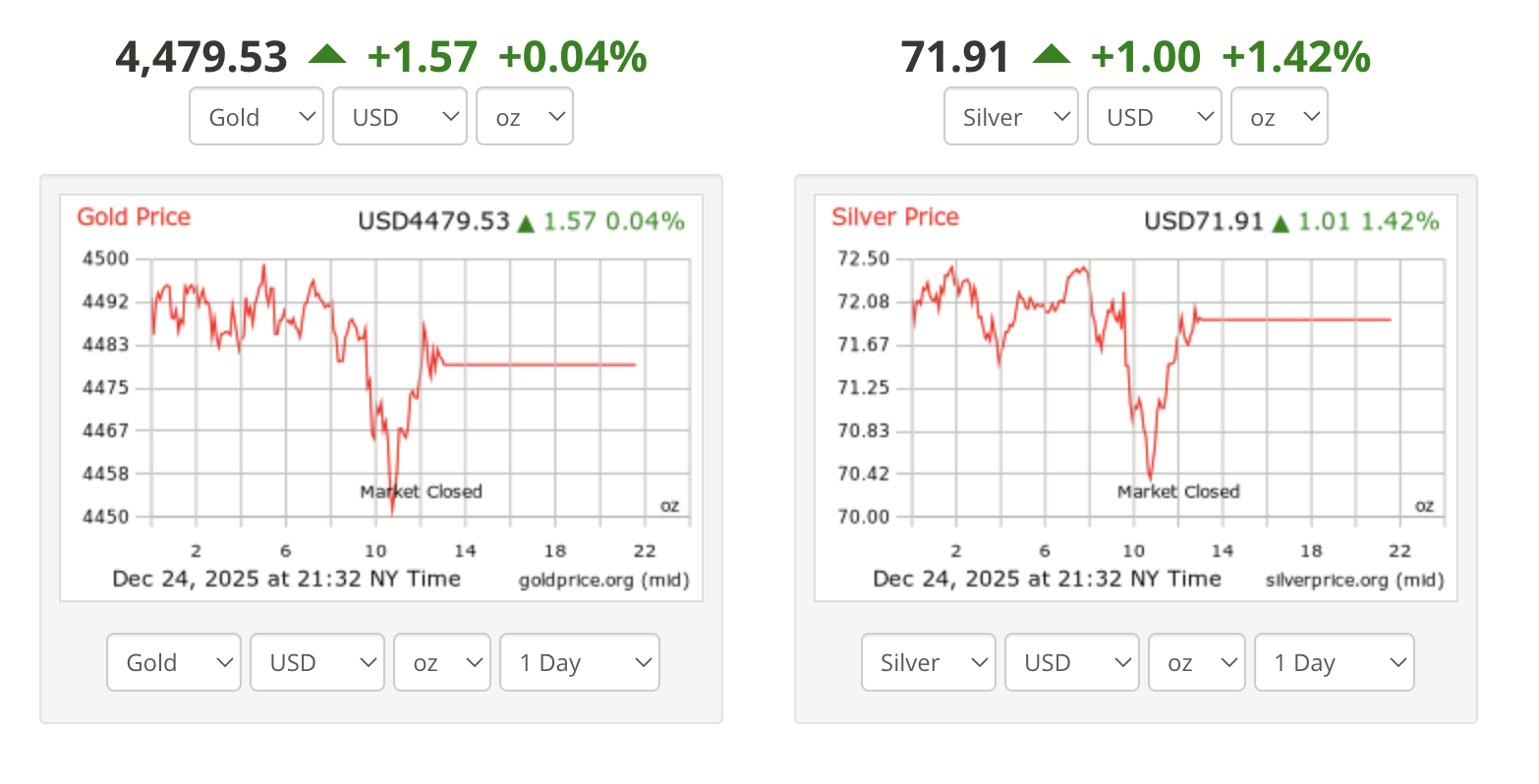
Market Review: Gold Continues to Set All-Time Highs
As 2025 nears its end, the global precious metals market is experiencing a rare and powerful rally. Since the start of the year, gold prices have climbed steadily, breaking multiple records by mid-December. Spot gold briefly surpassed $4,500 per ounce and continues to attract substantial capital inflows.
Silver, platinum, and other precious metals have also posted significant gains, with several price indicators reaching new cycle highs. This broad-based strength in precious metals is closely tied to rising global macroeconomic uncertainty and a concentrated surge in safe-haven demand.
From both technical and capital flow perspectives, gold has gained over 70% year-to-date, making it one of the top-performing mainstream assets in recent years. Investors increasingly recognize gold’s role as a store of value and a hard asset, which is driving sustained demand for long-term portfolio allocation.
Bitcoin Price Trends and Investor Sentiment
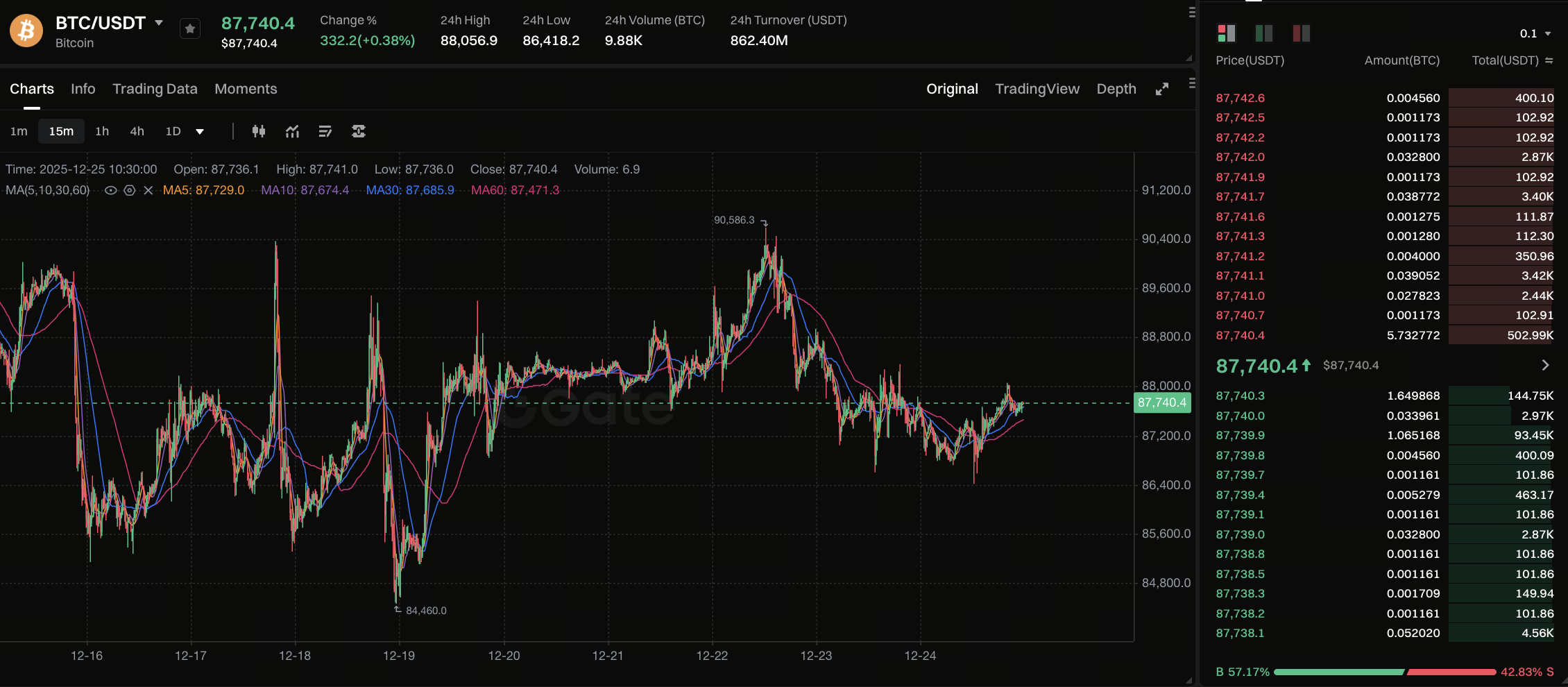
Image source: https://www.gate.com/trade/BTC_USDT
In stark contrast to the robust precious metals market, Bitcoin has remained weak heading into Christmas. Bitcoin’s price has largely traded between $87,000 and $90,000, with no decisive breakout in the short term.
While Bitcoin approached key psychological highs earlier this year, the approach of the holiday season and declining market liquidity have made investors more cautious. As a result, upward momentum has clearly faded.
Rising precious metals have triggered capital outflows from Bitcoin, creating year-end psychological pressure for some holders. Overall risk appetite has pulled back in the short term. In the context of thin holiday trading and increased volatility, crypto assets are more prone to range-bound consolidation.
Macroeconomic Drivers for Precious Metals and Crypto Markets
Macroeconomic conditions remain the primary force behind gold’s ongoing strength, reflected in several key factors:
- Heightened geopolitical tensions and escalating global trade frictions are driving capital toward traditional safe-haven assets.
- Growing expectations for future interest rate cuts are reducing the opportunity cost of holding gold.
- The US dollar’s recent weakness is making dollar-denominated precious metals more attractive.
By comparison, while some investors view Bitcoin as “digital gold,” its short-term price action is more vulnerable to market sentiment amid shrinking liquidity and lower trading volumes.
It’s not that Bitcoin has failed to act as a safe haven; rather, current market risk appetite is more focused on traditional precious metals than on highly volatile risk assets.
Risk Considerations and Investor Strategies
The performance of gold and Bitcoin in 2025 offers several important lessons for investors:
- Diversification Matters: Precious metals and crypto assets have distinct characteristics. Combining them appropriately can help smooth portfolio volatility.
- Sentiment and Liquidity Effects: Seasonal factors like the Christmas holiday can significantly amplify price swings.
- Maintain a Long-Term Perspective: For assets with long-term value potential, short-term corrections do not necessarily indicate a trend reversal.
Outlook for 2026: Potential Trajectories for Precious Metals and Bitcoin
Looking ahead to 2026, market expectations for gold and Bitcoin remain divided:
- Gold’s ability to retain its safe-haven and store-of-value appeal will depend on the persistence of macro risks.
- Bitcoin’s performance will hinge more on a rebound in risk appetite, renewed capital inflows, and a restoration of market confidence.
Over the long term, the value proposition and market drivers for both precious metals and crypto assets will continue to evolve. Investors should closely track global economic data, central bank policy directions, and shifts in overall risk sentiment.
Conclusion
In summary, as Christmas approaches, precious metals are showing pronounced strength, while Bitcoin faces mounting pressure. This divergence highlights a preference for traditional safe-haven assets and a cautious stance toward short-term uncertainty in crypto markets.
A thorough understanding of the underlying drivers and cyclical patterns of both asset classes will help investors make more rational and resilient decisions in an increasingly complex market landscape.