In recent years, the digital asset market has not only expanded in trading volume and asset diversity, but has also seen a rapid increase in information generation. Price movements, on-chain activity, project announcements, and discussions across social platforms are updated almost simultaneously through multiple channels.
This highly real-time information environment allows investors to access more market signals, but it also brings new challenges. As information sources proliferate, traders must sift through massive amounts of data to identify which signals are genuinely valuable.
As a result, the main issue for investors today is no longer a lack of information, but how to quickly grasp the reasons behind market changes.
From Dispersed Data to Structured Market Observation
Traditional market analysis methods rely on key indicators such as price trends, trading volume, or capital flows. While these metrics reflect market outcomes, they offer limited insight into the causes of volatility.
Gate AI’s core design philosophy is not simply to increase data volume, but to integrate information from diverse sources and establish connections between them. This approach reorganizes scattered market signals into a structured analytical framework.
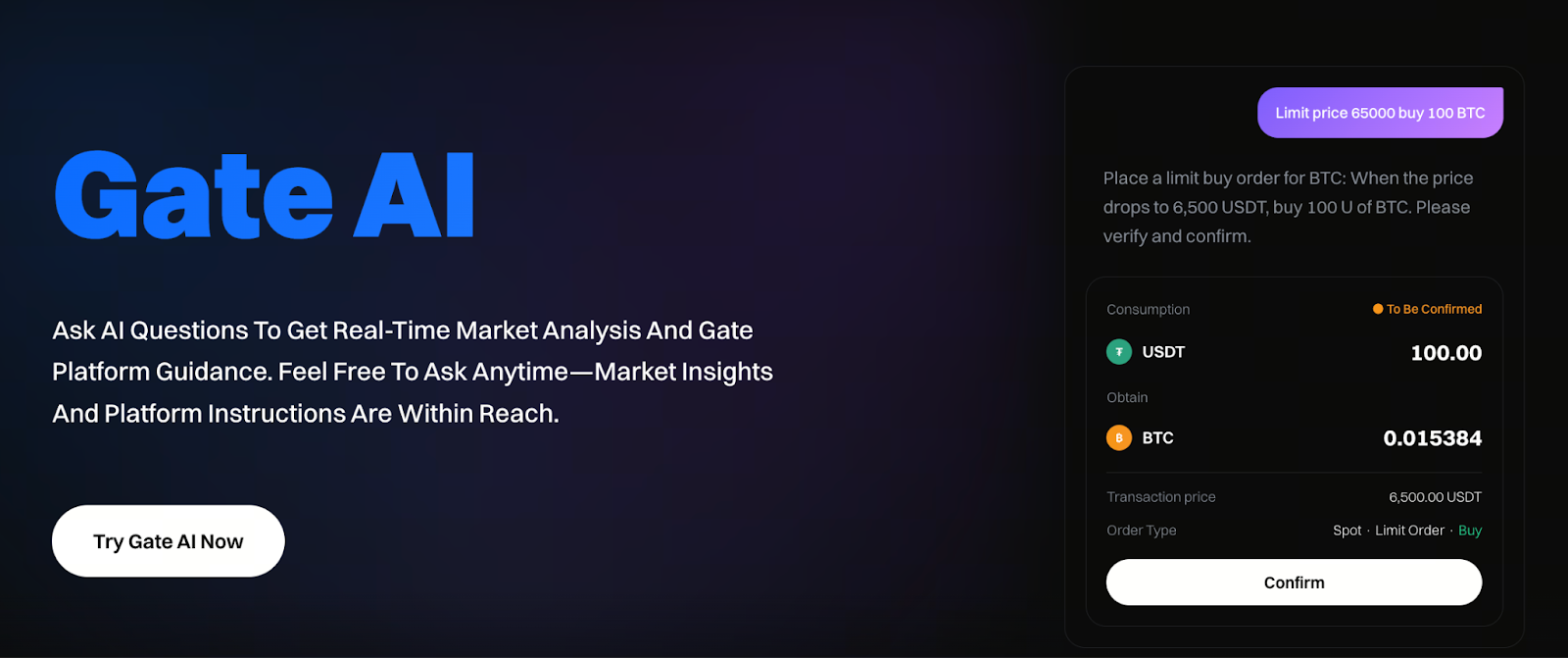
In practice, traders can directly pose market-related questions through conversational interfaces, such as:
- Which events may have influenced recent price fluctuations for a specific token?
- Is capital currently flowing into particular industry sectors?
- Are certain projects or sectors experiencing increased trading activity?
The system aggregates and organizes data from multiple sources, presenting market information in a clearer, more actionable format.
Clarifying the Logic Behind Price Movements
For many newcomers to the crypto market, merely observing price charts makes it difficult to understand what’s happening. When asset prices suddenly surge or drop, the price lines alone rarely reveal the underlying causes.
Through systematic data analysis, Gate AI breaks down market volatility into multiple contributing factors, such as:
- Shifts in capital flows
- Industry or project-specific news impacting the market
- Changes in investor sentiment or confidence
When these factors are organized within a unified analytical framework, price movements become the result of multiple market conditions working together, rather than just isolated numbers.
This method helps traders develop a clearer analytical logic when observing the market.
With generative AI technology becoming more widespread, rapid response has become a hallmark of many tools. Yet in financial markets, information credibility often outweighs speed. If analysis relies on unverified data or questionable sources, it can mislead investment decisions. Gate AI therefore adopts a cautious approach to data processing.
When data sources are insufficient or market information remains uncertain, the system flags these limitations rather than producing speculative conclusions. While this may slow down some real-time responses, it helps maintain overall information quality. In trading decisions, verified information is typically more valuable than fast but uncertain signals.
Often, market analysis tools and trading platforms operate separately. Traders must switch between sites to gather market data and execute trades, increasing operational burden in fast-moving markets.
Gate AI’s design also focuses on integrating analytical capabilities directly into the platform’s market and search systems. Users browsing an asset or viewing market information can ask relevant questions via a conversational interface without leaving the current page. This integration creates a seamless connection between market observation and trading decisions, embedding analysis directly into the trading workflow.
The Future of AI in Market Analysis
Artificial intelligence is continuously evolving in financial markets. As technology advances, AI analytical tools are likely to further expand into areas such as:
- Market risk alerts and early warning systems
- Cross-verification of multi-source data
- Community sentiment and market trend analysis
In an environment of ever-increasing information density, AI acts as a signal filter, helping traders extract truly valuable insights from vast data sets.
By reducing information noise, traders can focus on understanding market logic rather than being distracted by excessive data.
Summary
As the crypto market enters an era of real-time information, simply acquiring data is no longer a challenge. The real priority is understanding, organizing, and analyzing that information. Gate AI integrates multi-source market data and conversational analysis, transforming scattered signals into a structured observation framework. This approach not only helps traders understand the market more efficiently, but also naturally embeds analysis into trading decisions. As information continues to grow, intelligent tools that filter, organize, and verify data will become an indispensable part of the crypto trading ecosystem.