Global Stock Market Volatility Intensifies: How Should Investors Respond?
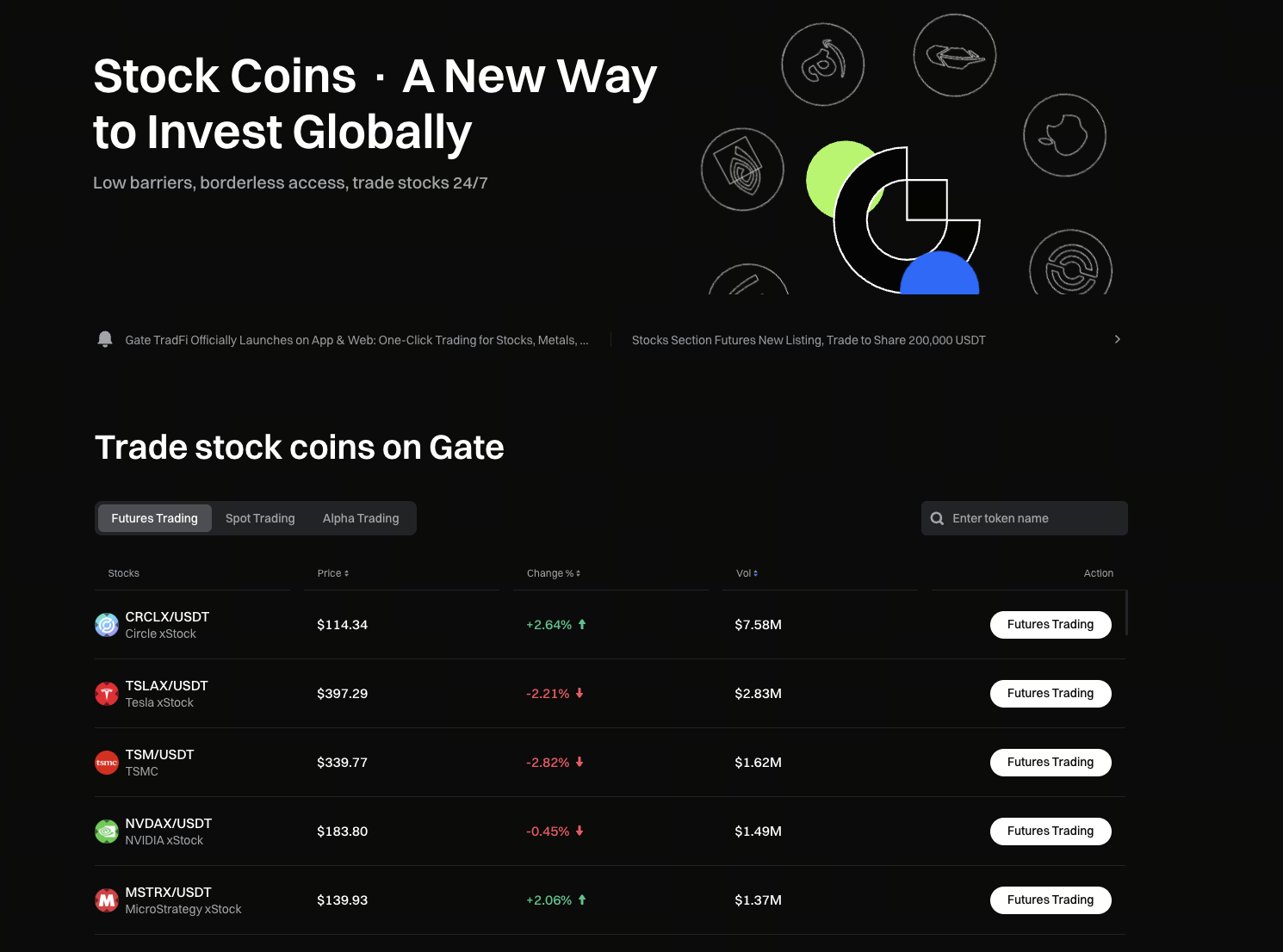 Image source: Gate Tokenized Stocks Page
Recently, global stock markets have experienced heightened volatility driven by multiple factors. Geopolitical tensions in the Middle East, fluctuations in global energy prices, and uncertainty surrounding economic recovery have triggered large swings in US and European equity markets. The rapid rise in oil and metal prices has intensified risk-aversion sentiment, significantly increasing market volatility.
In this environment, investors need more agile asset allocation strategies to manage uncertainty. The Gate Tokenized Stocks section offers an innovative solution, allowing investors to engage with stock price movements and capture trading opportunities amid market turbulence.
Gate Tokenized Stocks: An Innovative Trading Approach
Gate's Tokenized Stocks section uses tokenization technology to bring traditional stock price volatility into the crypto market. Users can trade these tokens directly on the Gate platform, participating in the ups and downs of the stock market. Unlike traditional stock trading, tokenized stocks do not confer shareholder rights, so there is no need to consider dividends or voting privileges.
Moreover, tokenized stocks are not bound by traditional market hours. Investors can trade at any time, leveraging market volatility to seize trading opportunities.
Key Advantages of Tokenized Stocks:
-
High Liquidity: Tokenized stocks can be bought and sold at any time on digital asset trading platforms, eliminating the time constraints of traditional stock markets.
-
Low Entry Barrier: Investors can participate without opening a traditional securities account, and trading funds are more flexible.
-
Decentralization: Trading tokenized stocks removes intermediaries, making transactions more transparent and direct.
-
Cross-Platform Trading: Tokenized stocks can circulate across multiple crypto trading platforms, enhancing asset liquidity and expanding market reach.
Trading Opportunities in Volatile Markets
1. Short-Term Volatility Opportunities
During periods of high stock market volatility, tokenized stock prices also fluctuate. For example, the recent surge in oil prices may drive up energy-related tokenized stock prices, while those affected by geopolitical or macroeconomic factors may decline. Investors can capitalize on these short-term price swings for potential gains by trading tokenized stocks flexibly.
Additionally, in turbulent markets, investors often achieve better returns through contrarian strategies—such as buying during excessive market panic. When recession fears drive tokenized stock prices lower, these discounted prices may present attractive entry points.
2. Cross-Market Arbitrage Opportunities
Tokenized stocks also enable investors to pursue arbitrage across multiple markets. By allocating capital to different regions worldwide, investors can profit from price discrepancies between markets.
For instance, if tokenized stocks in one region fluctuate due to political events or economic data releases while similar tokens elsewhere remain stable, investors can execute arbitrage trades between the two markets to capture profits.
3. Hedging Opportunities
During global stock market turbulence, hedging assets typically perform well. Investors can choose tokenized stocks linked to assets like gold or oil. Trading these tokenized stocks allows investors to participate in price movements of safe-haven assets while avoiding traditional stock market restrictions and high fees.
How to Trade Effectively on Gate Tokenized Stocks?
When trading tokenized stocks, investors should tailor their strategies to current market volatility:
1. Select High-Potential Tokenized Stocks
Investors should choose tokenized stocks likely to perform well in today's economic climate. Sectors such as energy, gold, mining, and technology often see active tokenized stocks during periods of uncertainty. By analyzing market news and macroeconomic data, investors can identify tokens with significant upside potential.
2. Set Stop-Loss and Take-Profit Levels
In volatile markets, it's essential to set stop-loss and take-profit levels before each trade. Stop-losses help investors exit positions promptly when trends turn unfavorable, limiting losses. Take-profit levels lock in gains and prevent missed opportunities due to market swings.
3. Monitor Macroeconomic and Political Events Closely
Tokenized stock prices are influenced by macroeconomic conditions, policy changes, and political events. Investors should stay alert to these factors and adjust strategies accordingly. For example, as Middle East tensions evolve, energy-related tokenized stocks may experience significant volatility, allowing investors to respond to changing conditions.
4. Diversify to Manage Risk
Diversification is an effective way to manage risk in volatile markets. Investors can spread capital across tokenized stocks from multiple sectors or industries, reducing the impact of volatility in any single area on their overall portfolio.
Risk Management for Tokenized Stocks
While Gate's Tokenized Stocks section offers flexible trading opportunities, market risks remain. Consider the following risk management tips:
-
Market Volatility: Tokenized stock prices can swing sharply due to shifting sentiment and liquidity. Investors should maintain strong risk awareness and avoid excessive trading.
-
Policy Risk: Regulatory policies for digital assets are evolving. Investors should monitor changes to ensure compliance and legal trading.
-
Liquidity Risk: Some tokenized stocks may have shallow market depth, posing liquidity risks. Choose tokens with higher liquidity to avoid delays in executing trades.
Conclusion
Amid global stock market turbulence, the Gate Tokenized Stocks section provides investors with a flexible investment tool to capture opportunities in volatile markets. Tokenized stocks enable efficient participation in price swings and allow investors to benefit from market uncertainty. With sound risk management, tokenized stocks can become a valuable investment tool in turbulent times, helping investors achieve improved returns.