Ondo Finance Overview & Tokenized Stock Concepts
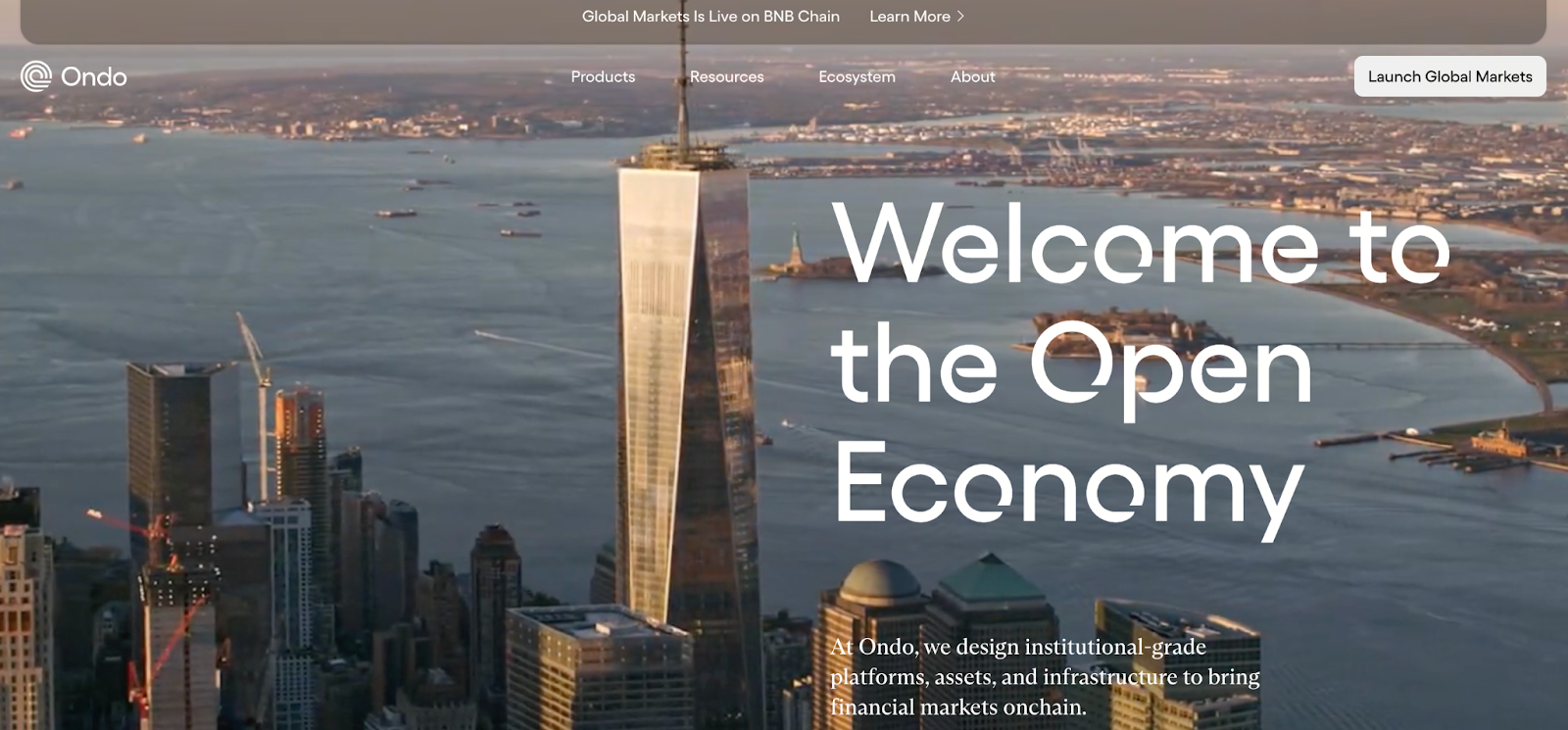
Image source: https://ondo.finance/
As blockchain technology continues to advance, the tokenization of real-world assets (RWAs) has become a defining trend at the intersection of crypto and traditional finance. Ondo Finance stands out as a leading RWA issuance and trading platform, specializing in converting traditional financial assets—including stocks, bonds, and ETFs—into blockchain-based tokens. These tokenized securities, enabled by smart contracts, represent actual ownership in underlying assets and allow for unrestricted, round-the-clock trading, settlement, and custody on-chain. This continuous trading capability sets them apart from the limited hours of conventional financial markets.
Tokenized stocks offer several advantages: lower barriers to entry, faster settlement, and uninterrupted 24/7 investment access for global investors. For users seeking on-chain exposure to equity markets, this approach could bridge the gap between traditional securities and the crypto ecosystem.
Latest Developments: Launching on Solana in Early 2026
According to the latest official announcement, Ondo Finance will launch its tokenized US equities and ETF trading platform on the Solana blockchain in early 2026. Touted as the largest of its kind, this platform aims to bring Wall Street liquidity to online capital markets, leveraging Solana’s high performance and throughput for rapid trading and settlement.
Unlike traditional trading environments, users can directly hold and trade regulated stock assets on-chain, greatly enhancing transaction efficiency and transparency. The growing Solana ecosystem also signals increased infrastructure and market participation in this innovative space.
Market Impact of Tokenized Stocks
Ondo Finance’s strategic rollout highlights a significant trend: the rapid convergence of on-chain assets and real-world financial products. While stocks and ETFs dominate traditional finance with massive scale, few have been fully migrated to blockchain for global access. Ondo’s platform not only enables continuous trading, but also allows investors worldwide to access digital representations of these assets without geographic or time zone restrictions.
Moreover, tokenized securities promise to streamline market settlement, moving from the traditional T+1/T+2 post-trade cycles to near-instant clearing and delivery. This shift is crucial for saving time and reducing settlement risk for market participants.
ONDO Price and Market Sentiment
Despite strong long-term prospects, ONDO tokens have seen short-term price corrections. Recent market data shows ONDO declined and briefly fell below a key support level, reflecting some volatility in expectations around the platform’s development timeline.
This pullback likely stems from the extended rollout period for the tokenized stock platform and fluctuating sentiment in the RWA sector. While investors pursue innovative opportunities, they should remain aware of price volatility risks.
Potential Risks and Regulatory Outlook
Regulation remains a central concern for tokenized securities. Recently, the US SEC concluded its long-term investigation into Ondo Finance without filing formal charges, easing some regulatory uncertainty and paving the way for further expansion in the US market.
However, global regulations for tokenized stocks are still evolving, and policy differences across jurisdictions may affect the growth of on-chain securities markets. Investors and users should conduct thorough compliance and risk assessments before participating.
Outlook and Summary
Looking ahead to 2026, Ondo Finance’s launch of tokenized equities and ETFs on Solana marks a major milestone for the convergence of crypto and traditional finance. This breakthrough could attract major asset managers to on-chain markets and accelerate the digital transformation of global capital markets.
As a financial innovation, tokenized securities will reshape both investment strategies for traditional assets and the overall trading experience. For global investors, this means greater efficiency, broader access, and a more open financial ecosystem.