As the global new energy industry accelerates, Tesla has evolved from a pure electric vehicle manufacturer into a key player in both energy and technology sectors. Its success is driven not only by rising EV sales but also by a diversified business model built around energy and software. Compared with traditional automakers, Tesla emphasizes technological integration and ecosystem synergy, which is a major reason it continues to attract market attention.
From a capital markets perspective, Tesla’s value extends beyond automotive revenue. It also reflects the long-term growth potential of autonomous driving software, energy storage systems, and its broader energy ecosystem. For this reason, Tesla is often viewed as a hybrid of manufacturing and technology, and its business model has become a key framework for evaluating its long-term value.
Overview of Tesla
Founded in 2003 and headquartered in the United States, Tesla initially focused on the development and sale of electric vehicles. Over time, it expanded into energy storage, solar products, and autonomous driving software, forming a business ecosystem that spans clean mobility and energy management.
Unlike traditional automakers, Tesla’s strategy goes beyond selling vehicles. Its broader mission is to drive the global transition to sustainable energy through technological innovation. This positioning gives Tesla a strong competitive edge and creates significant room for long-term growth.
What Are Tesla’s Core Revenue Streams?
Tesla’s revenue mainly comes from three segments: automotive sales, energy business, and software services. Among these, vehicle sales remain the primary contributor, with models such as Model 3 and Model Y accounting for a large share of total revenue. As global demand for electric vehicles continues to rise, this segment provides a stable cash flow base.
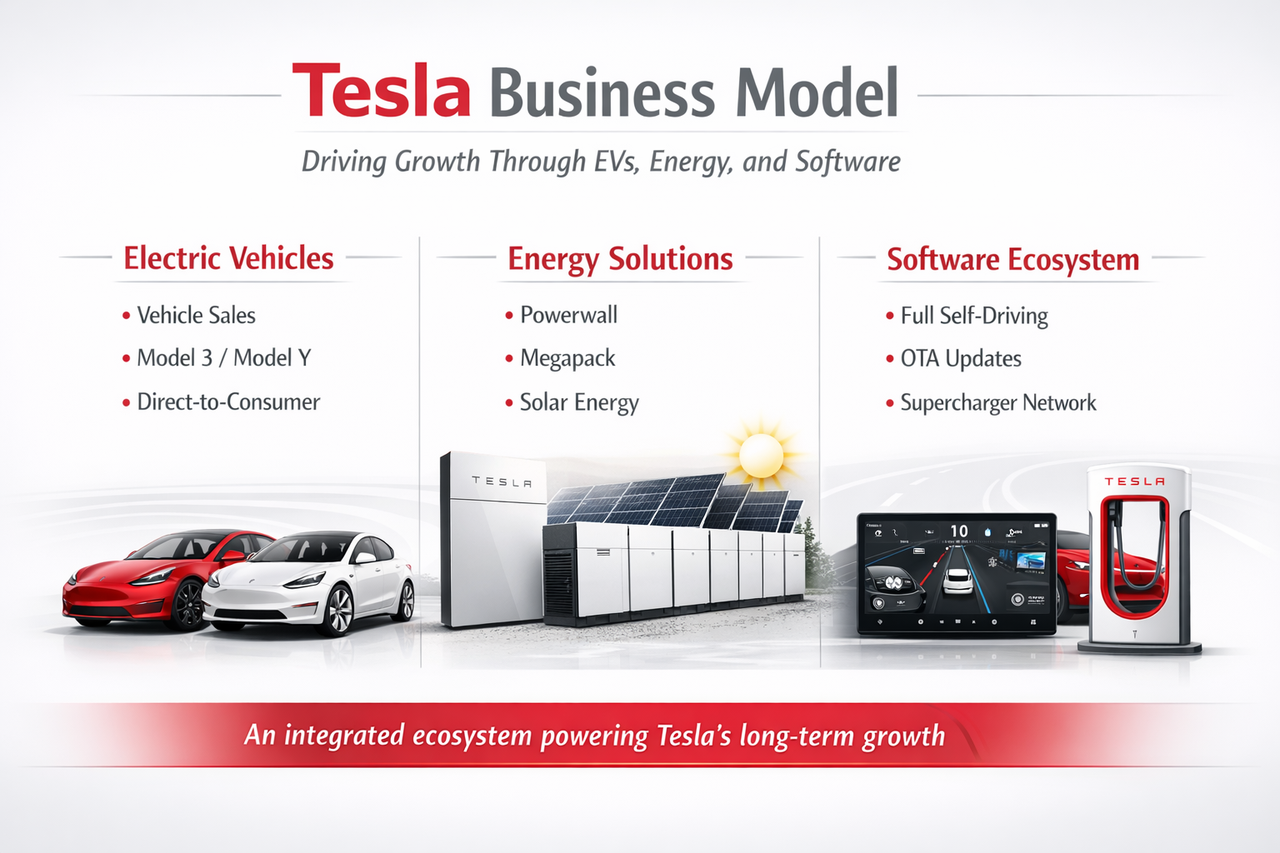
At the same time, Tesla is expanding its energy business through products such as Powerwall and Megapack, including residential storage systems and large-scale energy solutions. Although this segment currently contributes a smaller portion of total revenue, it is growing rapidly and is widely seen as a key future driver.
Software services are another critical component of Tesla’s model. Features like Full Self-Driving (FSD) and subscription-based services increase the value of each vehicle while offering higher-margin revenue streams. This diversified income structure is what sets Tesla apart from traditional automakers.
How Does Tesla Use Vertical Integration to Reduce Costs?
One of the core strengths of Tesla’s business model is vertical integration, which involves controlling its supply chain and key technologies to reduce costs and improve efficiency. Unlike traditional automakers that rely heavily on external suppliers, Tesla manages critical components such as batteries, electric drivetrains, software systems, and sales channels in-house.
For example, Tesla uses a direct-to-consumer sales model, eliminating dealership costs. On the technology side, it develops its own battery systems and software platforms, allowing for more efficient product optimization and production processes.
This vertically integrated approach not only lowers operational costs but also accelerates product iteration, helping Tesla maintain a competitive edge in the rapidly evolving EV market.
How Does Tesla Build Its Energy and Software Ecosystem?
Beyond vehicle sales, Tesla is actively building an ecosystem centered on energy and software to support long-term growth. In the energy segment, it offers residential storage, commercial energy systems, and solar solutions, aiming to create a fully integrated clean energy network.
On the software side, Tesla focuses on autonomous driving systems and connected vehicle services. Through continuous software updates, Tesla can add new features and improve performance, transforming vehicles from static hardware products into evolving smart devices.
In addition, Tesla strengthens its ecosystem through a global charging network. The integration of energy products, software services, and charging infrastructure creates a strong synergy, enhancing user retention and reinforcing the long-term competitiveness of its business model.
Why Does Tesla’s Business Model Attract Capital Market Attention?
Tesla’s business model draws strong interest from capital markets due to its scalability and growth potential. Unlike traditional automakers that rely mainly on vehicle sales, Tesla also benefits from software revenue and expanding energy operations, leading to higher growth expectations.
In particular, the commercialization of autonomous driving is widely viewed as a major source of long-term value. Since software services typically offer higher margins, investors expect Tesla’s profitability to improve over time.
Additionally, Tesla’s strong brand influence and technological leadership in the EV sector provide a competitive advantage. This integrated “vehicles + energy + software” approach has positioned Tesla as a highly attractive growth company in the eyes of investors.
What Challenges Does Tesla’s Business Model Face?
Despite its strong growth potential, Tesla’s business model faces multiple challenges. First, competition in the EV market is intensifying, with companies such as BYD rapidly gaining market share, which could put pressure on Tesla’s margins.
Second, Tesla faces profitability challenges as it continues to scale. Pricing adjustments in response to competition may impact margins, while the full potential of its energy and software businesses may take time to materialize.
Additionally, the development of autonomous driving technology is subject to regulatory constraints and technological maturity. If commercialization progresses more slowly than expected, market expectations for Tesla’s growth could decline.
As a result, while Tesla’s business model offers strong growth potential, its future performance will depend on competition, technological execution, and sustained improvements in profitability.
Conclusion
Tesla’s business model is built on three pillars: electric vehicles, energy solutions, and software services, supported by vertical integration to improve efficiency and create a scalable growth ecosystem. Compared with traditional automakers, Tesla expands its revenue streams through energy and software, which is why it receives heightened attention from capital markets.
However, this model also faces challenges such as intensifying competition and margin pressure. For investors, understanding Tesla’s business model provides a more complete view of its long-term growth potential and associated risks.
FAQs
What are Tesla’s main sources of revenue?
Tesla’s main revenue streams include vehicle sales, energy business, and autonomous driving software services, with automotive sales currently contributing the largest share.
How is Tesla’s business model different from traditional automakers?
Tesla not only sells vehicles but also builds an ecosystem through energy solutions, software services, and vertical integration, giving it a stronger technology-driven profile than traditional automakers.
Why does Tesla emphasize vertical integration?
Vertical integration helps Tesla reduce costs, improve efficiency, and accelerate product and technology iteration, strengthening its competitive position.
What risks does Tesla’s business model face?
Key risks include intensifying competition, declining margins, and uncertainty around the commercialization of autonomous driving technology.