Tether to Launch First Comprehensive Reserve Audit
 (Source: tether)
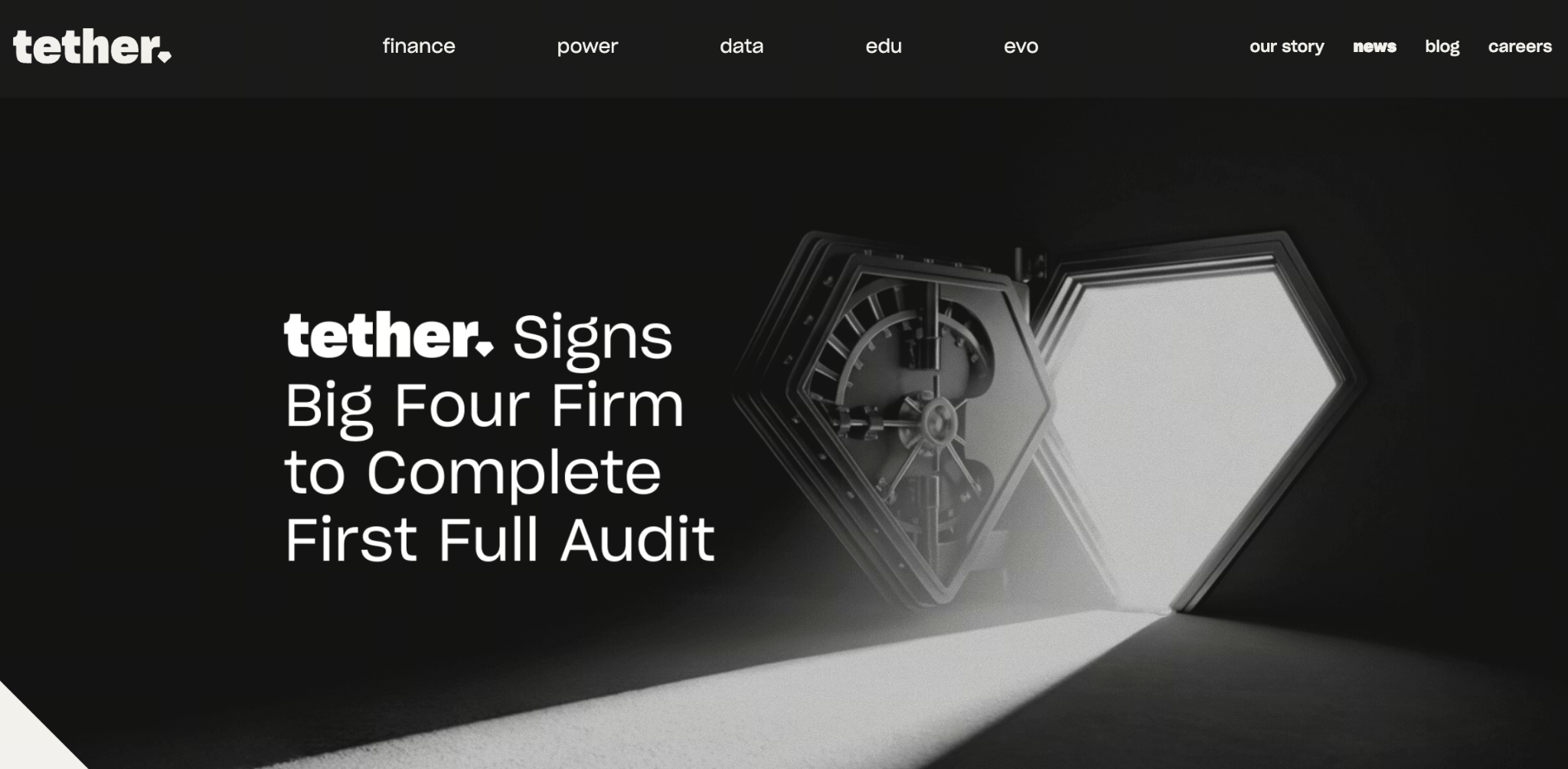
Tether, the world’s largest stablecoin issuer, has announced plans to commission a leading global accounting firm for its first full audit of reserve assets.
The audit will be conducted by one of the Big Four accounting firms, though Tether has not disclosed which firm will take on the task. The audit will cover the financial condition of its US dollar-pegged stablecoin, USDT.
Audit Will Address Multiple Layers
According to Tether, this process is not a simple financial review but a thorough, independent audit.
Key areas include:
-
Assessment of asset and reserve status
-
Review of liabilities related to issued tokens
-
Comprehensive audit of financial statements
-
Evaluation of internal controls and financial processes
Simon McWilliams, Tether’s Chief Financial Officer, noted that the accounting firm was selected through a competitive process.
Big Four Firms Likely Involved
The Big Four refers to Deloitte, Ernst & Young, KPMG, and PricewaterhouseCoopers—firms recognized globally for their authority in financial auditing. Successful completion of the audit could further strengthen market confidence in USDT.
USDT’s Role in the Stablecoin Market
USDT remains the largest stablecoin in the crypto market.
Recent data shows:
For example, Circle’s USDC has a market cap of roughly $78.6 billion.
Recent market research found that USDC’s trading volume briefly exceeded USDT’s, marking the first occurrence since 2019.
Reserve Asset Structure Under Ongoing Scrutiny
Tether’s reserve asset composition has been a focal point for the market. The company asserts that each USDT is backed 1:1 by fiat assets. Tether has disclosed that its reserves primarily consist of US Treasury bonds, physical gold, Bitcoin, and collateralized loan assets. Audit and advisory firm BDO Global previously reported these details.
Market Discussion on Reserve Security
At the end of last year, Arthur Hayes warned that a sharp decline in reserve asset prices could pressure Tether. James Butterfill, Head of Research at CoinShares, countered this view, arguing that risk concerns have been exaggerated.
Regulatory Changes Impact Stablecoin Development
Tether’s audit announcement coincides with shifts in regulatory policy. The United States recently passed the GENIUS Act, establishing a regulatory framework for payment stablecoins. To meet these requirements, Tether launched a new stablecoin, USAt, earlier this year, with Anchorage Digital Bank as the issuer. This shows Tether is actively adapting its business to align with evolving regulations.
Conclusion
Tether’s plan for its first comprehensive audit marks a major step forward in transparency and compliance for the stablecoin sector. As the market expands and regulatory clarity increases, stablecoin issuers face growing pressure for audits and disclosures. A successful audit could boost confidence in USDT’s reserve system and set a new standard of trust across the stablecoin market.