What Are NFTs? Core Values and Use Cases
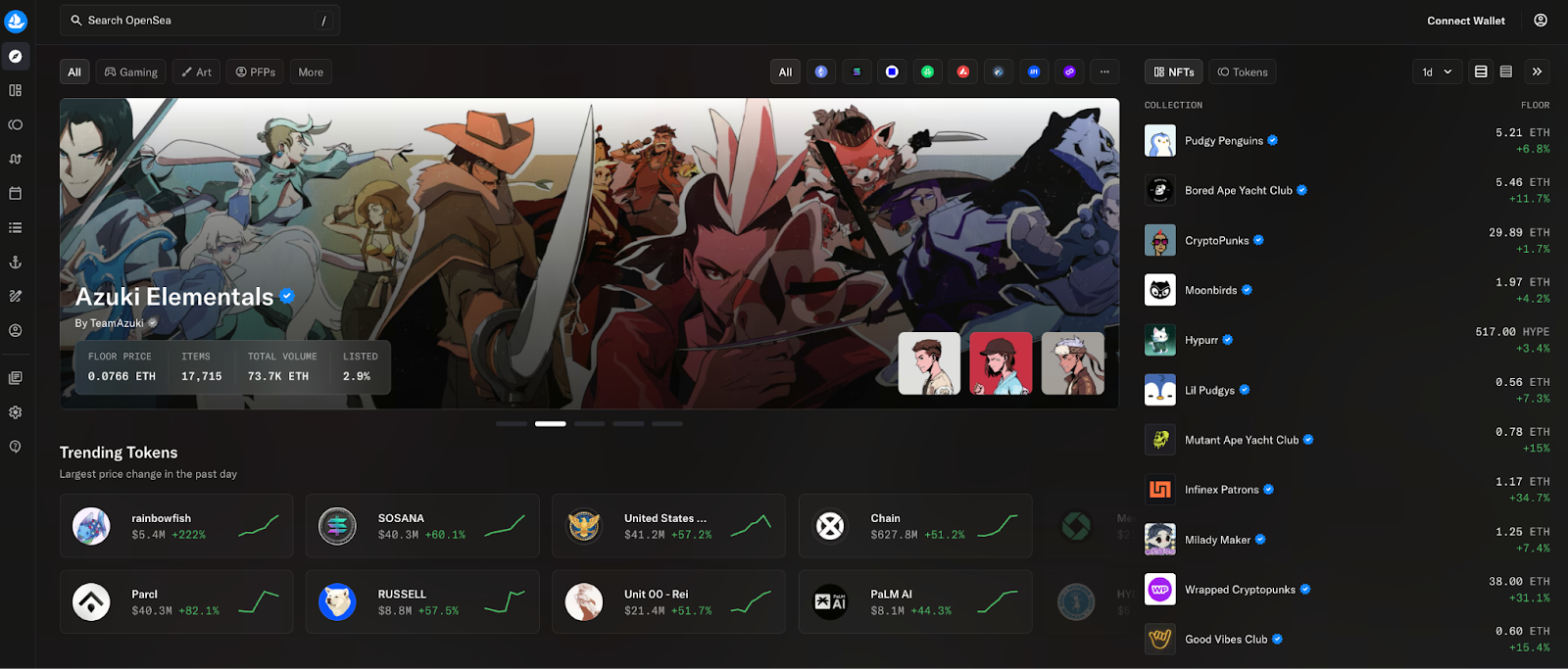
Source: https://opensea.io/
NFTs (Non-Fungible Tokens) are a class of digital assets enabled by blockchain technology that represent unique ownership or rights. Unlike fungible assets such as Bitcoin or Ethereum, each NFT is one-of-a-kind and cannot be exchanged on a one-to-one basis. This uniqueness drives their adoption across digital art, collectibles, gaming, virtual real estate, and community membership applications.
The core value of NFTs lies in their uniqueness, verifiability, programmability, and scarcity. These features make NFTs more than just digital collectibles—they serve as vehicles for digital identity, rights, and interactive experiences. Market focus has shifted from short-term speculation to building sustainable ecosystems and exploring governance models for NFTs.
NFT Market Size Forecast for 2026
Recent market reports project the global NFT market will expand from about $37.2 billion in 2025 to approximately $46.3 billion, marking a strong growth trend. Capital and user participation are flowing into multiple segments, including digital art, gaming assets, and utility NFTs. The market is expected to continue its robust expansion over the next several years.
Additionally, the NFT platform sector—including trading platforms and underlying infrastructure—is forecast to reach $10.8 billion by 2026 and approach $90 billion by 2035. This underscores the critical role that trading and transaction infrastructure plays in driving ecosystem growth.
NFT-as-a-Service (NFTaaS) and Market Growth Drivers
Another notable trend is the emergence of NFT-as-a-Service (NFTaaS). NFTaaS providers deliver end-to-end NFT solutions for enterprises and brands, enabling teams without blockchain expertise to launch NFT products that engage users. The NFTaaS market is projected to reach $3.6 billion by 2026, with a compound annual growth rate of 38%, reflecting strong growth momentum.
Key drivers of NFTaaS growth include:
- Traditional sectors such as sports, entertainment, and retail seeking to enhance digital experiences and user loyalty,
- Brands using NFTs to deepen fan engagement and reward programs,
- The ease of issuing and managing NFTs without requiring deep technical skills.
This trend shows that NFTs are moving beyond the crypto niche and entering mainstream business applications.
Market Trends: Multi-Chain Ecosystems and Interoperability
By 2026, the NFT market will place greater emphasis on cross-chain interoperability and support for multi-chain ecosystems. Leading NFT marketplaces are expanding across blockchains like Ethereum, Polygon, Solana, and Binance Smart Chain, giving collectors more flexibility to access and trade NFTs across different ecosystems.
Fractional ownership is also gaining traction, allowing multiple parties to share high-value NFTs. This boosts liquidity and participation, with the market’s transaction volume surpassing $750 million in 2025 and expected to exceed $1 billion in 2026.
Utility NFTs, Gaming NFTs, and Enterprise Adoption
As the industry matures, NFTs are evolving toward greater utility and integration across diverse use cases:
- Gaming NFTs: In blockchain games, NFTs representing items, characters, or land can generate real-world rewards or benefits for players, powering the play-to-earn economy. This segment is expected to grow rapidly in the coming years.
- Enterprise Adoption: Traditional brands are leveraging NFTs to improve customer engagement through VIP access, exclusive event tickets, and membership tiers, creating ongoing value for users.
- Metaverse Integration: NFTs are being combined with virtual world assets, enabling users to experience tangible ownership in digital spaces.
These trends not only enhance collectible value but also strengthen NFTs’ long-term potential as proof of rights and digital economic assets.
Investment Opportunities and Risk Considerations
Current forecasts and trends indicate the NFT market remains attractive, but it is not without risks:
Investment Opportunities
- Significant expansion potential for NFT platforms and infrastructure,
- Multi-chain and fractional ownership models increase liquidity,
- Enterprise and brand adoption is accelerating NFT mainstream adoption.
Risk Considerations
- Market volatility remains high; NFT prices are sensitive to macroeconomic factors and crypto market sentiment,
- Speculative projects and liquidity risks require careful evaluation,
- Changes in legal and regulatory frameworks could reshape the market landscape.
Therefore, investors and participants should focus on long-term value, ecosystem utility, and team execution rather than short-term price speculation.
Future Outlook: The Long-Term Value Proposition of NFTs
What are NFTs? Their core value is not just price appreciation, but the innovation they bring to digital ownership, identity, and value transfer. As technology matures, use cases expand, and enterprise adoption accelerates, NFTs are positioned to become a foundational element of the future digital economy. Whether you are a collector, developer, or brand, 2026 marks a pivotal growth window—identify future opportunities by prioritizing utility and ecosystem value.