As crypto assets continue to shift from investment tools to payment instruments, the demand for using digital currencies in everyday transactions is steadily increasing. However, traditional payment systems still rely on bank accounts and fiat currencies, which creates a structural barrier between crypto assets and real world usage.
In this context, crypto cards have emerged as a key layer connecting Web3 with the real economy. By integrating with the Visa network, Gate Card allows users to spend crypto globally, enabling direct payments with digital assets and significantly improving overall usability.
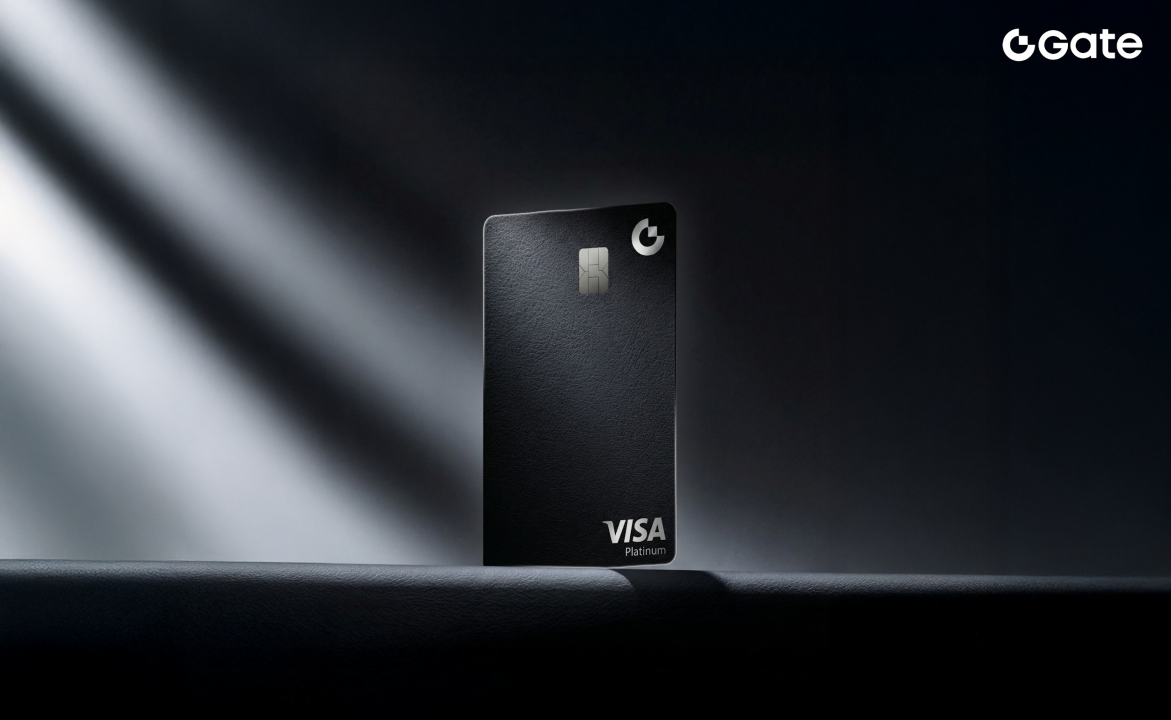
What Is Gate Card?
Gate Card is a crypto credit card product introduced by Gate, allowing eligible users to spend crypto assets or withdraw funds at Visa supported merchants and ATMs.
Its core features include:
-
Automatic conversion of crypto assets into fiat at the point of payment
-
Support for online payments, offline transactions, and ATM withdrawals
-
Direct linkage with the user’s Gate account balance
Gate Card Core Advantages
As a new type of crypto card, Gate Card connects crypto asset ownership directly with real world spending power. Compared with traditional payment tools, it not only improves transaction efficiency but also expands the practical use cases of digital assets.
Automatic Crypto Conversion Reduces Friction
Gate Card automatically converts crypto assets into fiat at the moment of payment. This removes the need for manual selling or transferring funds through banks or third party services, reducing both operational steps and time costs.
Global Payment Coverage Across Merchants
Built on the Visa network, Gate Card can be used at over 130 million merchants worldwide, supporting both online and offline payments as well as ATM withdrawals. It offers both virtual and physical card options and can be linked to Google Pay, enabling flexible payment experiences across devices and scenarios.
Multi Asset Cashback Incentives
Users can receive rewards in multiple assets such as BTC, ETH, USDT, or GT after spending. With a transaction fee of around one percent, higher tier users may offset costs through cashback and potentially gain additional value, with monthly rewards reaching up to 250 USDT.
Direct Account Integration Without Top Up
Gate Card is directly linked to the user’s Gate account, removing the need for separate card funding. This allows real time access to funds, simplifies asset management, and improves capital efficiency.
ATM Withdrawal Support Enhances Liquidity
With a physical card, users can withdraw cash from ATMs, enabling a direct conversion path from crypto assets to fiat cash when needed.
Gate Card Use Cases
By transforming crypto holdings into direct spending power, Gate Card serves as a bridge between on-chain assets and the real economy, making it applicable across a wide range of everyday scenarios:
-
Cross border e commerce shopping such as Amazon and AliExpress
-
Everyday spending, including dining, retail, and transportation
-
Subscription services such as Netflix and Spotify
-
International travel payments
-
ATM cash withdrawals
Gate Card vs Traditional Credit And Debit Cards
Compared with traditional credit and debit cards, Gate Card differs in its underlying asset structure. It is based on crypto holdings and includes real time conversion into fiat at the moment of payment, which gives it greater flexibility in cross border usage and asset management.
| Comparison Dimension |
Gate Card |
Credit Card |
Debit Card |
| Source of Funds |
Crypto assets |
Bank credit line |
Bank deposits |
| Conversion Requirement |
Automatic conversion |
Not required |
Not required |
| Global Payments |
Supported via Visa |
Supported |
Supported |
| Asset Type |
Digital assets |
Fiat currency |
Fiat currency |
| Entry Requirement |
Moderate with KYC |
Higher with credit checks |
Low |
How To Apply For a Gate Card
Applying for a Gate Card typically involves the following steps:
-
Register and log in to a Gate account
-
Complete Level 2 identity verification (KYC)
-
Submit proof of address and identity documents
-
Select a card type on the official platform and submit the application
-
Wait for approval and activate the card
It is important to note that Gate Card is only available in supported regions, and final approval depends on compliance and risk assessment.
What Risks Should Be Considered When Using a Gate Card?
While Gate Card operates within a compliance framework, users should still be aware of the following risks:
-
Price volatility risk: crypto price changes may affect the actual payment cost
-
Exchange rates and fees: transactions may involve conversion spreads and fees
-
Regulatory restrictions: availability may vary depending on local policies
-
Account security risk: users must protect account credentials and private information
Who Should Use a Gate Card:?
Gate Card is suitable for the following types of users:
-
Users who hold crypto assets and want to spend them directly
-
Individuals who frequently make cross border payments or travel internationally
-
Web3 native users such as those involved in DeFi or NFT ecosystems
-
Traders who want to reduce manual fiat conversion steps and improve efficiency
The Role Of a Gate Card In Web3 Payments
The emergence of Gate Card reflects a broader shift in how crypto assets are used, moving from purely investment instruments toward practical payment tools. By connecting on-chain assets with real world payment networks, Gate Card acts as a bridge between the crypto economy and traditional financial systems, enabling more seamless everyday transactions.
This integration also supports the expansion of Web3 into broader commercial use cases. As crypto payments become more accessible, products like Gate Card contribute to the convergence of decentralized finance and traditional finance by providing a usable infrastructure layer for real world adoption.
Conclusion
Gate Card provides a convenient, secure, and efficient way to use crypto assets in daily life. Through its global payment capability and automatic conversion mechanism, it simplifies the user experience and enhances the practical utility of digital assets.
For users looking to improve how their assets are used beyond holding or trading, Gate Card represents a meaningful step toward integrating crypto into everyday financial activity.
FAQs
Does Gate Card support global usage?
Yes, through the Visa network, Gate Card can be used at most merchants worldwide.
Does Gate Card require top up?
No, it is directly linked to the user’s account balance.
Can Gate Card be used for withdrawals?
Yes, the physical card supports ATM withdrawals, although fees may apply.
Is Gate Card available to all users?
No, it is only available to users who meet KYC requirements and are located in supported regions.
How does asset conversion work when paying with Gate Card?
The system automatically converts crypto assets into fiat currency based on real time exchange rates at the moment of payment.