Gas: A Common Challenge in the Multi-Chain Era
As the Web3 ecosystem expands, users are no longer confined to a single blockchain. Interacting with DeFi on the Ethereum mainnet, executing low-cost transactions on Layer 2 networks, or managing assets across different EVM environments has become routine for many crypto users.
In this multi-chain landscape, one seemingly simple detail often creates frustration—preparing gas fees.
Every blockchain requires its native token to pay transaction fees, for example:
- Ethereum requires ETH
- BNB Chain requires BNB
- Polygon requires POL
If your wallet doesn’t contain the required token, you can’t send a transaction—even if you have sufficient assets.
For users who frequently operate across chains, constantly topping up gas tokens often becomes a major obstacle to a seamless experience.
Gate Gas Station: Making Gas Management a Core Service
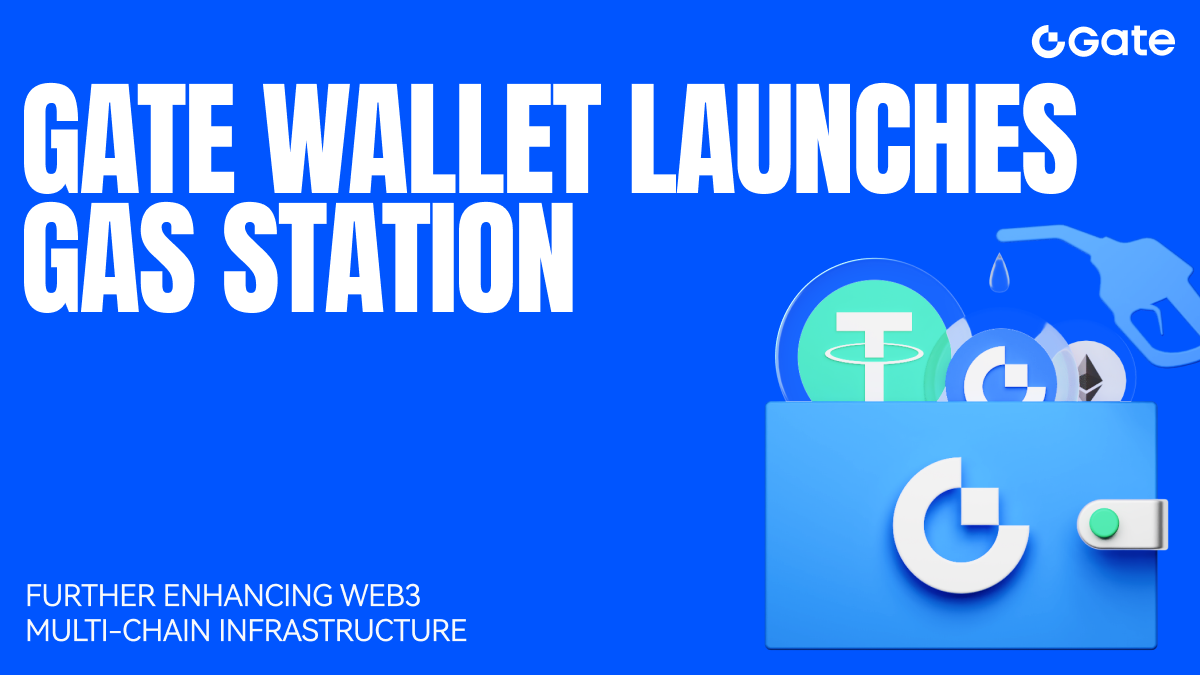
To solve this problem, Gate introduced the Gas Station mechanism. Unlike traditional gas top-up tools, it does more than simply offer a swap service—it directly integrates gas payment into the platform’s architecture.
With this system:
- Each EVM wallet establishes a dedicated gas account
- When the system detects insufficient gas for a user transaction
- The platform automatically pays the transaction fee
This process runs entirely in the background. Users don’t need to take extra steps or swap tokens in advance.
From a user perspective, transactions are no longer interrupted by gas shortages, making the experience much closer to standard digital payments.
Cross-Chain Shared Gas Pool Mechanism
Another key innovation of Gate Gas Station is its unified gas payment pool.
Currently, the system supports multiple leading EVM networks, including BNB Chain, Polygon, Avalanche, Base, and Linea. Traditionally, users had to prepare native tokens on each chain. With the Gas Station architecture, users can deposit different crypto assets to create a centralized gas pool.
When you make a transaction:
- The system identifies the required chain and gas fee
- It automatically deducts the corresponding cost from your gas pool
- The transaction fee is paid
This approach makes cross-chain operations feel like using a single account system, rather than repeatedly preparing resources across different blockchains.
Streamlining the Transaction Experience
As Web3 applications multiply, feature count is no longer the only competitive edge—the true differentiator is a seamless user experience.
In the traditional model, a single transaction often requires you to check:
- Which chain you’re on
- Whether you have enough gas tokens
- If you need to swap or bridge assets first
These extra steps continually disrupt the transaction process.
The core value of Gas Station is to remove gas management from the user’s checklist. You no longer need to prepare transaction fees in advance—you can simply execute your desired transaction or interaction. As the process is simplified, the barrier to multi-chain usage naturally falls.
Balancing Automation and Asset Control
While prioritizing convenience, asset security remains central to system design. The Gas Station’s automatic payment mechanism is strictly limited to transaction fees and does not involve:
- Transferring user assets
- Additional asset authorizations
- Changes to smart contract control
All transactions and fund movements are viewable in the system, ensuring transparency and traceability. Users retain complete control over their assets, while the platform handles the convenience of gas payments.
Advancing Toward a Mature Multi-Chain Ecosystem
As multi-chain structures become a long-term trend in blockchain, the real challenge shifts from technical barriers to seamless user experience.
Gate Gas Station, through:
- Automated gas payments
- A cross-chain shared payment pool
- Eliminating the need to manually prepare native tokens
transforms previously fragmented and tedious gas management into platform-level infrastructure.
This seamless optimization requires virtually no learning curve for users, yet dramatically boosts cross-chain efficiency.
Conclusion
As Web3 applications move toward mass adoption, user experience becomes increasingly vital. Gas fee management, while just one small part of the transaction process, has a direct impact on operational smoothness. Gate Gas Station’s automated and centralized design reduces friction in multi-chain transactions, allowing users to focus on strategy and asset allocation. When transaction fees are no longer a barrier, the multi-chain ecosystem’s potential can truly be unlocked. This kind of user experience upgrade will be a critical step in driving broader Web3 adoption.