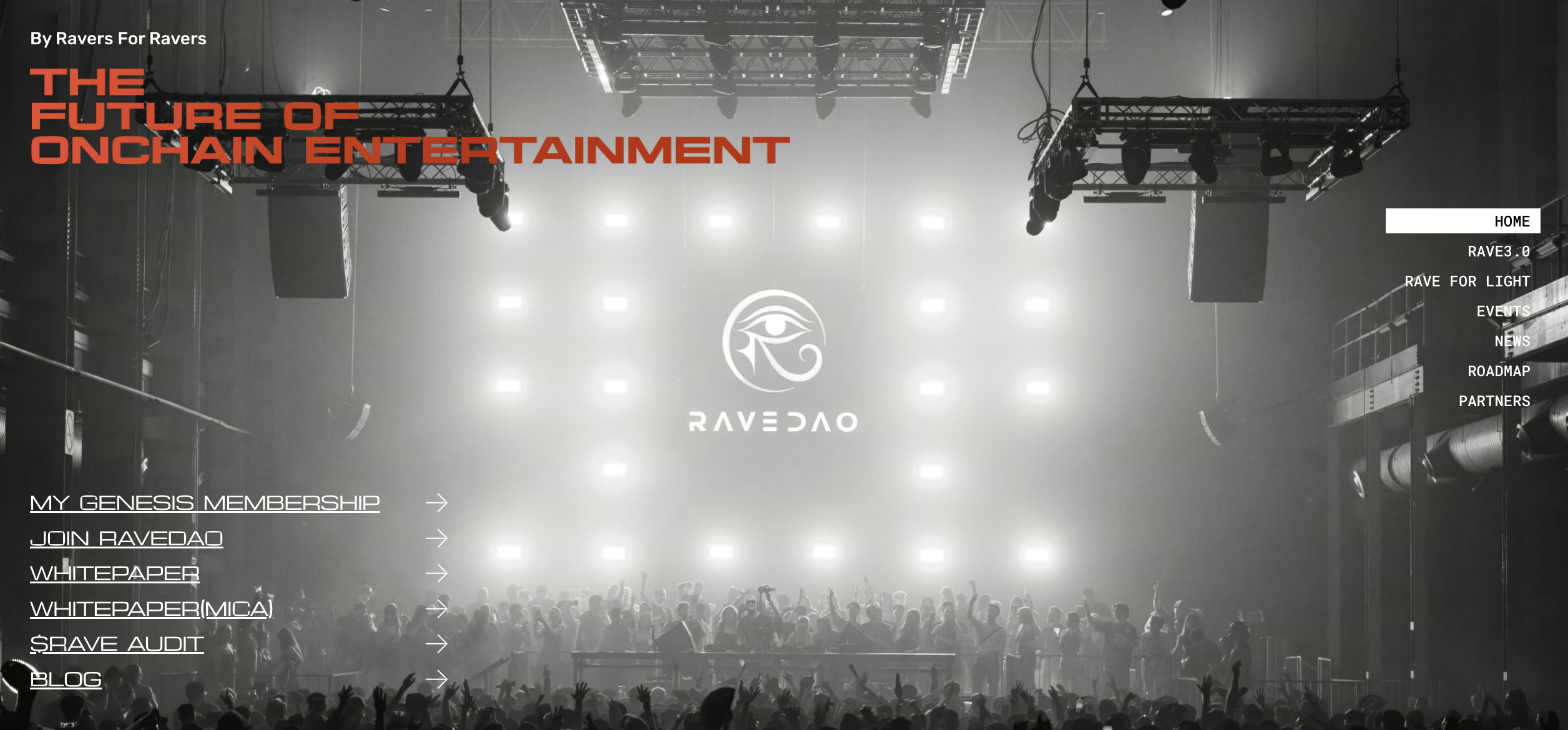
Image source: RaveDAO Official Website
In today's market, tokens driven solely by concepts are finding it increasingly difficult to maintain long-term competitiveness. Projects that address real-world needs are more likely to weather market cycles. RaveDAO stands out by tackling a critical question: Can entertainment consumption be transformed into sustained on-chain collaboration, ultimately creating a reusable and scalable community economic model?
This analysis examines RaveDAO from seven key perspectives: tokenomics, technical architecture, governance mechanisms, DeFi use cases, platform differentiation, risk assessment, and future potential. Recent public updates are integrated to provide a holistic framework—combining business fundamentals, on-chain data, and market structure—to guide reader insights.
RAVE Tokenomics and Distribution Mechanism
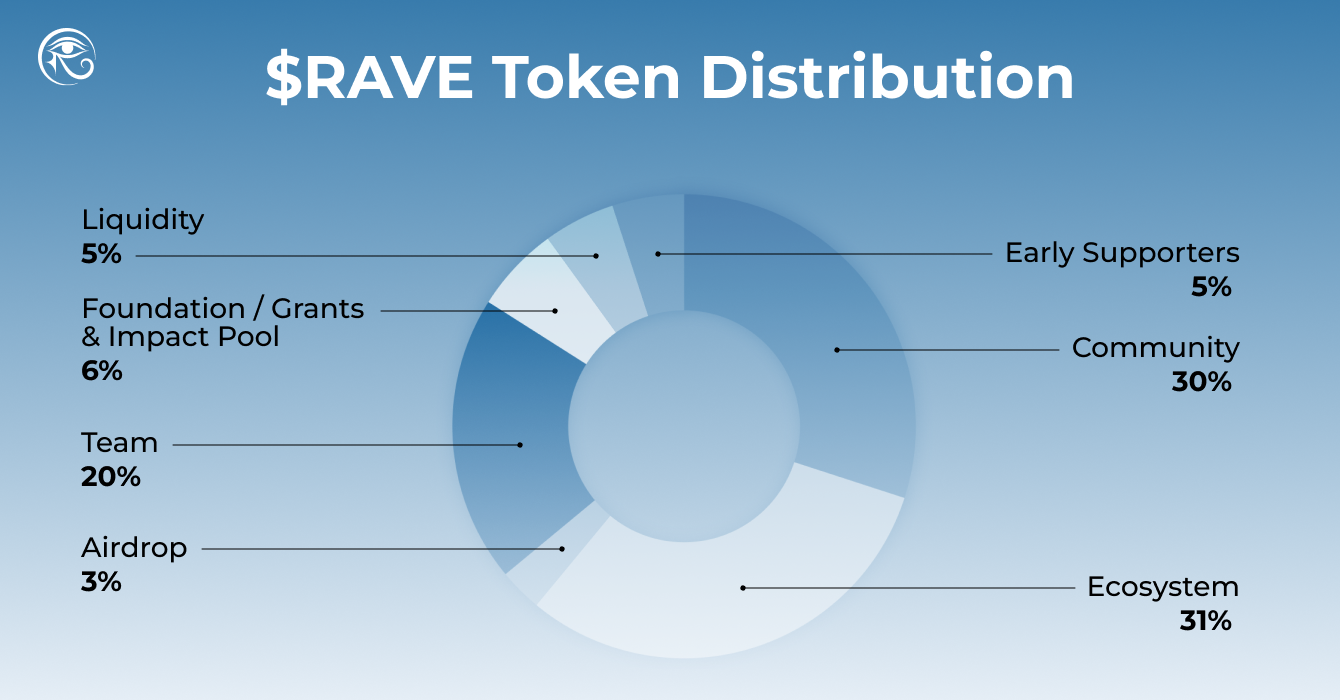
Image source: RaveDAO Official Documentation
According to the official white paper, the RAVE token has a fixed maximum supply of 1 billion. The market's main focus is not on total supply, but on the pace and structure of its release. Disclosures show that about 23.03% of tokens entered circulation at the TGE, with the remainder subject to a 12-month cliff and a 36-month linear vesting schedule.
Primary allocations include:
- Community incentives and ecosystem expansion
- Team and joint builders
- Initial airdrop and liquidity pool
- Influence and public welfare funds
- Early supporters and strategic partners
This design aligns long-term incentives but presents two practical challenges:
- If new token circulation outpaces actual user demand, secondary market pressure increases.
- When trading activity is concentrated in short-term hotspots, price volatility is amplified.
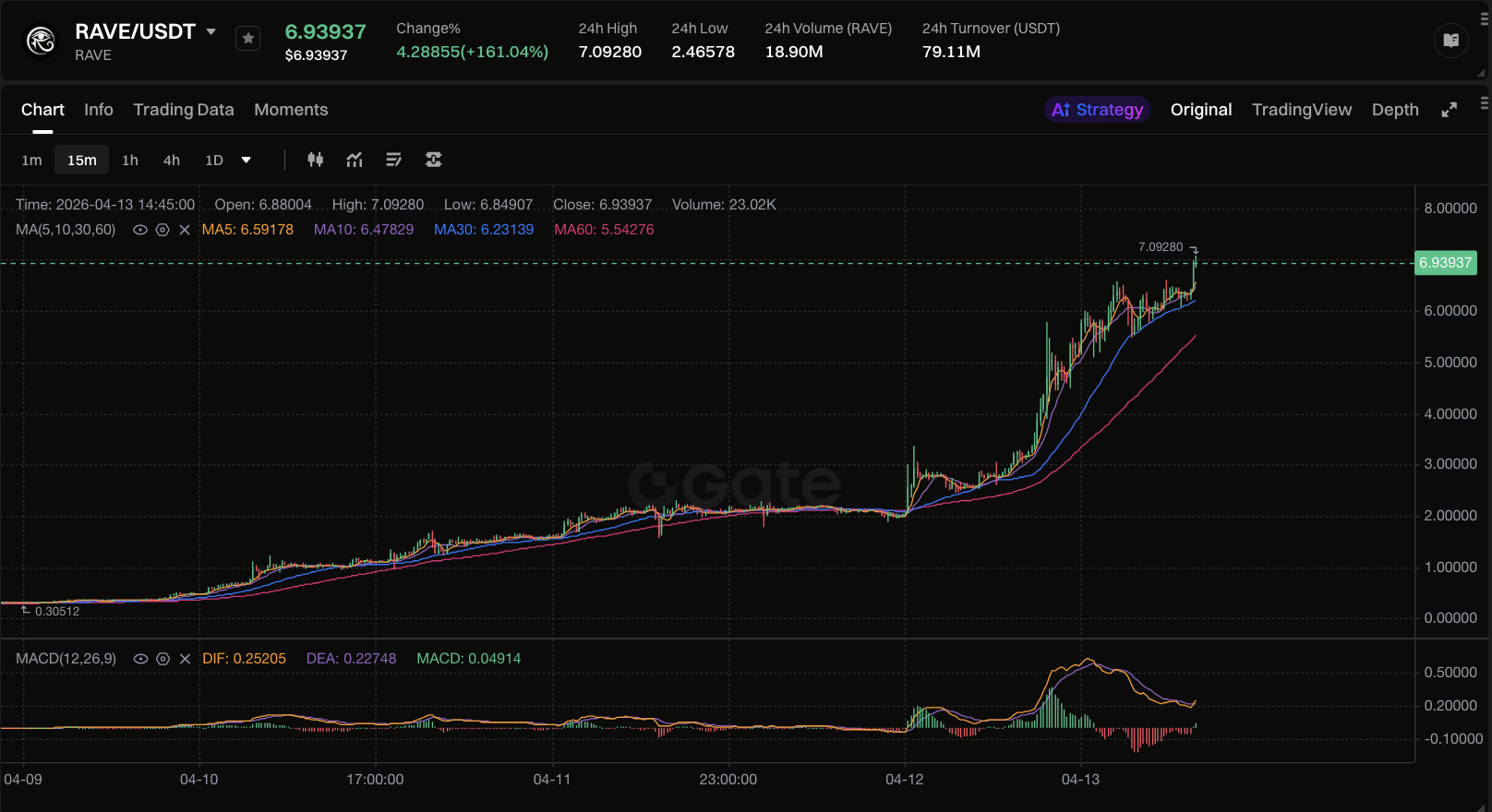
Image source: Gate Market Page
Recently, RAVE has seen sharp price increases over short periods, with trading volume and volatility rising in tandem. Market discussions about its circulation and valuation structure have intensified. For analysts, it's advisable to track the MC/FDV ratio, the potential new circulating supply over the next 90 days, and liquidity depth changes in major trading pairs—rather than focusing solely on daily price swings.
Core Technology and Architecture of RaveDAO
RaveDAO does not operate its own Layer 1 blockchain; instead, it uses a multi-chain deployment model and currently supports Ethereum, Base, and BNB Chain. The technical approach emphasizes compatibility and ease of integration for wallets, exchanges, NFT infrastructure, and partner systems.
The architecture is structured into three layers:
- Asset Layer: RAVE exists as ERC-20/BEP-20 compatible tokens, enabling cross-ecosystem circulation and integration.
- Application Layer: Supports event ticketing, membership benefits, digital collectibles, and community engagement.
- Governance and Incentives Layer: Enables community collaboration through proposals, voting, and rewards.
From an engineering standpoint, this "multi-chain + scenario-based application" architecture offers two main benefits:
- Lowers barriers to entry and expands cross-platform reach.
- Links on-chain activity with offline event data, creating verifiable participation records.
However, technical constraints remain: multi-chain environments increase contract management and operational complexity. Consistent cross-platform experience, transparent asset mapping, and transaction confirmation efficiency under heavy load all impact user retention.
RaveDAO's Decentralized Governance and Community Participation
RaveDAO governance focuses on community co-creation, but professional assessment must distinguish between "governance expression" and actual "protocol control." Public documents show that RAVE holders can participate in ecosystem proposals, activity discussions, and resource allocation input—forming a participatory governance model.
Community participation typically includes:
- Soliciting feedback on event themes, collaboration directions, and community plans
- Voting and providing input via on-chain or official governance portals
- Engaging in chapter-based operations and local event collaboration
To evaluate governance effectiveness, focus on these metrics rather than slogans:
- Proposal count and implementation rate
- Voting address activity and repeat participation
- Alignment between governance outcomes and business actions
- Timeliness and traceability of key decision disclosures
If governance remains superficial, the token's governance premium will erode quickly. Genuine improvements in product and operations, however, can drive compounding benefits for community assets.
RaveDAO's DeFi Use Cases
While RAVE is not a traditional DeFi protocol, it is gaining DeFi utility as trading depth and platform integrations grow. Recent updates show RAVE entering derivatives markets, boosting liquidity and leverage participation.
Current and potential use cases include:
- Spot liquidity: Centralized and decentralized markets both provide trading access
- Staking and loyalty incentives: Lock-up mechanisms enhance holding stability and equity alignment
- Collateral and strategy portfolios: Connect with yield strategies or lending modules under controlled risk
- Financialization of events: Link ticketing, membership, and brand collaboration revenues to on-chain asset models
It is critical to note that improved derivatives liquidity does not mean improved fundamentals. Leverage trading increases price discovery efficiency but also amplifies volatility. For most users, RAVE's DeFi value should be assessed first by real usage growth, then by financial tool diversity.
Unlike typical governance or protocol DAOs, RaveDAO's roots are in offline entertainment and cultural events—not native on-chain financial services. It operates as a hybrid "cultural gateway + on-chain accumulation" model.
Key differences include:
- User entry: Most DAOs start with on-chain users; RaveDAO starts with event participants.
- Value proposition: Traditional DAOs focus on protocol revenue and governance; RaveDAO emphasizes event participation and community identity.
- Growth engine: Traditional DAOs rely on product iteration; RaveDAO relies on both event execution and brand collaboration.
- Risk profile: Traditional DAOs are exposed to smart contract and governance risks; RaveDAO also faces offline performance and regional compliance risks.
As such, RaveDAO should not be valued solely by DeFi metrics but rather as a "platform token + community consumption network." Its core strengths lie in cross-city replication, partner retention, and user loyalty—not just short-term traffic.
Key Risks to Consider When Investing in RAVE
During periods of heightened attention, risk management outweighs return expectations. Based on recent public market activity, RAVE's primary risks include:
- Price and liquidity volatility: Large swings in price and trading volume over short periods
- Supply structure risk: Significant gap between total and circulating supply; future unlocks may impact price anchors
- Sentiment-driven risk: Hot events, new listings, and derivatives access can trigger overreactions
- Execution and operational risks: Activity-focused ecosystems demand strong execution, partner fulfillment, and cash flow management
- Compliance and platform risks: Cross-border operations and multi-platform trading are subject to regulatory and platform rule changes
Recommended risk controls:
- Set position limits for individual assets to avoid emotional overexposure
- Closely monitor unlock and new circulation calendars for the next 3–6 months
- Separate "trading activity" from "fundamental improvement" in analysis
- Remain conservative in high-leverage scenarios and prioritize drawdown control
Additionally, some third-party commentary has raised concerns about concentrated holdings and abnormal volatility. Such claims should be cross-verified using on-chain address distribution, exchange net flows, and position structure data.
RaveDAO (RAVE): Future Directions and Market Potential
RaveDAO's medium- and long-term potential depends on whether it can shift from "event-driven growth" to "system-driven growth." Success in a single event does not guarantee platform success—sustainable reuse is key.
Areas to watch include:
- Global chapter network expansion: Can the event + community model be replicated in more cities?
- Digital equity deepening: Will NFT ticketing, membership systems, and brand collaborations drive repeat engagement?
- Governance upgrades: Can community participation move from voting to measurable execution contributions?
- Financial layer integration: Can more mature staking and yield scenarios be developed under manageable risk?
- Compliance capabilities: Are information disclosure and user protection mechanisms improving as the platform operates across jurisdictions?
If RaveDAO can consistently improve offline-to-online conversion and maintain real-world RAVE utility beyond trading, its valuation model will become more robust. If ecosystem growth remains dependent on short-term trends and events, price volatility is likely to persist.
In summary, RAVE has the potential to become a flagship project in the Web3 entertainment sector. However, long-term success hinges on three verifiable factors:
- Sustainable business expansion
- Measurable user retention
- Alignment of token supply schedule with demand growth
When these three elements align, RaveDAO's "cultural traffic assetization" can transition from narrative to structural value.
FAQs
Q1: What type of token is RAVE?
A: RAVE is primarily a utility and participation token within the RaveDAO ecosystem, connecting events, community, and equity use cases.
Q2: What is RAVE's total supply?
A: The maximum supply is 1 billion tokens, with actual circulation and unlocks subject to official real-time disclosures.
Q3: What are the key metrics for analyzing RAVE?
A: Focus on circulation ratio, unlock schedule, trading depth, event conversion rate, and retention of active on-chain addresses.
Q4: What are RAVE's core risks?
A: High volatility, changes in supply structure, execution uncertainty, and cross-border compliance risks.
Q5: How should RAVE be understood?
A: It is best viewed as a "scenario-driven participation token" rather than just a short-term trading vehicle.