As the blockchain ecosystem evolves, the volume of on-chain data is expanding rapidly. From DeFi protocols to NFT marketplaces and DAO governance platforms, decentralized applications generate massive amounts of transaction and status data every day. However, with the complex structure of blockchain data storage, directly reading and querying on-chain data is extremely costly for developers, making data access a major bottleneck in Web3 application development.
The Graph emerged as a decentralized indexing protocol in response to this challenge. As the Web3 ecosystem grows, The Graph is becoming a foundational component of the blockchain data layer.
What Is The Graph (GRT)?
The Graph is a decentralized Web3 data indexing protocol that delivers efficient data access for DeFi, NFT, and DAO applications by decentralizing the indexing and querying of blockchain data. It creates an open indexing network that transforms complex on-chain data into easily accessible data interfaces, allowing developers to retrieve blockchain data as seamlessly as calling an API.
Within the Web3 infrastructure, The Graph is often described as the “Google for blockchains,” providing foundational data support for the decentralized ecosystem and bridging blockchain data with the application layer.
How Does The Graph Address Blockchain Data Query Challenges?
Traditional internet applications can quickly retrieve data through databases, but blockchain data is typically stored as event logs and transaction records, making it inefficient to read. Without dedicated indexing tools, developers must run full nodes and process on-chain data themselves—an approach that is both costly and detrimental to application performance.
The Graph’s core function is to index blockchain data, enabling developers to retrieve the information they need quickly. By defining Subgraphs, developers specify which data to index. Nodes within The Graph network then capture and organize this data, making it available through a unified interface. This dramatically reduces development complexity and allows DApps to operate more efficiently.
How The Graph Works
The Graph’s data indexing mechanism is built on the collaboration of three core components: Subgraph, Indexer, and GraphQL.
Subgraph: Data Indexing Rules
A Subgraph is a core concept in The Graph—essentially a template for on-chain data indexing rules. Developers define Subgraphs to specify which Smart Contract events to monitor and how to structure the resulting data. This process organizes previously scattered blockchain data for efficient querying.
Indexer: Data Processing Nodes
Indexers are node operators in The Graph network responsible for executing data indexing tasks. They run Graph Node clients, extract on-chain data according to Subgraph rules, and respond to user queries. In return, Indexers earn query fees and protocol rewards.
GraphQL: Data Query Interface
GraphQL is the data query language provided by The Graph. Developers use GraphQL to request only the data they need, eliminating the need to scan the entire blockchain. This approach improves efficiency and reduces resource consumption, making Web3 data access as seamless as traditional internet services.
What Is the Utility of the GRT Token?
GRT is the native utility token of The Graph network, serving as the medium for payments, incentives, and governance.
Developers and applications use GRT to pay query fees for The Graph’s data services, creating fundamental network demand.
Indexers and Delegators must stake GRT to participate in network operations. Indexers stake tokens to qualify for indexing, while Delegators delegate GRT to Indexers in exchange for a share of returns—enhancing protocol security.
GRT also enables governance, allowing token holders to participate in protocol upgrades and parameter changes. This token-driven model powers a decentralized data service network.
Key Participants in The Graph Network
The Graph network is composed of four main participants: Indexers, Curators, Delegators, and Consumers.
Indexers operate nodes and index data, serving as the network’s core executors. Curators identify high-value Subgraphs and guide resource allocation. Delegators stake GRT to support Indexers and earn returns. Consumers are developers or DApps using the query services.
Together, these roles create a collaborative system that enables The Graph to deliver stable, decentralized data services.
What Are The Graph’s Application Scenarios?
The Graph’s primary use cases are in Web3 sectors that require frequent access to on-chain data.
In DeFi, lending protocols and decentralized exchanges rely on real-time queries for asset prices, liquidity, and transaction history—use cases that The Graph supports with efficient data interfaces.
In the NFT space, marketplaces need to quickly retrieve NFT ownership and transaction histories, and The Graph enables projects to build data display features rapidly.
For DAO governance, proposal voting and governance record queries also depend on efficient indexing. In short, any Web3 application requiring on-chain data access can benefit from The Graph.
The Graph vs. Chainlink: What’s the Difference Between These Web3 Infrastructure Protocols?
The Graph and Chainlink are both essential Web3 infrastructure protocols, but they address distinct problems.
In summary, The Graph focuses on “reading blockchain data,” while Chainlink brings “off-chain data on-chain.” Though both are critical blockchain infrastructure, they differ in core functions, network roles, and value propositions.
| Comparison Dimension |
The Graph |
Chainlink |
| Core Function |
On-chain Data Indexing |
Off-chain Data Oracle |
| Main Role |
Blockchain Data Query |
External Data Input |
| Primary Users |
DApp Developers |
Smart Contracts |
| Token Utility |
Query Fees, Staking |
Node Payment, Staking |
| Typical Scenarios |
DeFi Data Query, NFT Data Indexing |
Price Oracles, Cross-chain Communication |
| Network Value Source |
On-chain Query Demand |
Off-chain Data Demand |
What Drives GRT’s Value?
GRT’s value is primarily driven by network usage and staking demand.
As more DApps use The Graph to query data, demand for GRT payments increases, enhancing its utility. Staking by Indexers and Delegators also reduces circulating supply, supporting the token’s price.
Additionally, as The Graph’s role as foundational Web3 data infrastructure grows, its value is bolstered by long-term ecosystem expansion. Sustained growth in Web3 applications will likely increase demand for The Graph’s network, reinforcing GRT’s value proposition.
What Risks and Challenges Does The Graph Face?
Despite its leading position in decentralized data indexing, The Graph faces several risks.
First, protocol revenue growth depends on the expansion of Web3 applications. If overall market growth slows, GRT demand could be impacted.
Second, competition in the data infrastructure space is intensifying, with other indexing protocols posing potential challenges.
Additionally, GRT token releases and market volatility can affect price performance. Assessing GRT’s long-term value requires attention to both technology adoption and tokenomics.
What Is The Future Outlook for The Graph?
As the Web3 ecosystem expands, demand for on-chain data access will continue to grow. The Graph, as a decentralized indexing protocol, plays a critical role in enhancing blockchain data accessibility, and its infrastructure value is expected to increase.
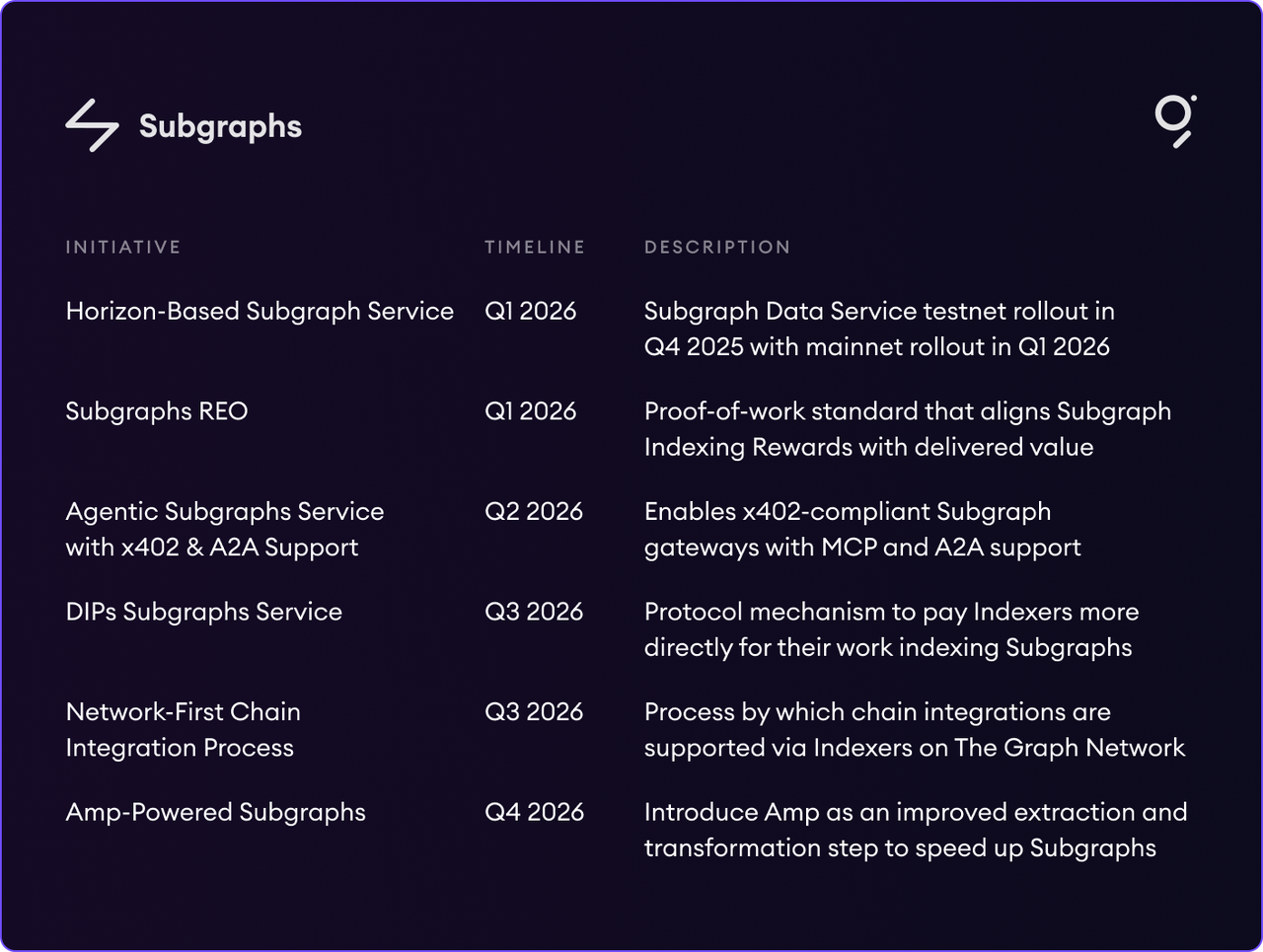 The Graph 2026 Roadmap, Source: The Graph
Looking ahead, as more public blockchains, Layer 2 networks, and new DApps integrate with The Graph, query demand is likely to rise. The development of AI and on-chain data analytics may also create new growth opportunities.
If The Graph continues to expand its developer ecosystem and increase protocol revenue, GRT’s value as Web3 infrastructure should strengthen further.
Summary
As a cornerstone of the Web3 data indexing infrastructure, The Graph delivers efficient on-chain data query services to developers through its decentralized network. Its core value lies in lowering the barrier to blockchain data access and boosting decentralized application development efficiency. GRT, the protocol’s native token, is essential for payments, staking, and governance.
With the expansion of Web3 applications, The Graph’s infrastructure status is set to climb, though its long-term value will depend on network usage growth and ecosystem competition.
FAQs
What does The Graph (GRT) do?
The Graph is a decentralized blockchain data indexing protocol that enables developers to quickly query on-chain data, supporting DeFi, NFT, and DAO applications.
What is the role of the GRT token?
GRT is used for query fee payments, node staking rewards, and network governance. It is a key incentive in The Graph network.
Why is The Graph called the “Google for blockchains”?
The Graph indexes blockchain data and provides efficient query services, much like Google indexes and enables search for web data.
Does The Graph have investment value?
The Graph’s value is driven by the growth in demand for Web3 data queries. If network usage rises, GRT’s long-term value may increase, though competition and market risks remain.







