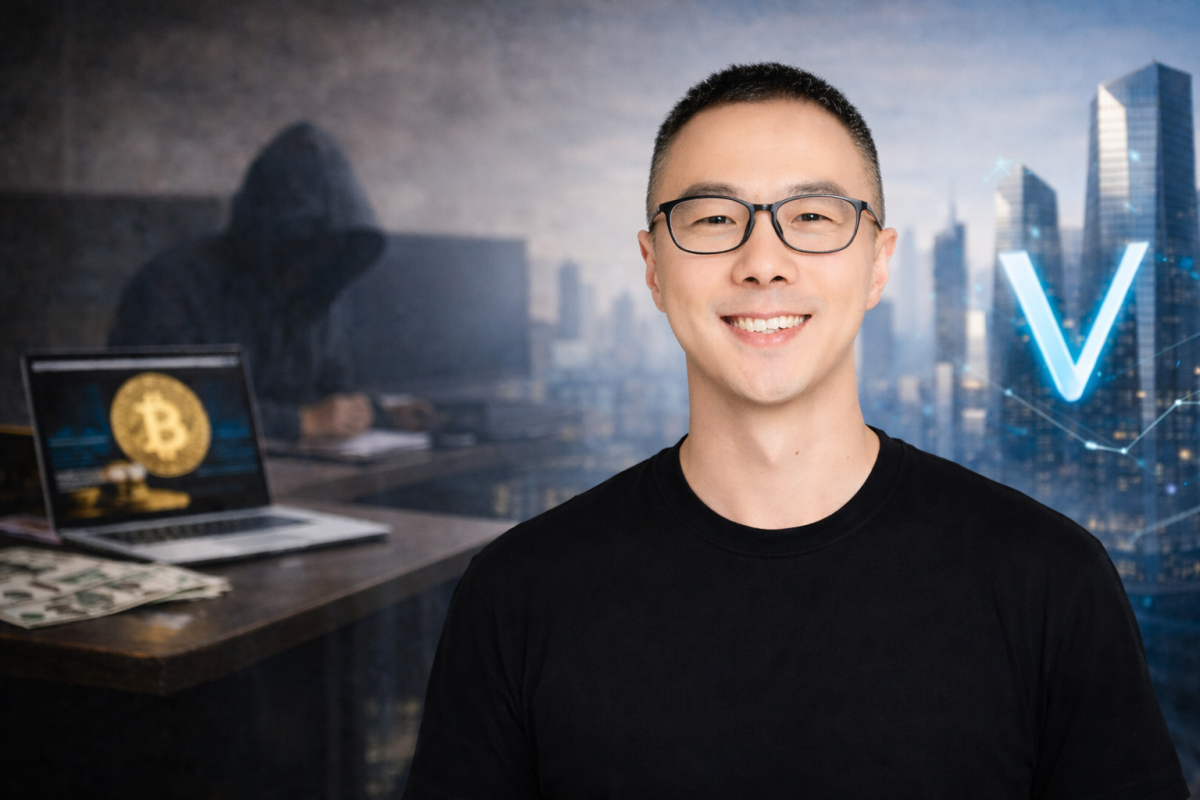
- VeChain’s Sunny Lu got into crypto after losing $300 on an unsuccessful 100 BTC purchase on Taobao, which led him to research Bitcoin.
- Later, Lu used blockchain to track supply chains and launched VeChain in 2015 to target verification and enterprise applications.
The crypto journey of Sunny Lu, the founder and CEO of VeChain, started with a loss. In 2012, he tried to buy 100 BTC through a Taobao listing in his search for gold for World of Warcraft. He paid about $300, but the Bitcoin never arrived.
The failed purchase did not push him away from the technology. Rather, it sparked curiosity. The VeChain founder read the Bitcoin whitepaper and took a keen interest in the underlying blockchain system. What he found most interesting was the concept of a ledger that did not use a central party and could store records.
In 2012, Sunny Lu’s crypto journey began after being scammed out of 100 Bitcoin trying to buy gold in World of Warcraft.
That scam sent him down a path that reshaped enterprise blockchain forever.
This is the origin story of Sunny Lu and VeChain. 🧵 pic.twitter.com/MRBjrh8i2q
— VeChain (@vechainofficial) March 5, 2026
That interest matched his professional background. Lu had worked in data and telecommunications, where handling complex information systems was already part of his career. Later, at Louis Vuitton China, he managed information systems and worked on tracking products through production and distribution.
The main challenge facing his industry was that supply chain data was stored across several systems, each controlled by different parties. As a result, it was hard to create a trusted record that everyone could access simultaneously. Blockchain presented an alternative, with data being shared with various parties on a common ledger.
How Lu’s Early Setback Led to VeChain
The concept formed the foundation of VeChain in 2015. The project launched to focus mainly on business applications, especially in supply chains and product verification. Its original concept centered on recording trusted data across several participants without handing control to a central party.
During that period, Lu also spent time discussing blockchain design and smart contracts with Ethereum co-founder Vitalik Buterin in Shanghai. Those exchanges helped sharpen the view that enterprise use cases required infrastructure built specifically for that purpose. Rather than force those needs onto networks designed for other goals, Lu moved toward building a dedicated platform.
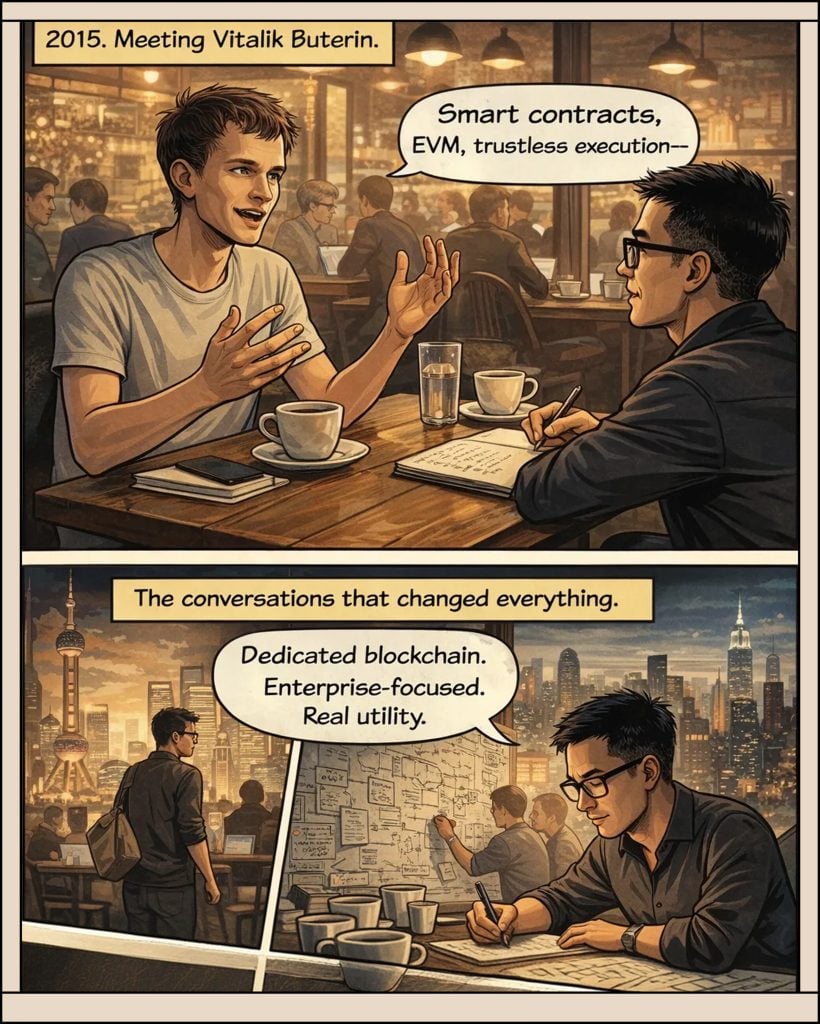
Image courtesy of VeChain.
VeChain took shape around real business activity. It developed tools for tracing goods, verifying authenticity, and linking physical products to digital records. This approach gave companies a way to record product history in a format that different stakeholders could verify.
Over time, that model was adopted in several commercial settings. Walmart China used VeChain for food traceability. BMW introduced VerifyCar to address vehicle history and mileage concerns. UFC used NFC-based verification for selected auction items. These cases tied the network to direct business use cases, rather than market speculation.
The project later expanded beyond enterprise tracking. VeBetter added applications that reward verified daily actions such as recycling, exercise, sustainability and community cleanup efforts.
This week, VeChain’s VeBetter ecosystem passed 48 million verified actions across more than 50 live apps. CNF reported that over 5.2 million wallets now earn weekly B3TR rewards through the network’s incentive system.
Disclaimer: The information on this page may come from third parties and does not represent the views or opinions of Gate. The content displayed on this page is for reference only and does not constitute any financial, investment, or legal advice. Gate does not guarantee the accuracy or completeness of the information and shall not be liable for any losses arising from the use of this information. Virtual asset investments carry high risks and are subject to significant price volatility. You may lose all of your invested principal. Please fully understand the relevant risks and make prudent decisions based on your own financial situation and risk tolerance. For details, please refer to
Disclaimer.


