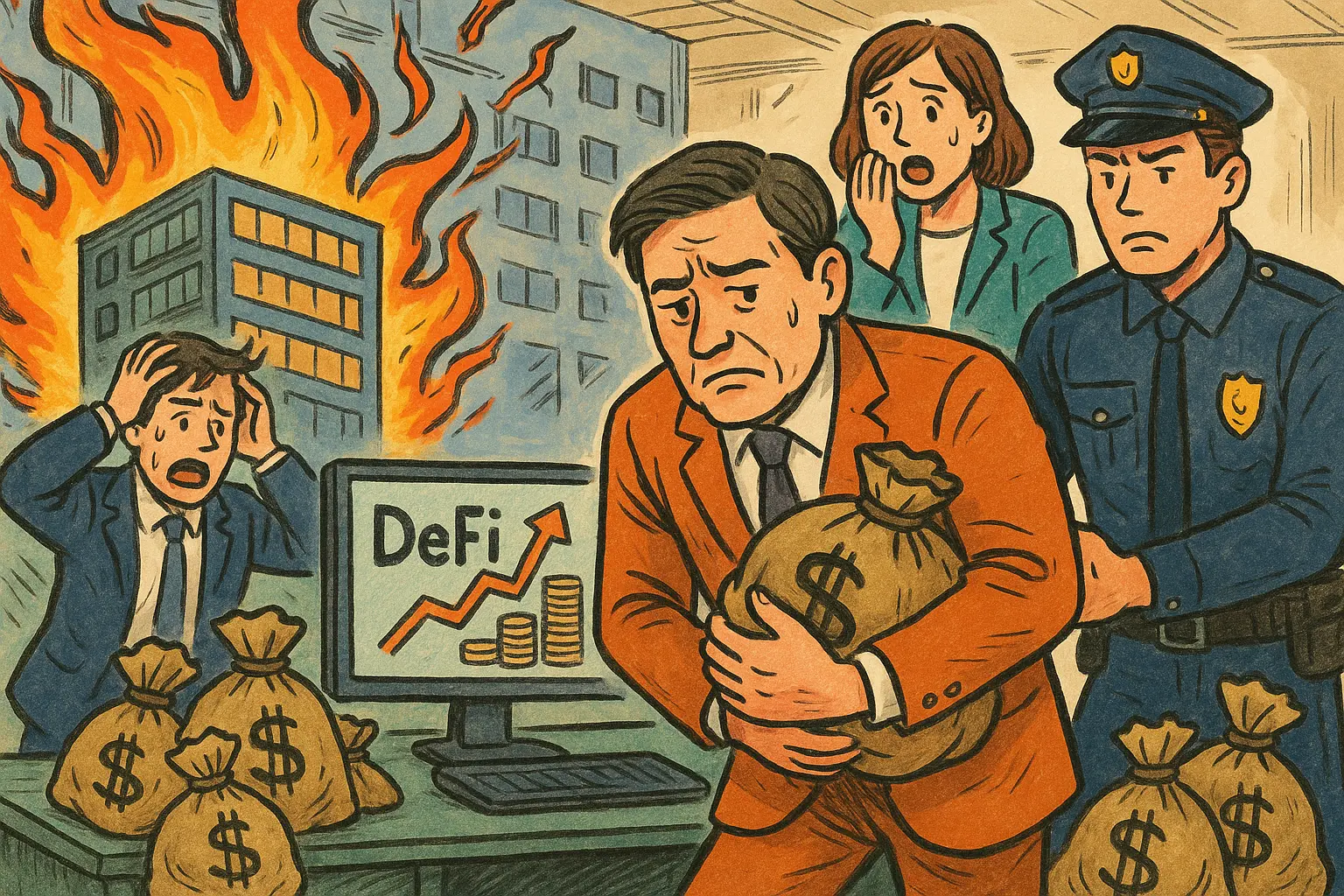
Nevin Shetty, the former CFO of a private software company in Washington State, was sentenced to two years in federal prison last Friday. Previously, after learning he was about to be laid off in April 2022, he secretly transferred $35 million from the company into his personal side project, HighTower Treasury, and invested the funds into decentralized finance (DeFi) lending protocols promising annual returns of over 20%.
Case Overview: From Conservative Investment Policy to Secret Embezzlement
During his tenure as CFO, Shetty personally established a conservative investment policy that clearly restricted how company funds could be used. However, this self-imposed set of rules ultimately became the benchmark against which his fraudulent actions were measured.
In April 2022, Shetty learned he was about to be dismissed due to performance issues. Following this news, he began secretly transferring tens of millions of dollars from the company account into HighTower Treasury. According to indictment documents from the U.S. Department of Justice (DOJ), his plan was to return a fixed amount to the company while retaining the additional profits generated by the cryptocurrency strategies.
This plan initially showed some success—court documents indicate that HighTower Treasury made approximately $133,000 in profit during its first month. However, this brief victory was soon overshadowed by a larger market crash.
Collapse of Terra Triggers Massive Losses: DeFi High-Yield Promises Vanish Instantly
In May 2022, the collapse of the Terra ecosystem marked a fatal turning point for the scheme. Terra’s downfall not only directly liquidated large positions in numerous DeFi protocols but also triggered a sharp decline across the entire cryptocurrency market, leading to a prolonged crypto winter that lasted throughout the year. All holdings of HighTower Treasury in high-yield DeFi lending protocols evaporated from about $35 million to nearly zero in the subsequent market crash.
The core warning from this incident highlights several common risk features:
Promising over 20% annual returns: At the time, the DeFi market was over-leveraged, with many protocols offering unsustainable high yields to attract funds. These returns often depended on token issuance and continuous new capital inflows.
Extreme concentration risk: HighTower invested all $35 million into DeFi without any diversification mechanisms.
Neglect of systemic risk: The Terra collapse exposed fundamental flaws in stablecoin algorithm design and revealed the systemic fragility of the entire DeFi ecosystem under chain liquidations.
After the losses became apparent, Shetty confessed his actions to colleagues and was subsequently dismissed. During sentencing, U.S. District Judge Tana Lin stated that the incident caused “significant and serious consequences” for the company, which, amid a capital shortage, attempted to stabilize operations, resulting in about 60 employees losing their jobs.
Sentencing: Federal Prosecutors Seek 9 Years, Court Sentences 2 Years
Federal prosecutors initially requested a nine-year prison sentence for Shetty, citing his actions involved deliberate deception that caused lasting harm to the company and its employees. Ultimately, Judge Tana Lin sentenced Shetty to two years in federal prison, along with the following measures:
Restitution: Ordered to pay over $35 million in damages to compensate for the company’s losses.
Supervised release: After serving his sentence, Shetty will be under three years of federal supervision.
Employment restrictions: Prohibited from serving as an executive or director of any company without prior approval from the probation office.
Frequently Asked Questions
Q: How is Nevin Shetty’s case characterized as wire fraud?
Wire fraud (Wire Fraud) requires the prosecution to prove that the defendant used electronic communications to carry out a deception scheme and profited from it. In this case, Shetty secretly transferred company funds into his personal project via electronic transfers and concealed the true purpose of the funds from the company, meeting the key elements of wire fraud.
Q: Why did the $35 million invested in DeFi nearly disappear?
Primarily due to the chain reaction triggered by the Terra ecosystem collapse in May 2022. HighTower Treasury concentrated its funds into high-yield DeFi lending protocols, which faced massive liquidations and liquidity crises after Terra’s fall. The related tokens plummeted in value, causing nearly all of the $35 million to evaporate.
Q: What regulatory lessons does this case offer for the cryptocurrency industry?
This case exposes the risks of inadequate internal controls over crypto asset investments within companies and the allure of high-yield promises in DeFi for decision-makers. From a regulatory perspective, it underscores the need to strengthen corporate fund management, establish governance frameworks for crypto investments, and require independent audits of crypto asset holdings by financial personnel.
Disclaimer: The information on this page may come from third parties and does not represent the views or opinions of Gate. The content displayed on this page is for reference only and does not constitute any financial, investment, or legal advice. Gate does not guarantee the accuracy or completeness of the information and shall not be liable for any losses arising from the use of this information. Virtual asset investments carry high risks and are subject to significant price volatility. You may lose all of your invested principal. Please fully understand the relevant risks and make prudent decisions based on your own financial situation and risk tolerance. For details, please refer to
Disclaimer.


