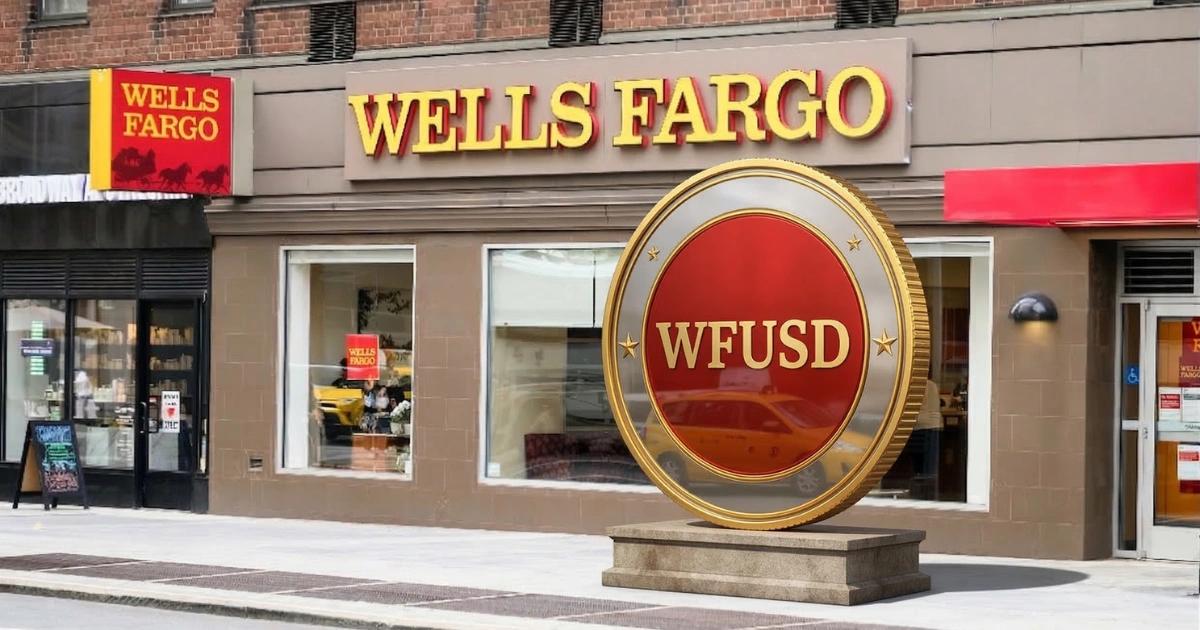
Wells Fargo Applies for WFUSD Trademark Covering Crypto Trading and Blockchain Services, Market Anticipates or Positions for a USD Stablecoin, Showing Wall Street Accelerating Its Entry into Digital Asset Infrastructure.
Wells Fargo Applies for WFUSD Trademark to Enter Digital Asset Financial Services
Major U.S. bank Wells Fargo recently filed a trademark application for “WFUSD” with the United States Patent and Trademark Office (USPTO), indicating that this approximately $1.9 trillion financial institution is accelerating its expansion into digital assets and blockchain-related businesses.
According to public documents, the trademark application covers a range of financial services related to cryptocurrencies and blockchain, including crypto trading, digital asset exchanges, payment processing, electronic transfers, and blockchain infrastructure software. The application also involves digital wallet management, blockchain transaction verification, asset tokenization platforms, and smart contract tools.
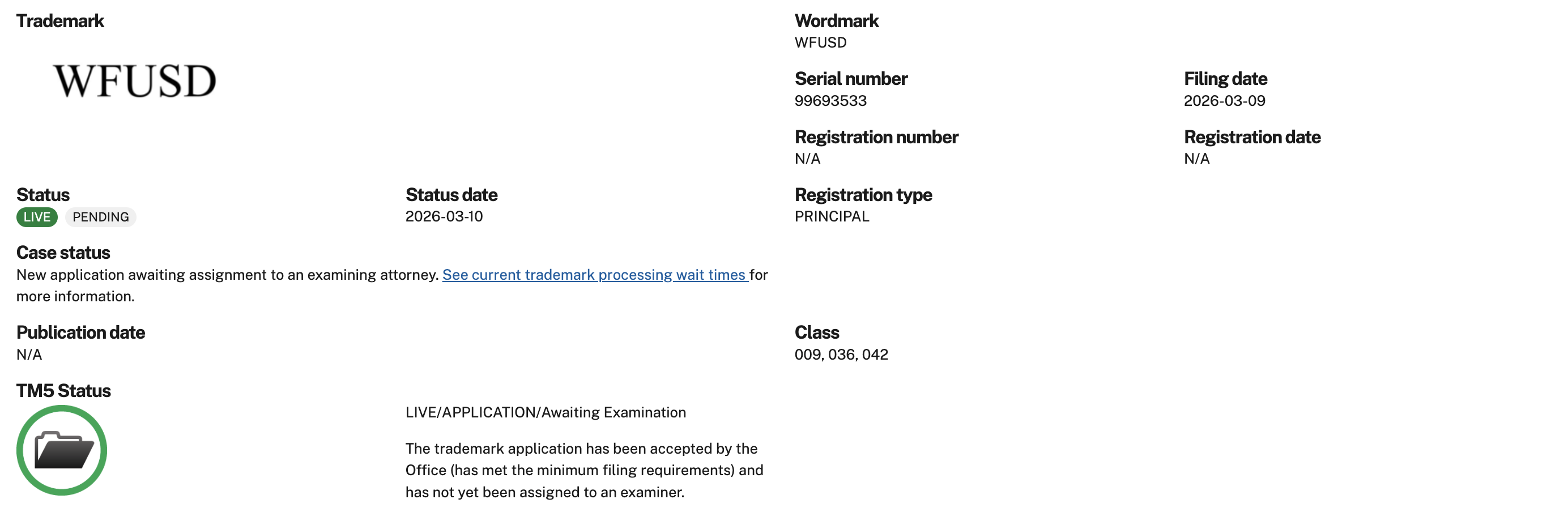
Image Source: USPTO Wells Fargo recently applied for the “WFUSD” trademark with the USPTO.
Documents show that the WFUSD trademark is being applied for across multiple international classes, including financial services, blockchain software, and digital asset trading infrastructure. Market analysts generally believe that the “USD” suffix resembles the naming conventions of major stablecoins like $USDC and $USDT, suggesting that this trademark could correspond to a dollar-pegged digital asset.
Wells Fargo has not publicly commented on the trademark application, but the market widely interprets this move as the bank preparing to launch stablecoins or tokenized deposit products in the future, establishing branding and technological groundwork in advance.
Stablecoins and Tokenized Assets Become Wall Street’s New Battlefield
Wells Fargo’s actions reflect a broader trend among major global banks to accelerate exploration of stablecoins and tokenized financial markets. In recent years, leading Wall Street financial institutions have gradually integrated blockchain technology into their infrastructure. JPMorgan, for example, has launched a dollar deposit token called “$JPMD” for 24/7 blockchain settlement among institutional clients.
Industry insiders suggest that if Wells Fargo launches WFUSD, it would allow traditional banks to directly enter the stablecoin market dominated by crypto firms. Currently, the global stablecoin market exceeds approximately $310 billion, led primarily by Tether’s $USDT and Circle’s $USDC.
Issuing stablecoins is seen as a significant step in the evolution of financial infrastructure. Bank-issued digital dollars could combine existing banking deposit systems with blockchain settlement efficiencies, enabling companies to transfer and settle funds around the clock on a global network.
If major banks enter the market, trust and regulatory compliance for stablecoins could be significantly enhanced, but it could also shift the current market landscape, which is largely led by crypto companies.
Wells Fargo Has Long Invested in Blockchain Development
Wells Fargo is not new to digital assets. As early as 2019, the bank launched an internal settlement system called “Wells Fargo Digital Cash,” utilizing distributed ledger technology for cross-border fund transfers. This system primarily facilitates internal fund management across different branches, achieving near-instant cross-border clearing through blockchain technology and reducing reliance on third-party payment networks.
Additionally, Wells Fargo has continued investing in blockchain infrastructure in recent years. In 2020, the bank invested in blockchain analytics firm Elliptic through Wells Fargo Strategic Capital and participated in investments in several crypto financial infrastructure companies. A report from the bank’s research division in 2025 indicated that digital assets are gradually becoming an investable asset class within asset allocation frameworks and could play a role in risk diversification in long-term portfolios.
These initiatives demonstrate Wells Fargo’s ongoing view of blockchain as part of future financial infrastructure, and the WFUSD trademark application may signal the bank’s intention to move these technologies from internal testing to broader financial applications.
Bank Stablecoin Race Heats Up, Regulation Is a Key Variable
The timing of Wells Fargo’s WFUSD trademark application is also closely linked to changes in the U.S. digital asset regulatory environment. The 2025 passage of the “GENIUS Act” established a regulatory framework for payment-type stablecoins in the U.S., allowing regulated banks to issue stablecoins through subsidiaries. This law provides a clearer legal pathway for banks to enter the stablecoin market.
Against this backdrop, several U.S. banks are reportedly discussing joint stablecoin projects, including JPMorgan, Bank of America, Citigroup, and Wells Fargo. The goal of these initiatives is to create bank-issued digital dollars that can compete with crypto-native stablecoins. Industry observers note that bank-issued stablecoins could bring two opposing effects:
- On one hand, the credibility and regulatory structure of the banking system could enhance stablecoin trustworthiness and attract more enterprise adoption of blockchain payments.
- On the other hand, bank stablecoins could pose competitive pressure to existing issuers.
Currently, the WFUSD trademark remains under review. If Wells Fargo officially launches related products in the future, market expectations suggest it could happen within 12 to 18 months. As traditional financial institutions gradually enter blockchain payments and tokenized assets, the competitive landscape of the stablecoin market is expanding from crypto-native projects into the Wall Street banking system.
Disclaimer: The information on this page may come from third parties and does not represent the views or opinions of Gate. The content displayed on this page is for reference only and does not constitute any financial, investment, or legal advice. Gate does not guarantee the accuracy or completeness of the information and shall not be liable for any losses arising from the use of this information. Virtual asset investments carry high risks and are subject to significant price volatility. You may lose all of your invested principal. Please fully understand the relevant risks and make prudent decisions based on your own financial situation and risk tolerance. For details, please refer to
Disclaimer.


