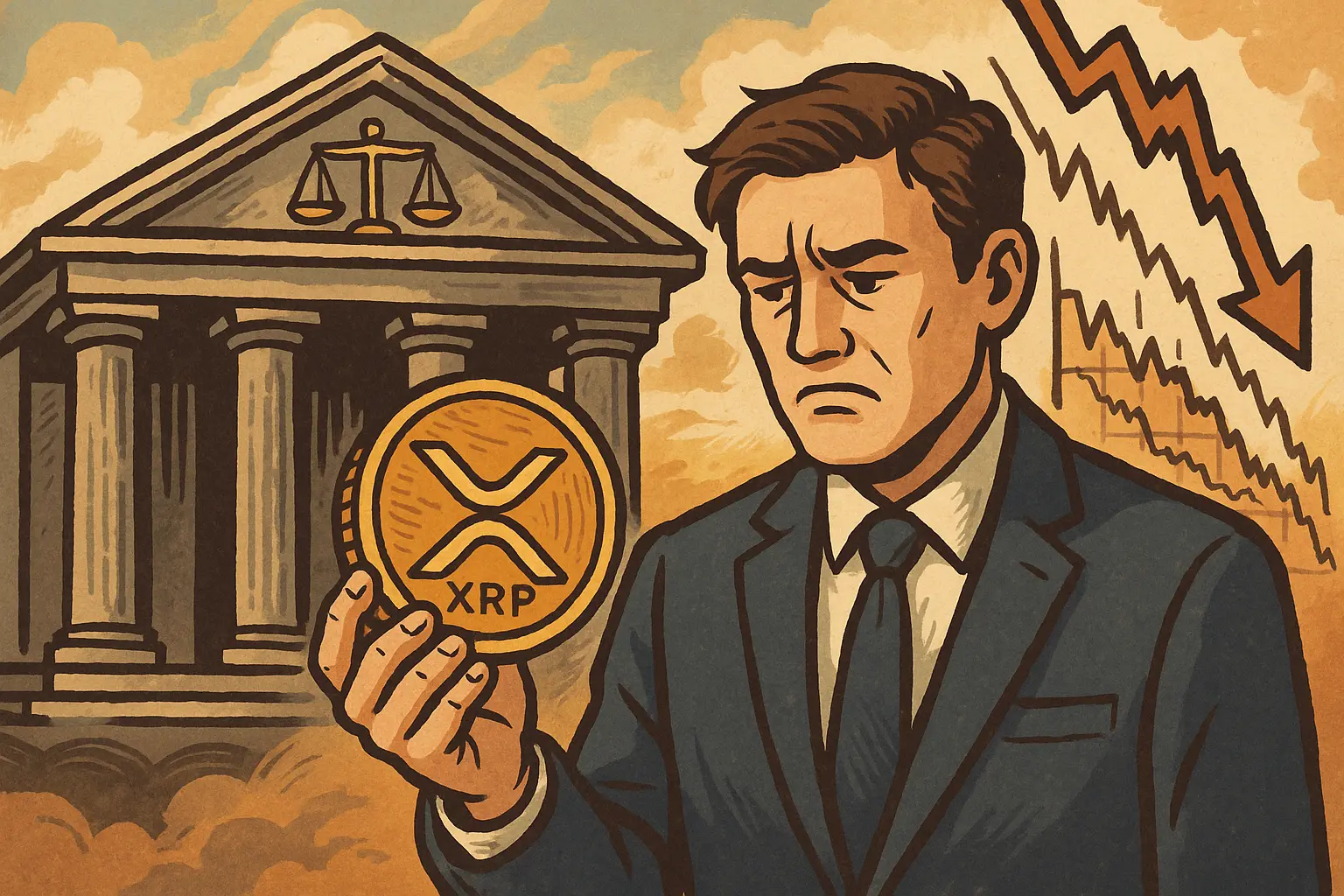
The U.S. Securities and Exchange Commission (SEC) and the Commodity Futures Trading Commission (CFTC) jointly released a 68-page crypto asset classification framework on March 17, officially designating XRP as a “Digital Commodity,” alongside Bitcoin, Ethereum, and Solana, confirming that XRP is not a security under federal law, ending a five-year regulatory dispute. However, on Friday, XRP’s trading price remained sluggish, hovering around $1.44.
SEC’s Five Major Classification Framework: The Legal Logic for XRP’s “Digital Commodity” Status
This joint framework categorizes crypto assets into five classes, with XRP placed in the first category:
Digital Commodities: XRP, Bitcoin, Ethereum, Solana, Cardano, Dogecoin, and 10 other assets, regulated by the CFTC
Digital Collectibles: Unique assets (such as NFTs)
Digital Utilities: Tokens with specific functional purposes
Payment Stablecoins: Stablecoins pegged to fiat currencies
Digital Securities: Assets still under SEC comprehensive regulation
The core reason XRP qualifies as a digital commodity is that its value derives from the XRP Ledger’s actual functionality as a payment and transfer network, not from Ripple’s promises of returns to investors. This has been Ripple’s consistent argument during the five-year legal battle, and the SEC has now officially agreed. SEC Chair Paul Atkins stated that clarifying regulatory boundaries “should have been done long ago,” emphasizing plans to establish a safe harbor mechanism for crypto companies.
Why Did Prices Drop After Regulatory Good News?
On the day of the announcement, XRP surged to $1.60, hitting a high since mid-February, but the rally was short-lived. The next day, the Federal Reserve announced no change in interest rates, while raising its inflation forecast for 2026 to 2.7%, expecting only one rate cut for the year. XRP immediately fell 5.3% to $1.46.
B. Riley Wealth Management Chief Market Strategist Art Hogan pointed out the current market logic: “Just tell me the oil price today, and I can tell you how the market will evolve.” Brent crude oil temporarily broke above $119 per barrel amid ongoing geopolitical tensions, suppressing global risk appetite.
Compared to July 2023, when Judge Torres ruled XRP was not a security, causing the token to surge 75% within days, the market reaction this time has been more restrained. Citigroup strategist Alex Sanders noted that while regulatory catalysts will indeed promote crypto adoption, the U.S. legislative window for 2026 is narrowing, which may explain why positive news has not yet translated into sustained upward momentum.
March 27 ETF Deadline: A Recent Window to Observe Institutional Entry
March 27 is the final deadline for the SEC to review the remaining spot XRP ETF applications, making it the most recent catalyst in XRP news. Since its launch, the spot XRP ETF has seen inflows of $1.44 billion, with 84% from retail investors; last week, XRP ETF experienced a net outflow of $28 million, while Bitcoin ETFs saw inflows of $767 million, highlighting the absence of institutional capital.
Longer-term legislative progress is also worth monitoring. Senator Lummis stated that the Senate Banking Committee plans to advance the Clarity Act amendments in late April; Senator Moreno warned that if the bill does not progress before May, there may be little movement in 2026. Currently, the classification framework is an interpretive document, not a binding federal law. Only through passing legislation in Congress can the asset classification attain formal legal status.
Frequently Asked Questions
What does SEC’s designation of XRP as a “Digital Commodity” mean?
Classifying XRP as a digital commodity means it is not a security under federal law and is regulated by the CFTC rather than the SEC. This removes legal uncertainties for exchanges listing XRP, allows banks and institutional investors to hold XRP under a commodity framework, and provides clearer legal grounds for the approval of spot XRP ETFs.
Why is XRP still falling after gaining regulatory recognition?
The digital commodity classification removes regulatory barriers to purchasing XRP but does not directly motivate market buying. Federal Reserve interest rate policies remain tight, high oil prices suppress risk appetite, institutional capital has yet to arrive, and macroeconomic uncertainties collectively constrain XRP’s recent market performance.
What is the significance of the March 27 XRP ETF deadline?
This is the SEC’s review deadline for the last batch of spot XRP ETF applications. If the SEC approves new ETFs by this date, it could facilitate easier access for institutional investors, serving as a potential catalyst for XRP to break above $2.00.
Disclaimer: The information on this page may come from third parties and does not represent the views or opinions of Gate. The content displayed on this page is for reference only and does not constitute any financial, investment, or legal advice. Gate does not guarantee the accuracy or completeness of the information and shall not be liable for any losses arising from the use of this information. Virtual asset investments carry high risks and are subject to significant price volatility. You may lose all of your invested principal. Please fully understand the relevant risks and make prudent decisions based on your own financial situation and risk tolerance. For details, please refer to
Disclaimer.


