

Trade
Basic
Futures
Futures
Hundreds of contracts settled in USDT or BTC
Options
HOT
Trade European-style vanilla options
Unified Account
Maximize your capital efficiency
Demo Trading
Futures Kickoff
Get prepared for your futures trading
Futures Events
Participate in events to win generous rewards
Demo Trading
Use virtual funds to experience risk-free trading
Earn
Launch
CandyDrop
Collect candies to earn airdrops
Launchpool
Quick staking, earn potential new tokens
HODLer Airdrop
Hold GT and get massive airdrops for free
Launchpad
Be early to the next big token project
Alpha Points
NEW
Trade on-chain assets and enjoy airdrop rewards!
Futures Points
NEW
Earn futures points and claim airdrop rewards
Investment
Simple Earn
Earn interests with idle tokens
Auto-Invest
Auto-invest on a regular basis
Dual Investment
Buy low and sell high to take profits from price fluctuations
Soft Staking
Earn rewards with flexible staking
Crypto Loan
0 Fees
Pledge one crypto to borrow another
Lending Center
One-stop lending hub
VIP Wealth Hub
Customized wealth management empowers your assets growth
Private Wealth Management
Customized asset management to grow your digital assets
Quant Fund
Top asset management team helps you profit without hassle
Staking
Stake cryptos to earn in PoS products
Smart Leverage
NEW
No forced liquidation before maturity, worry-free leveraged gains
GUSD Minting
Use USDT/USDC to mint GUSD for treasury-level yields

More


Trending Topics
View More1.01K Popularity
30.75K Popularity
9.92K Popularity
146 Popularity
83 Popularity




Pin
Mastering the Relative Strength Index: A Guide to RSI in Cryptocurrency Trading
The Relative Strength Index (RSI) has established itself as one of the most trusted momentum oscillators among professional traders. This technical indicator excels at measuring the velocity of price movements and identifying whether an asset has reached overbought or oversold conditions. For those entering the world of crypto trading, RSI often becomes the first technical tool they learn—and for good reason. Understanding how to leverage RSI effectively can form the foundation of a profitable trading approach.
Understanding RSI: The Fundamentals
Technical analysis forms the backbone of price prediction strategies across financial markets, including cryptocurrencies. Traders rely on patterns and trends visible in historical price data to anticipate future movements. The Relative Strength Index belongs to a special class of technical tools called momentum oscillators, which specifically evaluate whether market conditions are stretched in either direction.
J. Welles Wilder developed the RSI indicator in 1978, and it has remained relevant ever since. The indicator operates on a scale from 0 to 100, evaluating how an asset’s price has changed over a specified timeframe—typically 14 periods by default, though this can be customized. Whether you’re analyzing minute-by-minute movements or weekly trends, the RSI adapts to your preferred timeframe. The calculation happens automatically on virtually every modern trading platform, requiring you only to interpret the results.
The Mathematics Behind RSI
Calculating the Relative Strength Index follows a straightforward formula:
RSI = 100 – [100/ (1 + RS)]
Where RS represents the ratio of average gains to average losses over your chosen period:
The resulting value oscillates between 0 and 100. When you apply this indicator to a daily chart with the default 14-period setting, it analyzes price movements from the previous 14 days. The same logic applies to other timeframes—a weekly chart examines 14 weeks of data.
Interpreting RSI Signals: Overbought and Oversold Conditions
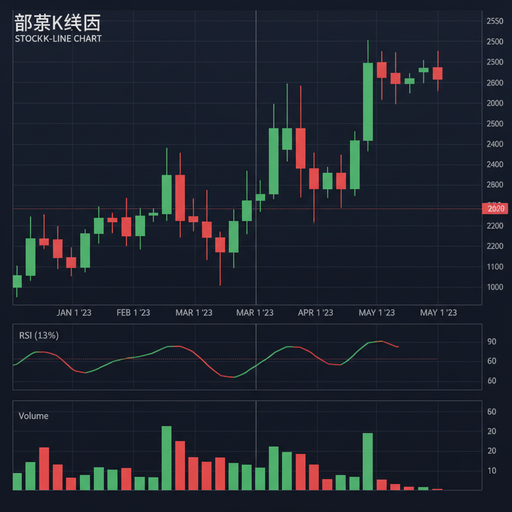
The practical power of RSI lies in its ability to signal potential reversals. When the indicator climbs above 70, it suggests the asset may be overbought—the price has risen sharply, but momentum could weaken. This often precedes a pullback or reversal to the downside.
Conversely, when RSI drops below 30, the asset appears oversold—prices have fallen significantly, yet the selling pressure may be exhausting. A bounce upward often follows such conditions.
However, traders must exercise caution. RSI can generate false signals, particularly in strong trending markets. An asset can remain overbought for extended periods during a robust uptrend, just as it can stay oversold during a strong downtrend. This is why experienced traders never rely on a single indicator in isolation.
Advanced Analysis: Divergence and Convergence
Beyond simple overbought/oversold signals, RSI reveals deeper market dynamics through divergence and convergence patterns.
Convergence occurs when price and RSI move in harmony. If an asset reaches a lower high while the price chart also shows a lower high, but the RSI creates a higher high, this mismatch—called bullish convergence—suggests potential upside strength beneath the surface.
Divergence presents the opposite scenario. When price reaches a new high while RSI registers a lower high simultaneously, this bearish divergence warns that upward momentum is weakening despite rising prices. This pattern frequently signals the end of a trend. Think of it like a crowd climbing a hill with less enthusiasm each step—the height increases, but energy fades.
Applying RSI to Your Crypto Trading Strategy
Timeframe matters significantly when using RSI for decision-making. Signals generated on higher timeframes—such as 4-hour charts—carry more weight than those from 15-minute charts. This is because longer periods filter out noise and reflect more genuine market sentiment.
When searching for entry and exit points, maintaining the standard 14-period setting provides consistency with market conventions. Many successful strategies have been calibrated around this baseline.
Combining Indicators for Confirmation
Rather than acting on RSI alone, overlay it with complementary tools like MACD (Moving Average Convergence Divergence) or Stochastic oscillators. When multiple indicators point in the same direction, your confidence in a trade signal increases substantially. This multi-indicator approach reduces false alarms and improves win rates.
Adjusting Sensitivity
Some traders tighten their thresholds, using 80 and 20 instead of 70 and 30. This generates fewer signals but with potentially higher reliability, as price movements must be more extreme to trigger alerts.
Practical Considerations and Risk Management
The RSI shines as a tool for day traders and swing traders seeking to time entries and exits. It provides visibility into market conditions and hints toward appropriate actions. Yet it remains a supporting tool rather than a crystal ball.
Several critical reminders:
First, timeframe consistency matters. Don’t expect a 15-minute chart signal to align with a 1-hour perspective; always analyze on your intended trading timeframe.
Second, false signals occur regularly, especially in choppy, sideways markets. RSI extremes don’t guarantee immediate reversals.
Third, divergence patterns typically emerge near trend exhaustion points, making them particularly valuable for swing traders planning trend reversals.
Finally, combine RSI insights with price action analysis and support/resistance levels to create a robust decision framework.
Conclusion
The Relative Strength Index stands as one of the most accessible yet powerful technical indicators available to crypto traders. Its simplicity makes it ideal for beginners, while its depth rewards advanced practitioners with sophisticated analysis capabilities. By understanding how to calculate it, interpret its signals, and blend it with other tools, you equip yourself with meaningful insight into market conditions.
Remember: successful trading never hinges on a single metric. RSI works best as part of a broader analytical toolkit where signals from divergence patterns, overbought/oversold extremes, and complementary indicators reinforce each other. This layered approach—combining RSI with MACD, Stochastics, and trend analysis—creates the synergy that separates consistent winners from traders chasing false breakouts. Build this discipline into your trading process, and RSI becomes not just an indicator, but a reliable compass through volatile crypto markets.