

Trade
Basic
Futures
Futures
Hundreds of contracts settled in USDT or BTC
Options
HOT
Trade European-style vanilla options
Unified Account
Maximize your capital efficiency
Demo Trading
Futures Kickoff
Get prepared for your futures trading
Futures Events
Participate in events to win generous rewards
Demo Trading
Use virtual funds to experience risk-free trading
Earn
Launch
CandyDrop
Collect candies to earn airdrops
Launchpool
Quick staking, earn potential new tokens
HODLer Airdrop
Hold GT and get massive airdrops for free
Launchpad
Be early to the next big token project
Alpha Points
NEW
Trade on-chain assets and enjoy airdrop rewards!
Futures Points
NEW
Earn futures points and claim airdrop rewards
Investment
Simple Earn
Earn interests with idle tokens
Auto-Invest
Auto-invest on a regular basis
Dual Investment
Buy low and sell high to take profits from price fluctuations
Soft Staking
Earn rewards with flexible staking
Crypto Loan
0 Fees
Pledge one crypto to borrow another
Lending Center
One-stop lending hub
VIP Wealth Hub
Customized wealth management empowers your assets growth
Private Wealth Management
Customized asset management to grow your digital assets
Quant Fund
Top asset management team helps you profit without hassle
Staking
Stake cryptos to earn in PoS products
Smart Leverage
NEW
No forced liquidation before maturity, worry-free leveraged gains
GUSD Minting
Use USDT/USDC to mint GUSD for treasury-level yields

More

Trending Topics
View More27.99K Popularity
53.8K Popularity
17.62K Popularity
12.22K Popularity
100.07K Popularity




Pin
How to invest 100,000? Wealth doubling plans every small investor must know
At this time of year, everyone should be able to feel a clear change—everything has increased in price. Eggs, which were about five yuan each five or six years ago, are now around ten; the prices of bubble tea and bento boxes have also risen by 20-30%; mortgage interest rates are even more dramatic, jumping from 1.6% before the pandemic to about 2.2%. For a 10 million mortgage, just the difference in interest rates means paying nearly 90,000 more in a year.
Behind these seemingly small numbers reflects the same phenomenon—inflation is accelerating, and this is why more and more people are starting to pay attention to investing and managing their finances. Saving money alone can’t keep up with rising prices; idle funds need to be put to work.
So the question is: if you’ve already saved 100,000 yuan, what should you do now?
First, Clarify Your Financial Situation
An important premise before investing: Invest with spare money. This money cannot be emergency funds or money needed next year. The reason is simple—investment assets fluctuate in value, and if you need to cash out during a downturn, you could lose money.
Therefore, the first step is keeping a budget. Treat yourself like a company—accurately calculate your stable monthly income and necessary expenses, then estimate the actual amount available for investment.
At the same time, clarify your investment goals. The key concept is—finding income to cover expenses—for example, if you pay fixed monthly bills for your phone and utilities, you can choose dividend-paying funds or high-yield ETFs to generate passive income that directly covers these daily expenses. Or if you want to travel abroad once a year or buy a new phone, you need to plan how much principal is required to reach those goals through investment returns.
Investment Options for 100,000 Yuan: Five Types Compared
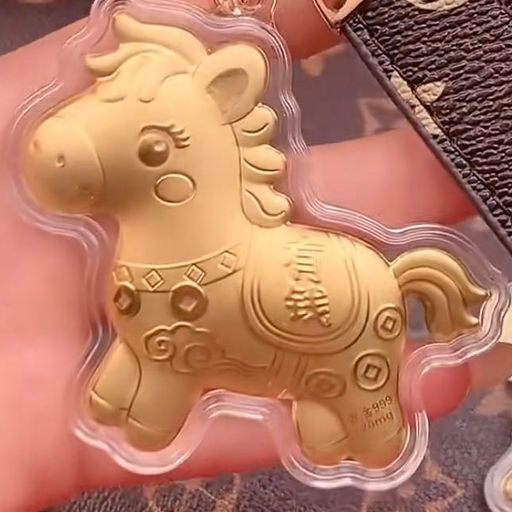
Gold—A Stable Hedge Against Inflation
Gold itself does not pay dividends; all returns come from price appreciation. Over the past ten years, gold prices have increased by 53%, averaging about 4.4% annually. This return may seem modest, but gold’s true value lies in—protecting assets during economic turmoil.
The periods from 2019 to mid-2020 and 2023 to 2024, when gold prices surged, corresponded with major events like COVID-19, the Russia-Ukraine war, and U.S. policy adjustments. Gold performed steadily during these times, serving as a defensive asset in portfolio allocation.
Bitcoin—A High-Volatility Opportunity Asset
Over the past ten years, Bitcoin has surged over 160 times, but this figure varies greatly depending on your entry point. Bitcoin also does not pay dividends; all gains come from price differences, and the reasons for its rise and fall differ across periods.
Currently, Bitcoin is around $94,180, with several bullish factors in the short term—Bitcoin halving completed, spot ETFs launched, geopolitical tensions increasing cross-border capital flight. But in the long run, Bitcoin’s volatility is too high, so it’s not recommended to allocate a large portion of your assets. A suitable approach is to buy on dips and reduce holdings at peaks, treating it as an aggressive component rather than a core holding.
High-Dividend ETF (0056)—A Stable Cash Flow Machine
Taiwan’s most well-known high-yield ETF, mainly investing in stocks with high dividend yields. Over the past ten years, 0056 has paid dividends at 60% of its income, and its stock price has risen by 40%.
The estimated future ten-year return is expected to be similar to the past—doubling the assets, with 60% distributed as dividends. It may not sound like much, but time changes everything. If you invest 100,000 yuan annually, even if you spend all dividends, after thirteen years, the annual dividend could reach 100,000 yuan; after twenty-five years, it could exceed 220,000 yuan annually. If combined with retirement benefits, passive monthly income could surpass 40,000 yuan.
U.S. Stock Market ETF (SPY)—The Ultimate Compound Growth Weapon
SPY tracks the top 500 U.S. companies, with a dividend yield of only 1.6%, but this reflects that most of its returns come from capital appreciation. Over the past ten years, SPY has risen from $201 to $434, with a return of 116%.
The key advantage is—this kind of compound growth is almost risk-free. As long as the U.S. dollar remains the global settlement currency and the U.S. economy continues to grow, assets will keep appreciating. An initial investment of 100,000 yuan could grow to 216,000 yuan in ten years; investing 3 million over thirty years could eventually surpass 12 million yuan.
The downside is limited cash flow along the way, requiring stable income from your main job to keep investing. Suitable for high-income earners or those with steady income.
Berkshire Hathaway—The Profit Machine of the Oracle
Warren Buffett’s company, with a unique and replicable profit model—accumulating large cash reserves through insurance, then using the company’s good reputation to borrow at low interest for arbitrage. For example, issuing bonds in Japan with a 0.5% annual interest rate and using that capital to buy Japanese stocks, which have higher dividend yields than the bond cost, ensuring profit as long as principal isn’t lost.
The brilliance of this model is—it won’t change even if Buffett passes away. As long as the company continues this strategy, this money-making machine will keep running. Stable returns and resilience in adverse conditions make it a holy grail for compound investors.
Investment Strategies for Different People
Stable working professionals: With slow salary growth, best suited for dividend funds or high-yield ETFs like 0056. Let dividends accumulate year by year, and over time, even retire on the passive income.
High-income professionals: Doctors, engineers, and similar high-earning, risk-tolerant individuals can invest in SPY or Berkshire Hathaway for long-term compound growth, potentially creating assets worth millions over 30 years.
Young people with plenty of time: Students or salespeople can try more aggressive short-term trading—monitor policy trends and market hotspots, and use thematic speculation for quick turnover. For example, when the government announces opening to mainland tourists, travel-related stocks will rise; during AI booms, tech stocks will be hot. Staying on top of current events allows for profitable momentum trading.
Proper Use of Leverage
A common misconception is—small capital doesn’t easily use leverage. In fact, the opposite is true: small capital is the best time to leverage.
For example, in real estate, buying a 10 million yuan property with only 2 million yuan down, and selling after five years when the price rises to 12 million, yields a profit of 2 million. The apparent return is only 20%, but considering leverage, using 2 million to make 2 million profit results in a 100% return. Plus, the risk of losing the entire principal is lower, and the cost of re-entry is smaller.
The core idea is: using turnover to increase returns. When the win rate is high, moderate leverage can accelerate wealth accumulation. That’s why many trading platforms are friendly to small investors—low entry barriers, leverage support—allowing 100,000 yuan to potentially generate returns far beyond expectations.
Time + Mindset + Projects = Financial Freedom
Three essential elements for successful investing—none can be missing. Mindset helps you make correct decisions, projects are your investment targets, and time is the key to letting compound interest work its magic.
The good news is—these three are accessible to small investors. Choosing the right investment method for yourself, the rest is just patience. Whether relying on dividends for living, doubling assets with compound interest, or quick turnover through short-term trading, the key is—choice is more important than effort.
As long as your direction is correct, 100,000 yuan can turn into a million within ten years. The earlier you start, the more astonishing the power of compound interest becomes.