

Trade
Basic
Futures
Futures
Hundreds of contracts settled in USDT or BTC
Options
HOT
Trade European-style vanilla options
Unified Account
Maximize your capital efficiency
Demo Trading
Futures Kickoff
Get prepared for your futures trading
Futures Events
Participate in events to win generous rewards
Demo Trading
Use virtual funds to experience risk-free trading
Earn
Launch
CandyDrop
Collect candies to earn airdrops
Launchpool
Quick staking, earn potential new tokens
HODLer Airdrop
Hold GT and get massive airdrops for free
Launchpad
Be early to the next big token project
Alpha Points
NEW
Trade on-chain assets and enjoy airdrop rewards!
Futures Points
NEW
Earn futures points and claim airdrop rewards
Investment
Simple Earn
Earn interests with idle tokens
Auto-Invest
Auto-invest on a regular basis
Dual Investment
Buy low and sell high to take profits from price fluctuations
Soft Staking
Earn rewards with flexible staking
Crypto Loan
0 Fees
Pledge one crypto to borrow another
Lending Center
One-stop lending hub
VIP Wealth Hub
Customized wealth management empowers your assets growth
Private Wealth Management
Customized asset management to grow your digital assets
Quant Fund
Top asset management team helps you profit without hassle
Staking
Stake cryptos to earn in PoS products
Smart Leverage
NEW
No forced liquidation before maturity, worry-free leveraged gains
GUSD Minting
Use USDT/USDC to mint GUSD for treasury-level yields

More



Paolo Ardoino tries to conquer Juventus: when new money challenges a century of tradition
The Return of the Prodigal Son
In a small Italian town, over three decades ago, a boy grew up under the shade of ancient olive trees, surrounded by the aroma of tradition and pride in the colors white and black. His father was a public official, his grandparents cared for generations of history on their lands. That boy was Paolo Ardoino, who at the time could not imagine that one day he would command one of the most powerful machines in the contemporary financial world.
Today, at 40 years old, Paolo leads Tether, the largest stablecoin platform in the world, with an annual profit volume around 13 billion dollars. Just over a decade ago, very few people in the traditional financial world knew this company. Now, its influence crosses borders and challenges the oldest structures of European power.
On December 12, Paolo presented to the Italian Stock Exchange an offer that would shake the foundations of millennial tradition: to acquire 65.4% of the shares of Juventus, the most emblematic football club in Italy, owned by the Exor group, at a price of 2.66 euros per share, representing a 20.74% premium over market quotes. This would be complemented by an injection of an additional 1 billion euros into the sports institution. No prior negotiations, no hidden conditions: just cash, what in the financial world is known as “payment on delivery.” The deadlines were tight: just ten days for the Agnelli family to make a decision.
The Unexpected Rejection
The response came quickly. Through an official statement, the Exor group was clear: “Currently, there are no negotiations regarding the sale of Juventus shares.” The message required no interpretation: they were not for sale.
Less than twenty-four hours later, press reports suggested that Tether was preparing to double its bid, raising Juventus’s valuation directly to 2 billion euros. The market reacted enthusiastically, and the club’s shares soared. All of Italy wondered if the family that had controlled this symbol of power for one hundred and two years would finally cede to the new money.
But the answer was no.
Nine Months of Corporate Coldness
The story between Tether and Juventus began with optimism just over a year ago. In February 2025, Tether announced the acquisition of 8.2% of the club’s shares, establishing itself as the second-largest shareholder after the Exor group. At that moment, Paolo allowed himself an unusual vulnerability: “For me, Juventus has always been part of my life,” he wrote in his official statement.
The logic seemed impeccable: Tether had the capital Juventus needed, and Paolo possessed the passion no algorithmic investor could bring. It should have been a natural, almost predestined union. However, in Italy, power structures do not open simply because someone has money.
Two months after acquiring his shares, Juventus announced a capital increase plan of up to 110 million euros. It was the exact moment when Paolo, as the second-largest shareholder, should have received calls, emails, opportunities to participate. Nothing. Only silence. The Exor group didn’t even bother to offer a polite explanation. Paolo, in an unprecedented act in his business career, had to express his frustration on social media: “We expected to increase our stake in Juventus through the club’s possible capital increase, but this wish was ignored.”
For the first time in his life, a magnate with unlimited access to billions of dollars experienced exclusion. From April to October, Tether increased its stake from 8.2% to 10.7% by gradually buying on the open market. According to Italian regulations, owning 10% of shares grants rights to nominate board members.
The November Meeting and the Sentiment Strategy
The annual shareholders’ meeting held in Turin on November 7 was the turning point. Tether nominated Francesco Garino, a local doctor passionate about the club since childhood, trying to demonstrate that they were not external invaders but Italians sharing the same roots.
The Agnelli family responded with their own masterstroke: Giorgio Chiellini, a living legend who captained the club for seventeen years and won nine Serie A titles. The strategy was clear: instead of competing with money, they won with history. In the end, Tether secured a seat on the board, but it was a powerless position, limited to listening to suggestions at a table entirely controlled by the Agnelli family.
John Elkann, fifth generation of the dynasty, delivered the final speech: “We are proud to have been shareholders of Juventus for over a century. We have no intention of selling our shares, although we are open to constructive ideas from all interested parties.” The direct translation was unequivocal: this is family territory, visitors are tolerated, but the owners will never change.
A Hundred Years of Glory: Too Valuable to Sell
The legacy of the Agnelli family is no ordinary thing. On July 24, 1923, Edoardo Agnelli assumed the presidency of Juventus at thirty-one years old. From that moment, the destinies of the family and the club became indelibly intertwined. The Fiat automotive empire of the Agnelli was for much of the twentieth century Italy’s most important private company, employing millions of workers and maintaining the country’s economic structure.
Juventus, with thirty-six Serie A titles, two Champions League trophies, and fourteen Coppa Italia wins, is not only the most successful club in Italian football history but also a symbol of national power. Selling the club would mean admitting the end of an era. It would mean recognizing that not even John Elkann, who spent two decades proving he deserved the power inherited by blood, could keep his ancestors’ empire intact.
The Financial Collapse of the Dream
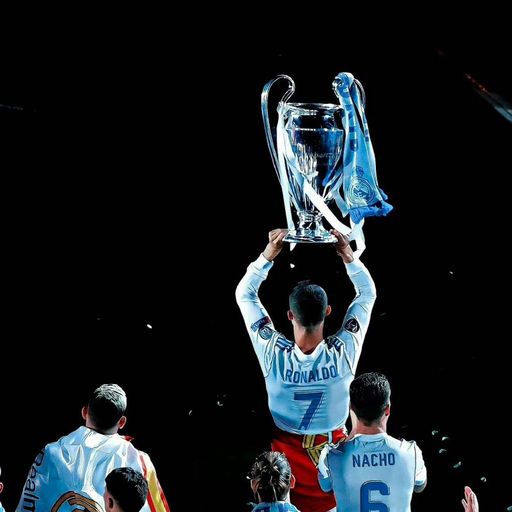
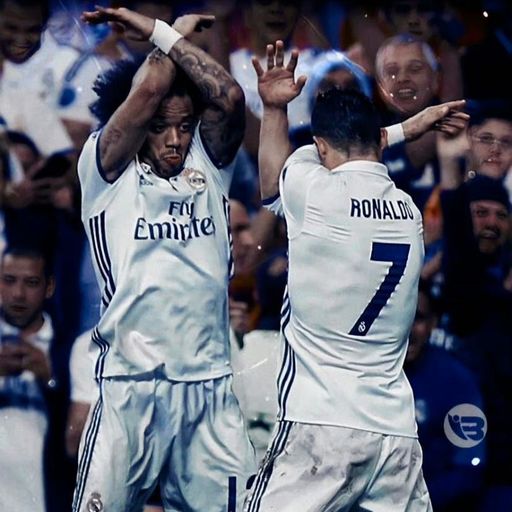
Few understood that Juventus had fallen into a cycle of economic destruction from which escape was difficult. It all began on July 10, 2018, when the club announced the signing of Cristiano Ronaldo. At thirty-three, Cristiano arrived with a transfer fee of 100 million euros and a net annual salary of 30 million euros for four years. The then-president Andrea Agnelli, fourth generation of the family, excitedly proclaimed it would be “the most important signing in Juventus history.”
Turin went wild. In the first twenty-four hours after the announcement, the club sold over 520,000 jerseys, a record in professional football history. Cristiano Ronaldo’s son, like an entire generation of Italian children, spent those days watching his father become the obsession of an entire city.
But Juventus never won the Champions League with Cristiano. They were eliminated by Ajax in 2019, by Lyon in 2020, and by Porto in 2021. In August 2021, Cristiano suddenly left for Manchester United. The final calculation was brutal: between transfer, salaries, and taxes, the total cost over three years was 340 million euros. In exchange, Cristiano scored 101 goals. Mathematically, each goal cost 2.8 million euros.
Creative Accounting and the Scandal
Without the Champions League, cash flows dried up. TV bonuses, match revenues, sponsorship bonuses: everything was tied to European competition. Juventus resorted to financial operations bordering on suspicion. They sold Pjanic to Barcelona for 60 million euros and bought Arthur for 72 million, making both transactions seem independent when in fact it was a coordinated exchange that allowed recording nonexistent capital gains.
This kind of “creative accounting” is not rare in professional football, but Juventus overstepped. Prosecutors discovered that over three years, the club inflated its profits by 282 million euros through forty-two questionable transactions. The scandal resulted in the entire board resigning en masse, including President Andrea Agnelli. Penalties were severe: point deductions, exclusion from European competitions, sanctions against executives.
Losses accumulated. From 39.6 million euros in losses during the 2018-19 season, the situation worsened to 123.7 million euros in the 2022-23 season. The Exor group had to inject nearly 100 million euros more in November 2025. It was the third time in two years that the Agnelli family rescued the club from bankruptcy.
The Crossroads of Financial Power
John Elkann faced a dilemma with no easy way out. Analysts indicated that Juventus was already a liability eroding Exor’s results. In the 2024 annual report, Exor’s net profits fell 12% precisely because of the club’s accumulated losses. A few days before Tether’s offer, Exor sold the media group GEDI, owner of influential newspapers like “La Repubblica” and “La Stampa,” to Greek investors for 140 million euros. A loss-making newspaper could be sacrificed; Juventus could not.
However, rejecting fresh money was an act of pure political will. It meant maintaining control while continuing to lose money. For the traditional European mindset that the Agnelli family represented, the hierarchy of values was clear: Agnelli money, forged in Fiat steel, in the twentieth-century industrial revolution, in the sweat of millions of workers and decades of corporate building, was qualitatively superior to cryptocurrency money, a nascent industry full of scandals, collapses, and rampant speculation that had only emerged a decade earlier.
Precedents were fresh in collective memory. The blockchain company DigitalBits had signed sponsorship contracts worth 85 million euros with Inter Milan and Roma, but when its financing chain broke, both clubs suffered huge reputational damage. The 2022 collapse in the cryptocurrency industry left Luna logos in Washington stadiums and the FTX name in Miami facilities. For the Agnelli family, Paolo represented that volatility, that lack of historical roots.
The Assault on the Gates of the Old World
But historical reality does not wait for the old world to assimilate the new. The same week Exor rejected Tether’s offer, Manchester City announced the renewal of a sponsorship with a cryptocurrency platform for over 100 million euros. Paris Saint-Germain, Barcelona, AC Milan, and other European giants had already established deep collaborations with crypto companies. In Asia, the Korean and Japanese leagues had opened their doors to digital money.
The phenomenon was replicating in other sectors. Sotheby’s and Christie’s accepted payments in bitcoin; in Miami and Dubai, it was possible to buy luxury mansions with cryptocurrencies. The entry of new money into industries historically controlled by old money was no longer a question of “if,” but of “when” and “how” they would adapt.
The Unanswered Question
What Tether’s offer posed went beyond football. It was a fundamental question for this historical moment: when a new generation of entrepreneurs creates extraordinary wealth through mechanisms unknown to the traditional elite, do they have the right to sit at the tables of power? Can young money buy what old money considers an inalienable patrimony?
For John Elkann, the answer was no. The bronze door would remain closed, not because he didn’t need the money, but because opening that door would mean admitting that a century of privilege, control, and industrial building could be replaced by algorithms and blockchain chains. It would mean that his ancestors, who built empires with steel and willpower, were nothing more than links in a chain that time would eventually replace.
For Paolo, however, the answer should be yes. Not out of a desire for power, but because it represented something deeper: the right of Italy’s children to build new legacy upon the ruins of the old. Paolo was not an outsider invader but a son of the land that had generated wealth through tools that the old world still did not understand.
The Unwritten Epilogue
The story pauses in that olive grove on the outskirts of Turin where it all began. Thirty-two years ago, a dark-haired boy sat under its branches, listening to his grandparents work, watching on the screen figures dressed in black and white representing the peak of Italian power. Back then, Paolo could not conceive that one day he would be standing before those same gates, waiting for an answer.
The bronze door remains closed. Behind it lies the century of glory of the Agnelli family, the last glow of an industrial era fading away. Old money still has the power to say “no,” even as that “no” slowly destroys it. But Paolo Ardoino is not someone used to being rejected. In the world of cryptocurrencies, where money reproduces on screens and travels through lines of code, persistence is the only currency that always counts.
For now, that door remains closed. But whoever knocks knows it’s only a matter of time. Because while old money defends its past, new money is already building the future. And the future, though sometimes slowly, always ends up winning.