

Trade
Basic
Futures
Futures
Hundreds of contracts settled in USDT or BTC
TradFi
Gold
Trade global traditional assets with USDT in one place
Options
Hot
Trade European-style vanilla options
Unified Account
Maximize your capital efficiency
Demo Trading
Futures Kickoff
Get prepared for your futures trading
Futures Events
Participate in events to win generous rewards
Demo Trading
Use virtual funds to experience risk-free trading
Earn
Launch
CandyDrop
Collect candies to earn airdrops
Launchpool
Quick staking, earn potential new tokens
HODLer Airdrop
Hold GT and get massive airdrops for free
Launchpad
Be early to the next big token project
Alpha Points
Trade on-chain assets and enjoy airdrop rewards!
Futures Points
Earn futures points and claim airdrop rewards
Investment
Simple Earn
Earn interests with idle tokens
Auto-Invest
Auto-invest on a regular basis
Dual Investment
Buy low and sell high to take profits from price fluctuations
Soft Staking
Earn rewards with flexible staking
Crypto Loan
0 Fees
Pledge one crypto to borrow another
Lending Center
One-stop lending hub
VIP Wealth Hub
Customized wealth management empowers your assets growth
Private Wealth Management
Customized asset management to grow your digital assets
Quant Fund
Top asset management team helps you profit without hassle
Staking
Stake cryptos to earn in PoS products
Smart Leverage
New
No forced liquidation before maturity, worry-free leveraged gains
GUSD Minting
Use USDT/USDC to mint GUSD for treasury-level yields

More


Trending Topics
View More79.53K Popularity
6.26K Popularity
1.92K Popularity
2.95K Popularity
7.3K Popularity




Pin
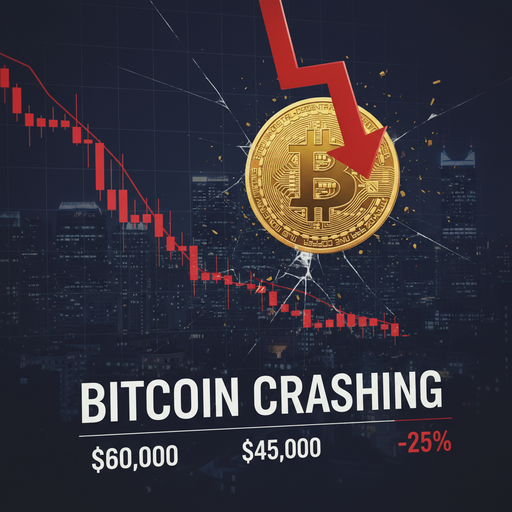
Why the Crypto Market Is Crashing: Five Critical Factors Behind the Downturn
The cryptocurrency market has entered a severe correction phase, with major digital assets plummeting to levels that have shaken investor confidence. Bitcoin recently dropped to $76.15K (down 2.84% in 24 hours), while Ethereum fell to $2.24K (down 2.65%), and BNB declined to $751.30 (down 3.01%). Understanding why the crypto market is crashing requires examining the complex interplay of macroeconomic policies, market structure failures, geopolitical tensions, and institutional behavior shifts that have converged to create perfect storm conditions.
Trade Wars and Policy Uncertainty Amplify Market Fear
The escalation of international trade tensions has become one of the most significant headwinds for cryptocurrency valuations. When tariff regimes tighten between major economies, inflation expectations rise sharply. This triggers panic selling among retail traders who face immediate pressure from rising cost of living, pushing many to liquidate crypto holdings to meet daily expenses. The geopolitical dimension compounds this effect—tensions between major powers create policy uncertainty that institutional investors actively avoid, pulling liquidity from speculative assets like cryptocurrencies.
Currency conversion pressures intensify as traders abandon digital assets to secure fiat currency during periods of economic uncertainty. Meanwhile, discussions around economic control and resource allocation between nations fuel market anxiety, creating a cascade of selling that feeds on itself. The broader consequence is clear: traders caught between currency devaluation fears and rising inflation often exit crypto positions regardless of long-term fundamentals.
The Liquidity Crisis: Fewer Buyers Than Sellers
One of the most dangerous dynamics currently impacting the crypto market is the structural collapse of liquidity. The recent severe price decline from peak levels has fundamentally altered supply-demand dynamics. Bitcoin’s recent drop from previous highs illustrates how quickly selling pressure can overwhelm available buy orders when sentiment shifts.
Major institutional players have significantly reduced their accumulation pace. Most notably, previously aggressive purchasers have paused their acquisition strategies, removing a key floor that previously supported prices during downturns. This matters because when whales and institutions stop buying, retail investors who depend on this support become more vulnerable to panic selling.
The situation deteriorates further when established projects announce strategic exits from the market. Token ecosystems built on major blockchains—particularly Ethereum-based projects—have seen their valuations compress to new lows. The meme coin sector, which thrived on community momentum and speculative fervor, now demonstrates how quickly enthusiasm evaporates without sustained buying interest. Fewer new projects entering the ecosystem means fewer sources of fresh capital, creating a vicious cycle where scarcity of new opportunities accelerates existing asset liquidation.
Platform Breaches Destroy Market Confidence
Security compromises at major trading platforms send shockwaves through the entire ecosystem. When exchanges suffer significant breaches, market participants immediately withdraw liquidity due to custody and security concerns. The psychological impact often exceeds the direct financial loss—traders become reluctant to keep assets on platforms, preferring to hold them in self-custody or exit positions entirely.
Following such incidents, while industry support mechanisms may activate (larger platforms stabilizing confidence in the sector), the damage to overall market psychology persists. Bitcoin’s behavior after major security incidents typically shows extended weakness as traders price in the risk of future incidents. Without sufficient buying liquidity post-incident, prices lack the support needed to stabilize, leading to cascading liquidations and forced selling.
Government Policy Shocks Force Immediate Liquidation
Economic disruptions at the national level ripple through crypto markets with particular severity. When government operations halt and income streams disappear, households face immediate cash crises. Crypto holders—often younger, more financially precarious populations—become forced sellers, converting digital assets into fiat currency needed for survival. Prolonged disruptions multiply this effect, as extended periods without income create cumulative liquidity desperation.
The psychological dimension adds another layer: when official institutions appear dysfunctional, confidence in the entire financial system erodes. Investors who might normally hold through minor downturns instead capitulate, fearing deeper systemic problems. The crypto market, being more sentiment-dependent than traditional markets, amplifies this uncertainty into accelerated sell-offs. Rumors or expectations of future policy disruptions create anticipatory selling, preventing price recovery even during relative calm periods.
Safe-Haven Competition: Gold and Geopolitical Risk Premium
An often-overlooked factor in recent crypto weakness is the rising appeal of traditional safe-haven assets. Gold prices have appreciated significantly, pulling investor capital away from speculative digital assets. When geopolitical tensions rise—particularly in resource-rich regions with global strategic importance—investors systematically rotate from cryptocurrencies into gold and government bonds.
This competition for defensive capital is particularly damaging because it’s structural rather than temporary. Each geopolitical flashpoint that raises global risk perception redirects capital flows away from crypto into established safe havens. The current environment shows this dynamic clearly: as international tensions fluctuate, capital systematically moves into gold and away from digital assets, creating predictable sell pressure every time headlines worsen.
The combination of all five factors—policy uncertainty eroding confidence, market structure failures reducing liquidity, security concerns destroying trust, government disruptions forcing liquidation, and defensive capital flows toward traditional assets—explains why the crypto market is crashing across the board. Recovery requires restoration of confidence at multiple levels simultaneously: policy certainty, platform security, institutional accumulation renewal, and geopolitical de-escalation. Until these conditions align, expect continued pressure on cryptocurrency valuations.