

Trade
Basic
Futures
Futures
Hundreds of contracts settled in USDT or BTC
TradFi
Gold
Trade global traditional assets with USDT in one place
Options
Hot
Trade European-style vanilla options
Unified Account
Maximize your capital efficiency
Demo Trading
Futures Kickoff
Get prepared for your futures trading
Futures Events
Participate in events to win generous rewards
Demo Trading
Use virtual funds to experience risk-free trading
Earn
Launch
CandyDrop
Collect candies to earn airdrops
Launchpool
Quick staking, earn potential new tokens
HODLer Airdrop
Hold GT and get massive airdrops for free
Launchpad
Be early to the next big token project
Alpha Points
Trade on-chain assets and enjoy airdrop rewards!
Futures Points
Earn futures points and claim airdrop rewards
Investment
Simple Earn
Earn interests with idle tokens
Auto-Invest
Auto-invest on a regular basis
Dual Investment
Buy low and sell high to take profits from price fluctuations
Soft Staking
Earn rewards with flexible staking
Crypto Loan
0 Fees
Pledge one crypto to borrow another
Lending Center
One-stop lending hub
VIP Wealth Hub
Customized wealth management empowers your assets growth
Private Wealth Management
Customized asset management to grow your digital assets
Quant Fund
Top asset management team helps you profit without hassle
Staking
Stake cryptos to earn in PoS products
Smart Leverage
New
No forced liquidation before maturity, worry-free leveraged gains
GUSD Minting
Use USDT/USDC to mint GUSD for treasury-level yields

More





ETHZilla "Abandoning Coins to Invest in Real Estate" Sparks Hot Debate: Are Institutional Crypto Asset Allocations Shifting Towards the Real World?
“Surrendering” ETHZilla announces transformation into real estate tokenization business, having acquired loans for 95 prefabricated and modular homes valued at $4.7 million. These loans are expected to generate an annual yield of approximately 10%, which will be converted into cash flow digital tokens and circulated through regulated broker-dealers and trading systems like Liquidity.io.
Transformation Under Market Pressure
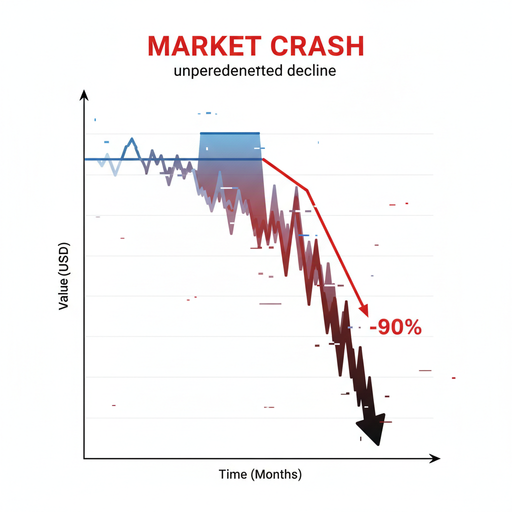
After a double setback in its Ethereum holdings and stock price, ETHZilla ultimately chose to abandon the traditional route. Its transformation actually represents a significant turning point in the market. The company’s stock price has plummeted over 90% from its peak of $107 in August 2025. To buy back shares and pay down debt, ETHZilla sold over $110 million worth of Ethereum last year, and recently sold $74.5 million worth of ETH for debt repayment.
Like many crypto treasuries, ETHZilla’s core strategy was simply holding Ethereum. However, during the market downturn, this single strategy revealed clear vulnerabilities, putting enormous pressure on the company’s balance sheet.
Strategic Logic and Real Opportunities
ETHZilla has acquired a tangible, visible portfolio of assets capable of generating stable cash flow. This $4.7 million loan portfolio consists of 95 loans secured by first-lien mortgages on prefabricated and modular homes. These loans are expected to yield about 10% annually, providing a stable cash flow that cannot be offered by simply holding volatile Ethereum.
The transformation was not a hasty move. ETHZilla had already purchased approximately 15% of digital lending platform Zippy in December 2025, and this loan acquisition further deepened the strategic partnership. The company plans to tokenize this loan portfolio on Ethereum’s layer 2 network, making it a tradable digital token that can generate cash flow on a regulated platform.
The Rationality of Institutional Shift
The shift from simply holding tokens to exploring RWA (Real World Asset) tokenization is driven by clear business logic. This marks the evolution of the crypto industry into a mature market stage focused on stable returns and concrete applications. RWA tokenization can offer investors the yield characteristics of traditional financial assets (like bonds and real estate), while also leveraging the efficiency and transparency advantages of blockchain technology.
Institutional investors are seeking more stable returns, not just speculative growth. Tokenization reduces asset trading and settlement costs, enhances market liquidity, and is highly attractive to institutions. BlackRock explicitly stated in the “2026 Tokenization Outlook” that tokenization will become a core component of future financial infrastructure. The report emphasizes that Ethereum maintains a clear advantage in the tokenization space, currently supporting about 65% of the total tokenized assets.
The Future of Ethereum and Tokenization
ETHZilla’s choice to tokenize on Ethereum’s layer 2 network is no coincidence. Ethereum has become the de facto settlement layer for institutions. Major global financial institutions like JPMorgan and Fidelity are building their on-chain products on Ethereum. The Ethereum ecosystem’s penetration in stablecoins, DeFi, and RWA protocols gives it unique advantages. As more assets are brought on-chain, Ethereum is not just a token for paying gas fees but is becoming an indispensable infrastructure for the financial system.
Joseph Chalom predicts that by 2026, Ethereum’s total value locked (TVL) could increase tenfold, driven by stablecoins reaching $500 billion and tokenized real-world assets (RWA) reaching $300 billion.
Current Ethereum Market Data and Insights
According to Gate行情 data, as of February 6, 2026, Ethereum (ETH) price is $1,907.66, down -9.46% in the past 24 hours, with a trading volume of $937.6M. Its market cap is $253.2 billion, with a market share of 10.01%. ETH price has fluctuated between $1,744.69 and $2,149.86 in the last 24 hours. Compared to the all-time high of $4,946.05, the current price is in a significant retracement phase.
Market forecast data suggests that the average price of Ethereum in 2026 could be $2,088.27, with a range between $1,399.14 and $3,007.1. Long-term, by 2031, Ethereum’s price could reach a high of $7,074.38. Currently, the circulating supply is 120.69 million ETH, with the total supply being the same, and an unlimited maximum supply. Market sentiment is currently “bullish.”
The integration with traditional finance will be the next key growth point for the crypto industry. Institutional funds are no longer satisfied with mere crypto speculation but seek to apply blockchain technology to real-world assets. Forecasts suggest that by 2026, the value of tokenized real-world assets could reach $300 billion. Ethereum, supporting about 65% of tokenized assets, is shifting from the “digital gold” narrative to a “financial infrastructure” logic. During market downturns, traditional financial institutions entering the space may accelerate this process. Clear regulation of real-world asset tokenization provides a safe gateway for compliant capital to access the blockchain world.