

Trade
Basic
Futures
Futures
Hundreds of contracts settled in USDT or BTC
TradFi
Gold
Trade global traditional assets with USDT in one place
Options
Hot
Trade European-style vanilla options
Unified Account
Maximize your capital efficiency
Demo Trading
Futures Kickoff
Get prepared for your futures trading
Futures Events
Participate in events to win generous rewards
Demo Trading
Use virtual funds to experience risk-free trading
Earn
Launch
CandyDrop
Collect candies to earn airdrops
Launchpool
Quick staking, earn potential new tokens
HODLer Airdrop
Hold GT and get massive airdrops for free
Launchpad
Be early to the next big token project
Alpha Points
Trade on-chain assets and enjoy airdrop rewards!
Futures Points
Earn futures points and claim airdrop rewards
Investment
Simple Earn
Earn interests with idle tokens
Auto-Invest
Auto-invest on a regular basis
Dual Investment
Buy low and sell high to take profits from price fluctuations
Soft Staking
Earn rewards with flexible staking
Crypto Loan
0 Fees
Pledge one crypto to borrow another
Lending Center
One-stop lending hub
VIP Wealth Hub
Customized wealth management empowers your assets growth
Private Wealth Management
Customized asset management to grow your digital assets
Quant Fund
Top asset management team helps you profit without hassle
Staking
Stake cryptos to earn in PoS products
Smart Leverage
New
No forced liquidation before maturity, worry-free leveraged gains
GUSD Minting
Use USDT/USDC to mint GUSD for treasury-level yields

More






Ethereum whale "surrenders" to transformation? ETHZilla bets on real estate tokenization
Global assets have just experienced a “Black Thursday”: the S&P 500 index wiped out its gains for the year, and spot gold plummeted 3.81% in a single day. In the crypto market, Ethereum prices dropped over 14%, briefly falling below $1,800.
Amidst the market’s cries of distress, the former ninth-largest Ethereum-based crypto treasury (DAT) company ETHZilla announced a strategic shift: selling over $110 million worth of Ethereum and fully transitioning into real estate tokenization.
Market Volatility
In early February 2026, the global financial markets experienced widespread and intense turbulence. During this storm, traditional assets and crypto assets declined in unison, a rare occurrence.
The S&P 500 index fell for the third consecutive trading day, completely erasing all gains made this year. Gold, as a safe-haven asset, was not spared either, with spot gold prices dropping 3.81% in a single day.
The impact on the cryptocurrency market was even more pronounced. Bitcoin prices plunged over 13%, hitting a low of $62,333; Ethereum prices also tumbled more than 14%, falling to around $1,836.
Difficult Decisions
In this market environment, ETHZilla made a critical strategic pivot. Once focused on accumulating Ethereum assets, the company is now shifting its business focus to real estate tokenization.
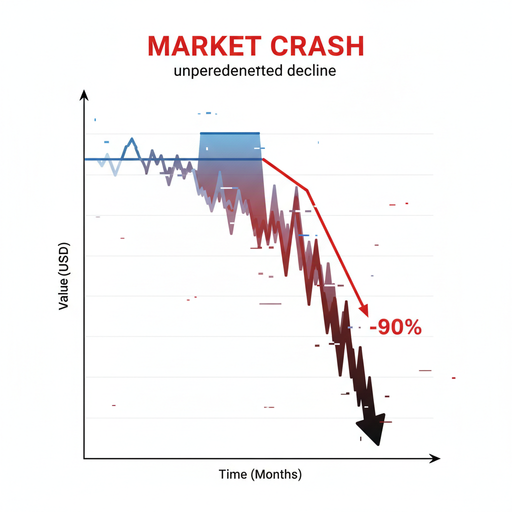
According to the latest data, ETHZilla’s stock price has fallen over 90% from its peak of $107 in August 2025. As of February 5, its stock closed at $3.1000.
Faced with dual pressures from stock prices and asset holdings, management had to seek new growth avenues. Last year, ETHZilla sold over $110 million worth of Ethereum, with the proceeds used for stock buybacks and debt repayment.
Strategic Transformation
ETHZilla’s transformation is not a sudden impulse but a carefully considered strategic adjustment. The company has acquired loans for 95 prefabricated and modular homes valued at $4.7 million.
These loans are secured by senior liens and are expected to yield about 10% annually, providing stable cash flow for the company. ETHZilla plans to tokenize these assets on Ethereum’s layer 2 network.
The company positions itself as a platform focused on asset securitization on Ethereum’s layer 2. Through a partnership with Liquidity.io, ETHZilla aims to facilitate transactions involving real-world assets.
Business Blueprint
ETHZilla’s tokenization plans extend beyond real estate. The company intends to bring various real-world assets onto the blockchain, including industrial equipment, private credit products, and commercial real estate.
These assets share the characteristic of being built around predictable cash flows and are supported by AI-assisted underwriting and diversified risk exposure models. The company expects its first tokenized assets to go live in the first quarter of 2026.
To ensure compliance, ETHZilla has established a comprehensive regulatory framework, including a trading system registered with the U.S. Securities and Exchange Commission (SEC), qualified custody and institutional settlement services, and partnerships with FINRA-licensed broker-dealers.
Industry Outlook
ETHZilla’s transformation is not an isolated event; it reflects the broader trend of real-world asset (RWA) tokenization. Industry experts predict that by the end of 2026, the tokenized asset market could exceed $400 billion.
Traditional financial institutions are moving from experimentation to implementation. Among the top 20 global asset management firms, more than half are expected to launch tokenized products in the near future.
In this transition, Ethereum and its layer 2 networks are becoming critical technological infrastructure. ETHZilla explicitly states that Ethereum’s programmable settlement layer allows assets to be issued, governed, and traded with greater transparency.
Future Challenges
Despite promising prospects, ETHZilla and the entire RWA tokenization sector face multiple challenges. Legal clarity, cross-chain interoperability, and unified identity mechanisms are major hurdles the industry must overcome.
ETHZilla’s transformation has also been controversial. A few months ago, a law firm launched an investigation into whether ETHZilla and its executives engaged in securities fraud or other illegal activities.
Additionally, RWAs currently account for only about 7% of the entire digital asset market, with a smaller proportion related to real estate, indicating that the sector is still in early development stages.
To address these challenges, ETHZilla plans to participate in the Susquehanna 15th Annual Technology Conference on February 26, 2026, showcasing its latest progress in asset tokenization.
Future Outlook
As of February 6, the price of Ethereum on Gate has fallen from recent highs, currently reporting $1,930. Market volatility has created opportunities for institutional players like ETHZilla to reassess their strategies.
ETHZilla’s path of transformation is not smooth. Its stock price has dropped from a 52-week high of $174.60 to around $3.1000, with a market cap shrinking to approximately $59 million.
However, amid the downturn, the tokenized real estate market is quietly gaining momentum. As more traditional assets gain liquidity through blockchain technology, ETHZilla’s early positioning may yield returns in the next market upcycle.