

 :
:



#CLARITYActAdvances
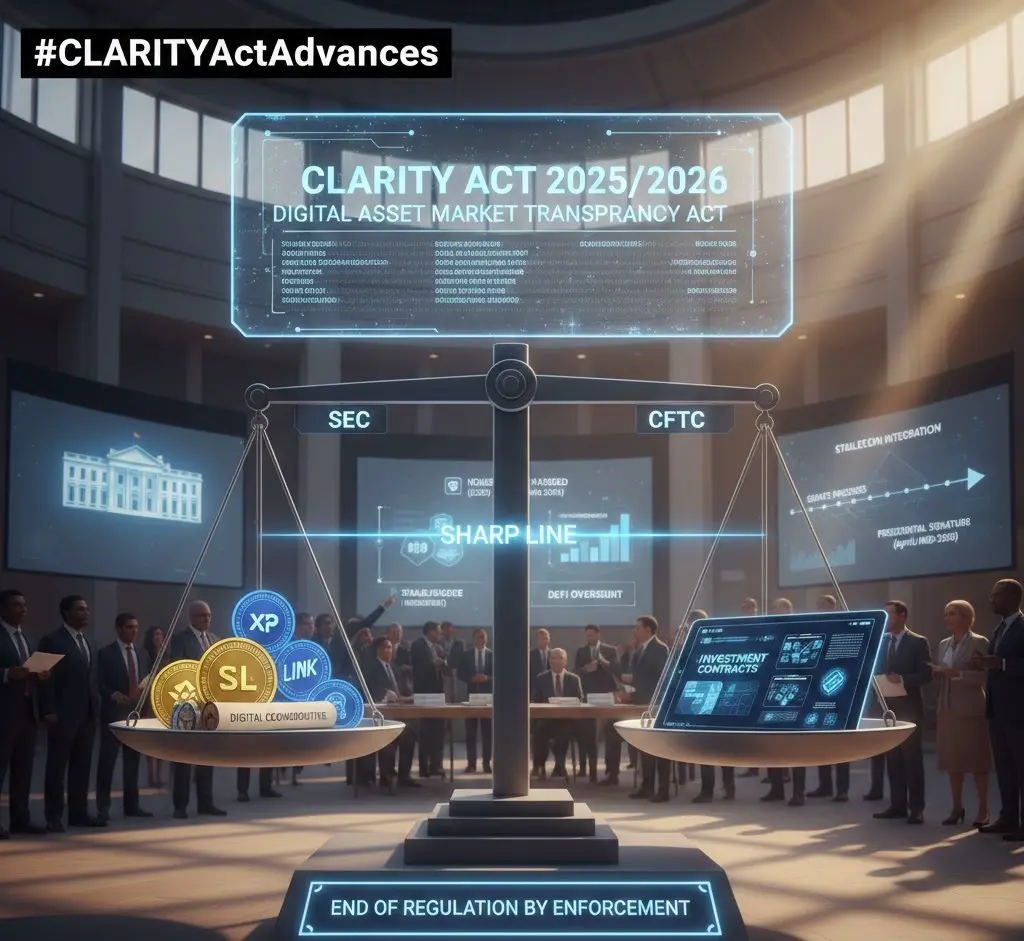
The CLARITY Act (2025/2026 Digital Asset Market Transparency Act) is currently a major focus in Washington, aiming to provide the first comprehensive federal regulatory framework for the U.S. crypto market.
As of early March 2026, after experiencing some stagnation, the bill is gaining momentum again. Here's a summary of what's happening and why it's important:
What is the CLARITY Act?
The primary goal of the Act is to end "regulation by enforcement" and replace it with a clear, legal rulebook.
Jurisdiction Separation: It draws a "sharp line" between the SEC (Securities and Exchange Commission) and the Commodity Futures Trading Commission.
It gains "exclusive jurisdiction" over digital commodity spot markets.
SEC: It maintains oversight over digital assets classified as investment contracts (securities).
The bill includes provisions that would classify major tokens like XRP, Solana, and Chainlink as commodities if they are pegged to exchange-traded ETFs before 2026.
It also allows new projects to raise up to $75 million annually without full SEC registration, provided they work towards decentralization.
Current Status: March 2026
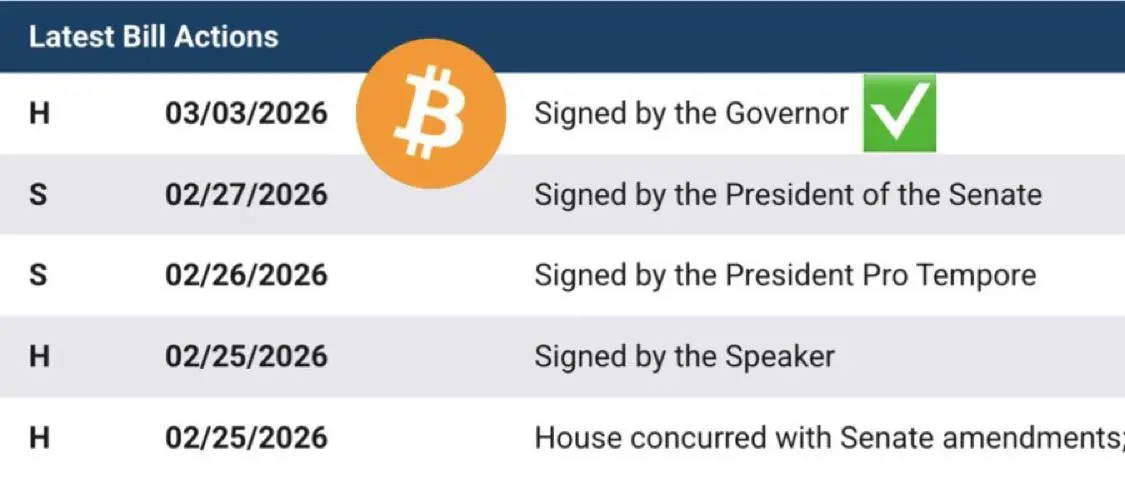
The bill has already passed the House with bipartisan support, but the Senate has been the primary battleground.
Key Developments:
Senate ProgressThe Senate Agriculture Committee advanced its version in early 2026, though largely along party lines.
White House PushThe administration is actively holding meetings with bank and crypto leaders to resolve a "stalemate" over stablecoin rewards and DeFi oversight.
Recent delays occurred after like expressed concerns that specific text might inadvertently hamper innovation or restrict staking rewards.
Timeline Industry analysts suggest the bill could be signed into law by April or mid-year 2026 if the current momentum holds.
Stablecoin Integration: The bill is a companion to the GENIUS Act (passed in 2025), which regulated stablecoins. Together, they represent a total overhaul of the U.S. payment system.
$SOL $XRP $LINK
The CLARITY Act (2025/2026 Digital Asset Market Transparency Act) is currently a major focus in Washington, aiming to provide the first comprehensive federal regulatory framework for the U.S. crypto market.
As of early March 2026, after experiencing some stagnation, the bill is gaining momentum again. Here's a summary of what's happening and why it's important:
What is the CLARITY Act?
The primary goal of the Act is to end "regulation by enforcement" and replace it with a clear, legal rulebook.
Jurisdiction Separation: It draws a "sharp line" between the SEC (Securities and Exchange Commission) and the Commodity Futures Trading Commission.
It gains "exclusive jurisdiction" over digital commodity spot markets.
SEC: It maintains oversight over digital assets classified as investment contracts (securities).
The bill includes provisions that would classify major tokens like XRP, Solana, and Chainlink as commodities if they are pegged to exchange-traded ETFs before 2026.
It also allows new projects to raise up to $75 million annually without full SEC registration, provided they work towards decentralization.
Current Status: March 2026
The bill has already passed the House with bipartisan support, but the Senate has been the primary battleground.
Key Developments:
Senate ProgressThe Senate Agriculture Committee advanced its version in early 2026, though largely along party lines.
White House PushThe administration is actively holding meetings with bank and crypto leaders to resolve a "stalemate" over stablecoin rewards and DeFi oversight.
Recent delays occurred after like expressed concerns that specific text might inadvertently hamper innovation or restrict staking rewards.
Timeline Industry analysts suggest the bill could be signed into law by April or mid-year 2026 if the current momentum holds.
Stablecoin Integration: The bill is a companion to the GENIUS Act (passed in 2025), which regulated stablecoins. Together, they represent a total overhaul of the U.S. payment system.
$SOL $XRP $LINK