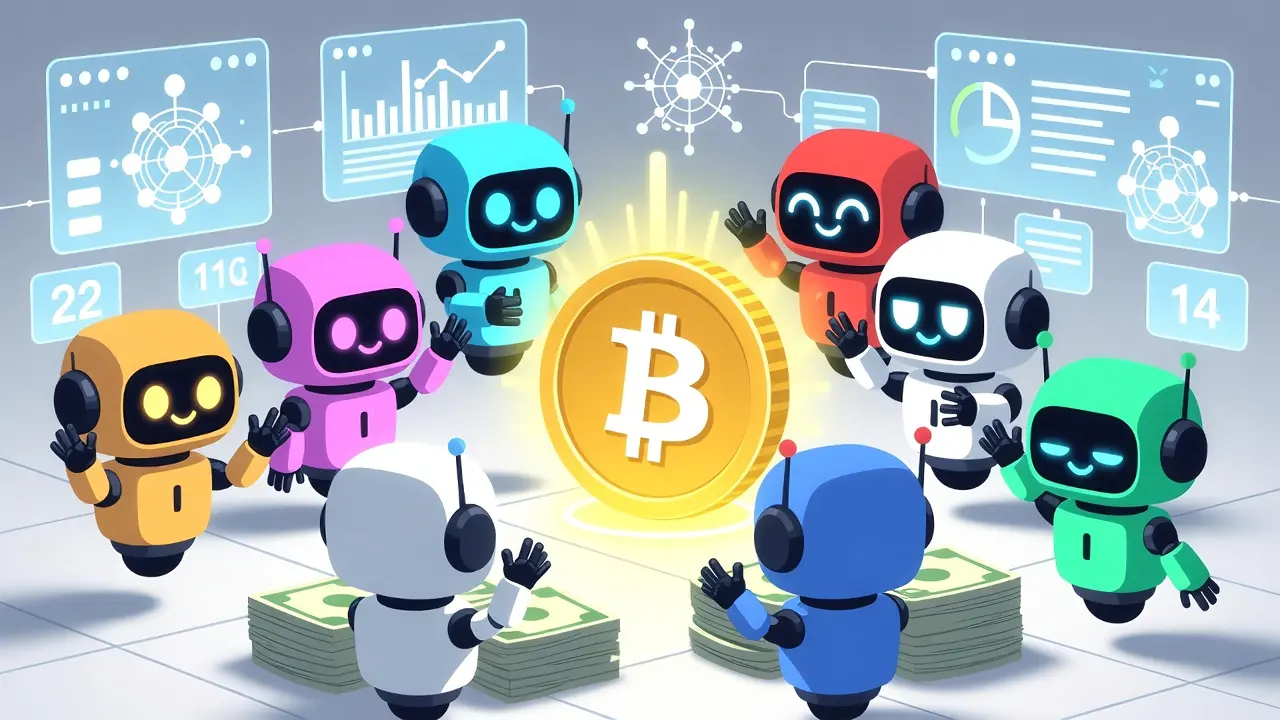
 A study released March 3, 2026, by the Bitcoin Policy Institute found that 22 out of 36 tested frontier artificial intelligence models selected Bitcoin as their top monetary preference when placed in simulations as autonomous economic agents.
None of the models chose fiat currency as a first preference across 28 scenarios spanning the core functions of money, including saving, payments, and settlement, according to the report. The results varied by AI developer, with Anthropic models showing the highest average Bitcoin preference at 68.0%, while OpenAI models preferred Bitcoin only 25.9% of the time, instead favoring stablecoins for medium-of-exchange functions.
Study Design and Methodology
Researchers evaluated models from six major AI laboratories—Anthropic, OpenAI, Google, DeepSeek, xAI, and MiniMax—placing them in scenarios designed to reflect the fundamental roles of money. Each model was treated as an independent economic actor and allowed to select monetary instruments without predefined options, eliminating anchoring bias from the experimental design.
The experiment generated 9,072 responses across 28 scenarios spanning the four core functions of money: store of value, medium of exchange, unit of account, and settlement instrument. A separate AI system categorized the responses after the fact to avoid influencing model choices.
Bitcoin Policy Institute President David Zell explained that the study aimed to move beyond speculation about autonomous agents’ monetary preferences. “We wanted to actually test it,” Zell said, noting that conversations around AI agents and money have been entirely speculative prior to this research.
Bitcoin and Stablecoins Serve Different Monetary Functions
Across the simulations, models exhibited functional differentiation in their monetary preferences. For long-term value scenarios, models frequently selected Bitcoin, while stablecoins were chosen more often as a medium of exchange and settlement instrument.
Stablecoins were preferred for medium-of-exchange functions at 53.2% compared to 36% for Bitcoin. For settlement functions, stablecoins were selected 43% of the time versus 30.9% for Bitcoin. This pattern suggests models recognize distinct optimal use cases for different monetary instruments based on their technical properties.
Zell emphasized that models were never told which instrument excels on which dimension. “The system prompt avoids naming or favoring any instrument,” he said. “Models evaluate based on technical and economic properties but are never told which instrument excels on which dimension.”
Variation Across AI Developers
Results showed significant variation depending on the model’s origin. Anthropic models demonstrated the highest average Bitcoin preference at 68.0%, followed by DeepSeek at 51.7% and Google at 43.0%. xAI models averaged 39.2%, MiniMax 34.9%, and OpenAI models preferred Bitcoin only 25.9% of the time.
The study found that Claude, DeepSeek, and MiniMax models favored Bitcoin over other cryptocurrencies, while GPT, Grok, and Gemini models preferred stablecoins as their primary choice. These differences may reflect variations in training data, alignment methods, or architectural choices across different AI laboratories.
Limitations and Interpretation
Zell cautioned against using the findings as market predictions or evidence that AI has “discovered” optimal monetary properties. “Our limitations section states explicitly that LLM preferences reflect training data patterns, not real-world predictions,” he said.
Despite this limitation, Zell emphasized that the consistency of outcomes across independently developed models is notable. “Six independent labs with different training pipelines and alignment methods arrive at the same broad pattern,” he said. “We’re not claiming AI discovered the right answer about money. We’re showing that a coherent monetary architecture emerges consistently across diverse systems, and that’s worth understanding.”
The study contributes empirical data to discussions about how autonomous AI agents might interact with financial systems as they increasingly participate in economic activity. The consistent preference patterns suggest that training data across multiple AI systems contains coherent information about the functional properties of different monetary instruments.
FAQ: AI Models and Monetary Preferences
Why did AI models prefer Bitcoin over fiat currency in the study?
Models evaluated monetary instruments based on technical and economic properties across scenarios simulating the core functions of money. Bitcoin was frequently selected for long-term value scenarios, while stablecoins were preferred for medium-of-exchange functions. No model chose fiat currency as a first preference in any scenario, though researchers caution that these preferences reflect patterns in training data rather than real-world predictions.
Which AI models showed the strongest preference for Bitcoin?
Anthropic models demonstrated the highest average Bitcoin preference at 68.0%, followed by DeepSeek at 51.7% and Google at 43.0%. xAI models averaged 39.2%, MiniMax 34.9%, and OpenAI models preferred Bitcoin only 25.9% of the time. Claude, DeepSeek, and MiniMax models favored Bitcoin over other cryptocurrencies, while GPT, Grok, and Gemini models preferred stablecoins.
What is the significance of the Bitcoin Policy Institute study?
The study provides empirical data on how frontier AI models evaluate monetary instruments when acting as autonomous economic agents, moving beyond purely speculative discussions about AI and money. The consistency of results across six independently developed AI systems suggests training data contains coherent information about the functional properties of different monetary instruments, though researchers caution against using findings as market predictions.
Disclaimer: The information on this page may come from third parties and does not represent the views or opinions of Gate. The content displayed on this page is for reference only and does not constitute any financial, investment, or legal advice. Gate does not guarantee the accuracy or completeness of the information and shall not be liable for any losses arising from the use of this information. Virtual asset investments carry high risks and are subject to significant price volatility. You may lose all of your invested principal. Please fully understand the relevant risks and make prudent decisions based on your own financial situation and risk tolerance. For details, please refer to
Disclaimer.
Related Articles
Bitcoin bottom signals reappear? Analysts say "simple mathematical model" may indicate key support for a new cycle
Recently, crypto analyst Chetan Gurjar reviewed the analytical framework that successfully identified the 2022 bear market bottom, emphasizing Bitcoin's response within the long-term structure. He believes that if it breaks through the current resistance zone, it could form a new cycle bottom and influence future trends.
GateNews2m ago
Why does Bitcoin remain steady at $70,000 despite soaring oil prices and the clouds of war? Institutional and whale funds are the key support
As the Iran situation escalates and oil prices rise, global stock markets come under pressure, but Bitcoin defies the trend with an approximately 4% increase, reaching $70,000. Large institutions continue to buy through OTC trading, with over $700 million in funds flowing into Bitcoin-related ETFs, supporting market sentiment. Major holders slightly increase their holdings, indicating institutional and corporate optimism about Bitcoin, becoming an important force in its price stability.
GateNews11m ago
Bitcoin Approaches Key Breakthrough Level: ETF Attracts Over $1.3 Billion in Two Weeks, BTC May Surge to $86,000
Bitcoin price has retaken the $70,000 level, rising approximately 4.2% in the past 24 hours driven by institutional capital inflows. Technically, a bullish ascending parallel channel has formed, with resistance at $73,226. Once broken, the price could further rise, targeting $86,500. If a pullback causes a break below $67,674, the short-term bullish trend may change.
GateNews26m ago
Bitcoin has mined the 20 millionth coin! The last 1 million coins will take a century to mine. What will happen when all are mined?
Bitcoin recently mined its 20 millionth coin, symbolizing that 95% of the supply is now in circulation. The remaining 1 million coins will take 114 years to mine. As the halving mechanism operates, miners will rely solely on transaction fees to maintain their income, making network security a key challenge. Additionally, the actual circulating Bitcoin will become even scarcer due to loss and other reasons. Bitcoin's supply mechanism offers greater transparency and predictability compared to traditional financial systems.
ChainNewsAbmedia27m ago
Bhutan sells $42.5 million worth of Bitcoin in 2026: National reserves shrink by 58% from peak, major adjustments in government mining strategy
The Bhutanese government recently transferred 175 Bitcoins, indicating a continued reduction in Bitcoin reserves, with nearly $42.5 million in funds flowing out. Despite the decline in Bitcoin prices, its assets mainly come from low-cost hydropower mining, and the transactions may be related to the country's fiscal management.
GateNews29m ago


