





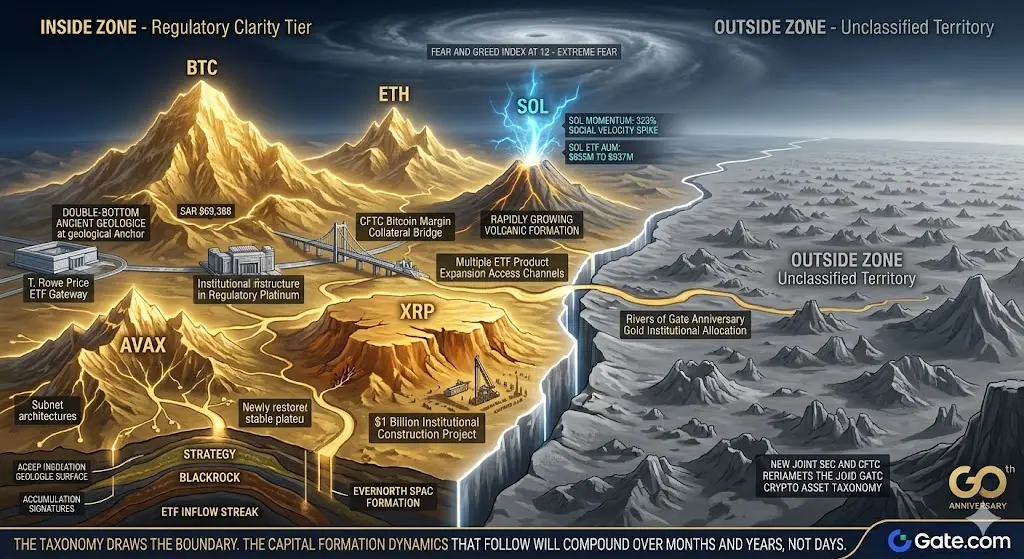
#SECAndCFTCNewGuidelines
The End of Regulatory Ambiguity: How the SEC and CFTC's New Joint Framework Is Reshaping the Entire Crypto Industry
The Most Significant Regulatory Shift in Crypto's History Has Just Happened and Most People Haven't Processed It Yet
For the better part of a decade, the single most paralyzing force in the crypto industry was not market volatility, not liquidity risk, not even security vulnerabilities. It was regulatory uncertainty. The absence of clear, consistent rules governing what a digital asset actually is — whether it is a security, a commodity, a currency, a collectible, or something entirely novel created a legal and operational environment so ambiguous that serious institutional capital stayed on the sidelines, legitimate projects operated in perpetual legal jeopardy, and enforcement actions were launched not on the basis of clear rules but on contested interpretations of laws written decades before blockchain technology existed.
That era is now formally over.
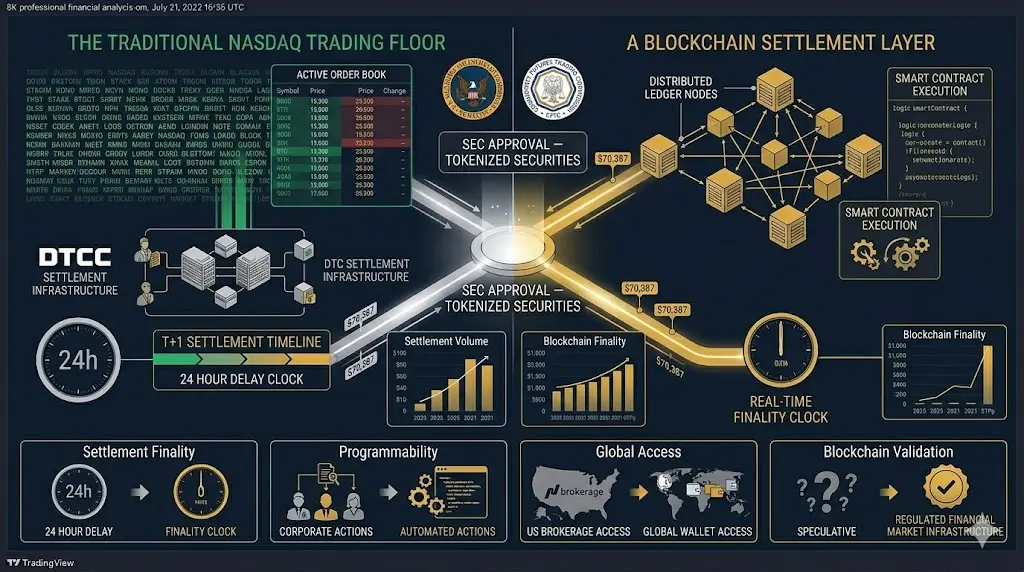
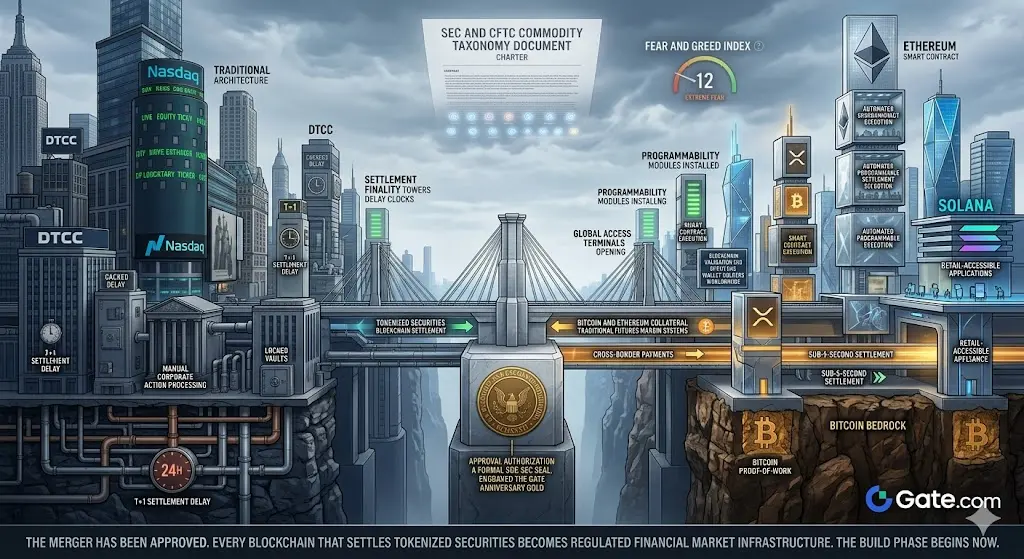
In a development that deserves far more attention than the short-term price action is receiving, the SEC and CFTC have jointly released a landmark regulatory framework coordinated under the banner of "Project Crypto" that for the first time provides structured, voted, published clarity on exactly how digital assets are classified, who regulates what, and what the rules of engagement are for every participant in the ecosystem. This is not a staff letter. It is not informal guidance. It is a commission-level interpretive document, voted on by the full SEC commission, published in the Federal Register, and explicitly coordinated with the CFTC for consistency.
The Gensler era's weaponized ambiguity is over. The post-Clayton "investment contract" framework that generated years of enforcement uncertainty is replaced. What comes next is a defined, navigable regulatory landscape and understanding it is now mandatory for anyone who participates seriously in this market.
What the SEC's New Framework Actually Says
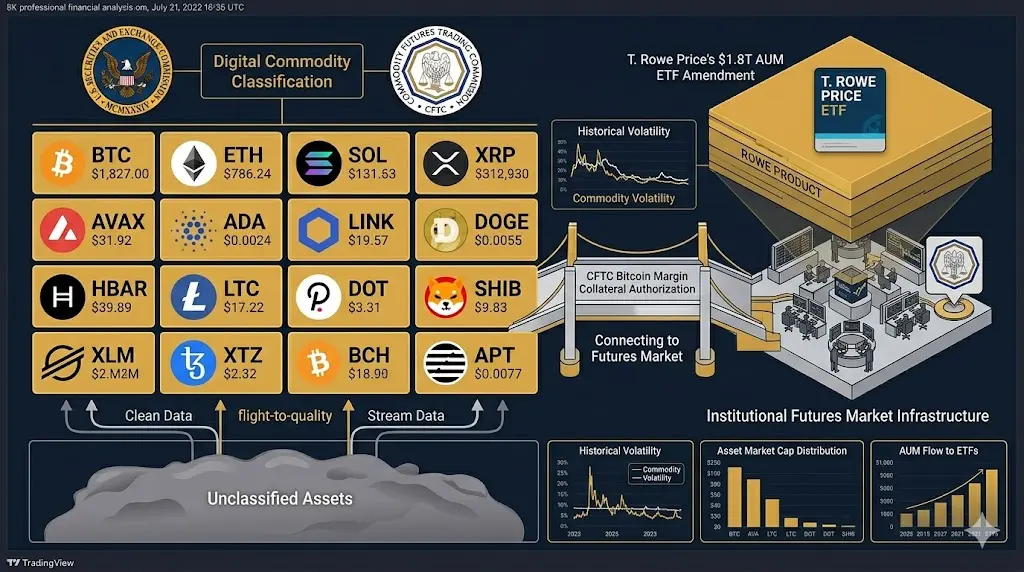
Galaxy Research's Alex Thorn, one of the most rigorous analysts tracking regulatory developments in crypto, summarized the core structure of the new SEC guidance this week. The framework establishes five categories of digital assets, with fundamentally different regulatory treatment for each:
Digital Commodities assets that function as decentralized stores of value or medium of exchange without a centralized issuing entity making ongoing material promises to holders. These fall primarily under CFTC jurisdiction and are not treated as securities. BTC is the clearest example.
Digital Collectibles NFTs and similar assets whose value derives from uniqueness and cultural significance rather than expectation of profit from managerial efforts. Not securities in the vast majority of cases.
Digital Utilities tokens that provide access to a specific platform, service, or protocol, where the value is tied to usage rather than investment return expectation. These are the assets that created the most enforcement ambiguity under the prior framework. The new guidance provides safe harbor conditions under which utility tokens are not treated as securities, even during initial distribution.
Stablecoins a distinct category with its own regulatory considerations, primarily around reserve requirements and redemption mechanisms, rather than securities law analysis. The coordination with Congressional Clarity Act legislation is moving in parallel.
Digital Securities (or Tokenized Securities) this is the only category that remains squarely under securities law. If an asset represents ownership in an enterprise, entitles holders to dividends or profit-sharing, or is marketed primarily as an investment in a managed business, it is a security and must be registered or exempt under federal securities law.
The critical clarification: only Category 5 requires securities registration. The prior enforcement posture — which treated almost any token as a potential unregistered security based on a broad reading of the Howey test — is explicitly replaced by a more structured, narrower analysis.
The Four Rule Changes That Matter Most
Rule Change 1: The "Sufficient Decentralization" Test Is Eliminated
Under the prior framework, projects argued that their tokens became non-securities once the underlying network achieved "sufficient decentralization" a standard that was never formally defined, was applied inconsistently across enforcement actions, and left projects in a permanent state of uncertainty about when, if ever, they crossed the legal threshold. The new guidance eliminates this test entirely and replaces it with a concrete, objective criterion: whether the issuer has made and fulfilled publicly disclosed core development commitments. Once those commitments are demonstrably completed, the asset can trade in secondary markets without continuing securities classification, regardless of any ongoing community development activity.
Rule Change 2: Secondary Market Trading Is Explicitly Protected for Non-Securities
One of the most operationally damaging aspects of the prior enforcement environment was the theory that secondary market trading of a token could independently constitute an unregistered securities offering, even if the original issuance had been conducted legitimately. The new guidance explicitly rejects this position. Non-securities digital assets in Categories 1 through 4 can be traded freely in secondary markets without triggering securities registration requirements. Exchanges listing these assets are not operating unlicensed securities exchanges.
Rule Change 3: Safe Harbors for Airdrops, Mining, and Staking
The new framework explicitly provides safe harbor treatment for three of the most common token distribution and participation mechanisms in the crypto ecosystem. Airdrops — the distribution of tokens to existing holders or users as a promotional or governance mechanism — do not constitute securities offerings. Mining — the process of validating transactions and receiving newly issued tokens as compensation — is not a securities transaction. Staking — locking tokens to participate in network validation and receiving yield as compensation — is not an investment contract.
These three safe harbors remove the legal cloud that has hovered over DeFi participation, staking services, and token distribution mechanics for years.
Rule Change 4: The "Efforts of Others" Analysis Is Narrowed Dramatically
The Howey test's fourth prong that an investment contract requires expectation of profit from the "efforts of others" — was applied under the prior framework to include essentially any third-party activity that might affect a token's price, including community discussion, social media commentary, and third-party developer activity. The new guidance restricts this analysis to only the core management commitments of the issuing entity. What the community says, what third-party developers build, what social media accounts post — none of this is attributable to the issuer for purposes of the securities analysis.
The Bigger Picture: Why This Moment Is a Structural Inflection Point
The history of every major financial market includes a moment when the regulatory framework matured from reactive and ambiguous to proactive and structured. That maturation is typically the precondition for the next major wave of institutional capital and mainstream adoption, because capital — particularly institutional capital — does not flow at scale into markets where the legal rules are unknown or inconsistently applied.
The SEC and CFTC's joint framework is that maturation moment for crypto. It does not resolve every question. It does not eliminate all compliance complexity. It does not prevent future enforcement actions against genuine fraud. What it does is replace a regime of enforced uncertainty with a regime of defined rules — and that shift, once made, tends to be irreversible.
The hashtag says SECAndCFTCNewGuidelines. The reality is larger than the hashtag suggests. This is the regulatory foundation on which the next phase of the industry will be built.
#MoonGirl
The End of Regulatory Ambiguity: How the SEC and CFTC's New Joint Framework Is Reshaping the Entire Crypto Industry
The Most Significant Regulatory Shift in Crypto's History Has Just Happened and Most People Haven't Processed It Yet
For the better part of a decade, the single most paralyzing force in the crypto industry was not market volatility, not liquidity risk, not even security vulnerabilities. It was regulatory uncertainty. The absence of clear, consistent rules governing what a digital asset actually is — whether it is a security, a commodity, a currency, a collectible, or something entirely novel created a legal and operational environment so ambiguous that serious institutional capital stayed on the sidelines, legitimate projects operated in perpetual legal jeopardy, and enforcement actions were launched not on the basis of clear rules but on contested interpretations of laws written decades before blockchain technology existed.
That era is now formally over.
In a development that deserves far more attention than the short-term price action is receiving, the SEC and CFTC have jointly released a landmark regulatory framework coordinated under the banner of "Project Crypto" that for the first time provides structured, voted, published clarity on exactly how digital assets are classified, who regulates what, and what the rules of engagement are for every participant in the ecosystem. This is not a staff letter. It is not informal guidance. It is a commission-level interpretive document, voted on by the full SEC commission, published in the Federal Register, and explicitly coordinated with the CFTC for consistency.
The Gensler era's weaponized ambiguity is over. The post-Clayton "investment contract" framework that generated years of enforcement uncertainty is replaced. What comes next is a defined, navigable regulatory landscape and understanding it is now mandatory for anyone who participates seriously in this market.
What the SEC's New Framework Actually Says
Galaxy Research's Alex Thorn, one of the most rigorous analysts tracking regulatory developments in crypto, summarized the core structure of the new SEC guidance this week. The framework establishes five categories of digital assets, with fundamentally different regulatory treatment for each:
Digital Commodities assets that function as decentralized stores of value or medium of exchange without a centralized issuing entity making ongoing material promises to holders. These fall primarily under CFTC jurisdiction and are not treated as securities. BTC is the clearest example.
Digital Collectibles NFTs and similar assets whose value derives from uniqueness and cultural significance rather than expectation of profit from managerial efforts. Not securities in the vast majority of cases.
Digital Utilities tokens that provide access to a specific platform, service, or protocol, where the value is tied to usage rather than investment return expectation. These are the assets that created the most enforcement ambiguity under the prior framework. The new guidance provides safe harbor conditions under which utility tokens are not treated as securities, even during initial distribution.
Stablecoins a distinct category with its own regulatory considerations, primarily around reserve requirements and redemption mechanisms, rather than securities law analysis. The coordination with Congressional Clarity Act legislation is moving in parallel.
Digital Securities (or Tokenized Securities) this is the only category that remains squarely under securities law. If an asset represents ownership in an enterprise, entitles holders to dividends or profit-sharing, or is marketed primarily as an investment in a managed business, it is a security and must be registered or exempt under federal securities law.
The critical clarification: only Category 5 requires securities registration. The prior enforcement posture — which treated almost any token as a potential unregistered security based on a broad reading of the Howey test — is explicitly replaced by a more structured, narrower analysis.
The Four Rule Changes That Matter Most
Rule Change 1: The "Sufficient Decentralization" Test Is Eliminated
Under the prior framework, projects argued that their tokens became non-securities once the underlying network achieved "sufficient decentralization" a standard that was never formally defined, was applied inconsistently across enforcement actions, and left projects in a permanent state of uncertainty about when, if ever, they crossed the legal threshold. The new guidance eliminates this test entirely and replaces it with a concrete, objective criterion: whether the issuer has made and fulfilled publicly disclosed core development commitments. Once those commitments are demonstrably completed, the asset can trade in secondary markets without continuing securities classification, regardless of any ongoing community development activity.
Rule Change 2: Secondary Market Trading Is Explicitly Protected for Non-Securities
One of the most operationally damaging aspects of the prior enforcement environment was the theory that secondary market trading of a token could independently constitute an unregistered securities offering, even if the original issuance had been conducted legitimately. The new guidance explicitly rejects this position. Non-securities digital assets in Categories 1 through 4 can be traded freely in secondary markets without triggering securities registration requirements. Exchanges listing these assets are not operating unlicensed securities exchanges.
Rule Change 3: Safe Harbors for Airdrops, Mining, and Staking
The new framework explicitly provides safe harbor treatment for three of the most common token distribution and participation mechanisms in the crypto ecosystem. Airdrops — the distribution of tokens to existing holders or users as a promotional or governance mechanism — do not constitute securities offerings. Mining — the process of validating transactions and receiving newly issued tokens as compensation — is not a securities transaction. Staking — locking tokens to participate in network validation and receiving yield as compensation — is not an investment contract.
These three safe harbors remove the legal cloud that has hovered over DeFi participation, staking services, and token distribution mechanics for years.
Rule Change 4: The "Efforts of Others" Analysis Is Narrowed Dramatically
The Howey test's fourth prong that an investment contract requires expectation of profit from the "efforts of others" — was applied under the prior framework to include essentially any third-party activity that might affect a token's price, including community discussion, social media commentary, and third-party developer activity. The new guidance restricts this analysis to only the core management commitments of the issuing entity. What the community says, what third-party developers build, what social media accounts post — none of this is attributable to the issuer for purposes of the securities analysis.
The Bigger Picture: Why This Moment Is a Structural Inflection Point
The history of every major financial market includes a moment when the regulatory framework matured from reactive and ambiguous to proactive and structured. That maturation is typically the precondition for the next major wave of institutional capital and mainstream adoption, because capital — particularly institutional capital — does not flow at scale into markets where the legal rules are unknown or inconsistently applied.
The SEC and CFTC's joint framework is that maturation moment for crypto. It does not resolve every question. It does not eliminate all compliance complexity. It does not prevent future enforcement actions against genuine fraud. What it does is replace a regime of enforced uncertainty with a regime of defined rules — and that shift, once made, tends to be irreversible.
The hashtag says SECAndCFTCNewGuidelines. The reality is larger than the hashtag suggests. This is the regulatory foundation on which the next phase of the industry will be built.
#MoonGirl
 :
: