The global geopolitical situation has undergone a major turning point at the very last moment, with the seesaw effect between safe-haven and risk assets reaching its peak again. With less than an hour and a half remaining until the “final deadline” set by U.S. President Donald Trump, the situation has taken a dramatic turn.
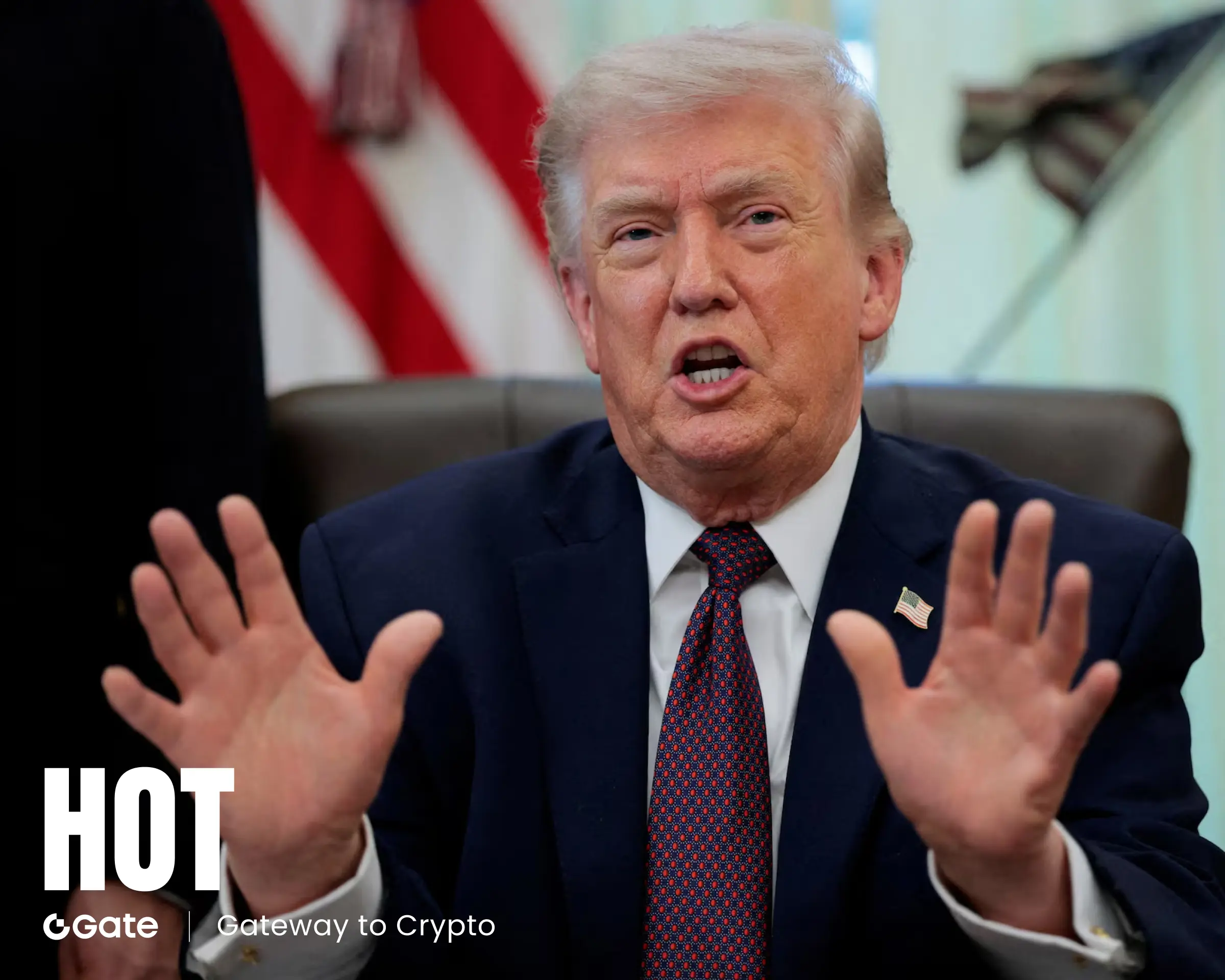
The U.S., Israel, and Iran agree to a temporary ceasefire; the geopolitical premium rapidly gives back
On April 8, U.S. President Donald Trump announced on social media that, based on talks with Pakistan Prime Minister She-rif and Pakistan Army Chief of Staff Asim Muneer, and at Pakistan’s request, he agreed to pause air strikes and attacks against Iran for two weeks. The pause is conditional on Iran agreeing to “fully, immediately, and safely” open the Strait of Hormuz, which Trump described as a “two-way ceasefire.”
Along with the ceasefire announcement, Trump also provided the macro rationale for the pause: the U.S. believes it has achieved—and even surpassed—all military objectives, and has made significant progress in reaching a long-term peace agreement with Iran and a broader peace agreement in the Middle East. Trump also revealed that the U.S. has received a 10-point proposal put forward by Iran and believes it is a viable basis for negotiations. White House officials subsequently confirmed that Israel has also agreed to the temporary ceasefire.
At nearly the same time, Iran’s Supreme National Security Council issued a statement in the early hours of April 8 local time, saying it is accepting Pakistan’s ceasefire proposal, based on the advice of the Supreme Leader and approval by the Supreme National Security Council. The statement said that Iran has achieved nearly all targets in this war and has decided to hold negotiations in Islamabad to determine details, “to consolidate the victory results through political negotiations within a maximum of 15 days.”
Iran releases the core of its 10-point plan; negotiations are not the end
While agreeing to the ceasefire, Iran also released the core content of a 10-point plan submitted to the U.S. through Pakistan, showing a hardline posture in the negotiations. The 10 points mainly include: coordinating with Iran’s armed forces to control passage through the Strait of Hormuz; ending the war against all members of the “axis of resistance” and putting an end to the aggression of the Israeli regime; withdrawing U.S. forces from all bases and deployment points in the region; establishing a secure transit protocol through the Strait of Hormuz to ensure Iran has a leading role; fully compensating Iran’s losses based on assessment results; lifting all first-level and second-level sanctions and relevant Security Council resolutions; releasing all Iranian assets and properties frozen overseas; and finally, having all of these matters approved in binding Security Council resolutions.
What investors should pay attention to is that, in Iran’s official statement, Iran specifically emphasized that all agreements reached through negotiations will become binding international law. At the same time, however, Iran also clearly stated that negotiations do not mean the end of the war. Only after all details are finalized according to the 10-point plan will Iran accept the end of the war. Negotiations will begin in Islamabad on April 10, with Iran allocating two weeks for this, and the negotiation timeline may be extended with mutual agreement. If negotiations fail, Iran said it is prepared to fight. This means that uncertainty in the geopolitical situation has not been fully eliminated, and the negotiation process over the next two weeks could still cause volatility in financial markets.
WTI crude oil plunges, giving back the earlier geopolitical premium
Fueled by a temporary cooling of the Middle East situation, international oil prices that had been continuously pushed up due to geopolitical risk have suffered a sharp, steep drop. As of the Asian early session on April 8, U.S. WTI crude oil futures’ front-month contract fell more than 19%, briefly touching $91.64 per barrel. Overnight, the WTI front-month contract, which had been around the $112 high, dropped straight down; intraday losses widened at one point to 12% - 15%, falling back into the $95 - $98 per barrel range; Brent crude also fell in tandem.
According to the latest EIA data, from the outbreak of the Middle East conflict through the end of March, Brent crude oil prices rose 63%, WTI rose 39%, and aviation fuel rose 84%. Because the Hormuz Strait crisis has not been resolved, European and Asian refiners had at one point paid record-high prices for some spot crude oil, far exceeding paper futures prices. Brent North Sea Forties crude spot prices rose to as high as $146.09 per barrel on Tuesday, higher than the level in 2008, setting what is believed to be the all-time record.
The Strait of Hormuz accounts for about one-fifth of global seaborne oil trade volumes. Previously, due to U.S.-Iran military standoffs, the market had long worried about the passage safety of this “energy artery.” Now, Iran’s Foreign Minister Araghzi said that if attacks on Iran stop, ships will be able to pass through the Strait of Hormuz safely within the next two weeks. This statement directly triggered the rapid unwinding of risk premiums in the crude oil market. What needs to be watched is that Iran’s 10-point plan still insists on “controlling and charging for” passage through the Strait of Hormuz, which will be one of the most difficult issues in the follow-up negotiations.
Crypto market rebounds strongly; Bitcoin briefly breaks $72k
In sharp contrast to the rout in the oil market, the cryptocurrency market saw a strong rebound after geopolitical tensions eased. About an hour earlier, Bitcoin was trading near $69,000, then quickly broke above the $72k threshold. As of the time of writing, Bitcoin is quoted at around $71,660, with a daily increase of more than 4%. Ethereum simultaneously broke above 2,250 USDT, with a 24-hour gain reaching 6%.
This rebound is not a solo push by Bitcoin. U.S. tech stocks and cryptocurrency-related sectors also moved higher across the board. High-profile tech stocks such as Tesla, AMD, and Meta rose more than 4%, and crypto-related concept stocks generally increased. Dow futures jumped 900 points, while S&P and Nasdaq futures rose 2.1% and 2.3%, respectively. The linkage between the AI industry chain and the crypto ecosystem provided additional support, reflecting a partial, phased restoration of market risk appetite.
In the derivatives market, over the past hour, the total liquidation amount in the crypto market reached $206 million, including $136 million liquidated from short positions. This data clearly indicates that previously, large numbers of traders had bet on an escalation of the geopolitical conflict, driving safe-haven demand; after the ceasefire news emerged, these short positions were cleared in a concentrated manner, further boosting Bitcoin’s short-term upward momentum.
From a macro perspective, the key driver behind Bitcoin’s break above $72k is a sharp reversal in market risk appetite. In the past several weeks when the market was shadowed by geopolitical conflict, large amounts of capital flowed into traditional safe-haven assets such as oil and gold, while risk assets such as Bitcoin were under pressure. With the ceasefire agreement reached, capital quickly pulled out of safe-haven assets and flowed back into risk assets like cryptocurrencies and tech stocks, forming a “seesaw effect.”
What to watch next
Looking ahead, there are several key variables worth monitoring continuously:
First is the negotiation process that begins in Islamabad on April 10. Iran has clearly stated, “If negotiations fail, Iran is ready to fight.” Any deadlock or rupture signals could quickly reverse the current market risk appetite and trigger another round of asset price volatility.
Second is whether the passage arrangements for the Strait of Hormuz can be implemented smoothly. In Iran’s 10-point plan, the provisions on control of passage rights for the strait diverge significantly from the U.S.’s requirements to open the strait, making it one of the most challenging issues in the negotiations.
Third is changes in capital flows in the crypto market. Although Bitcoin has broken above $72,000, the large-scale liquidation of short positions in the derivatives market also suggests that leverage risk has been concentratedly released. Investors participating in the market need to manage risk carefully and avoid losses from emotionally driven trading.
Summary
Geopolitical games are far from over. The two-week ceasefire period is both a window for peace and a monitoring period for the market. The extreme divergence between the oil selloff and the Bitcoin surge reflects the sensitive nerves of global capital rapidly switching between risk and safe-haven. Over the next two weeks, the negotiations at the bargaining table will determine whether this round of asset repricing is just a fleeting spike or a trend reversal.


