
Futures
Access hundreds of perpetual contracts
TradFi
Gold
One platform for global traditional assets
Options
Hot
Trade European-style vanilla options
Unified Account
Maximize your capital efficiency
Demo Trading
Introduction to Futures Trading
Learn the basics of futures trading
Futures Events
Join events to earn rewards
Demo Trading
Use virtual funds to practice risk-free trading
Launch
CandyDrop
Collect candies to earn airdrops
Launchpool
Quick staking, earn potential new tokens
HODLer Airdrop
Hold GT and get massive airdrops for free
Pre-IPOs
Unlock full access to global stock IPOs
Alpha Points
Trade on-chain assets and earn airdrops
Futures Points
Earn futures points and claim airdrop rewards


More

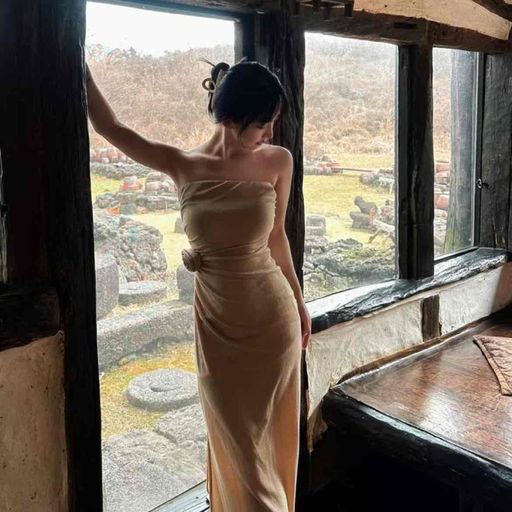



I recently came across a set of old photos, and it really moved me. In 1929, Lin Huìyīn had just given birth to her daughter Liang Zai Bing. Her body hadn’t fully recovered yet, but Liang Sicheng kept taking photos nonstop with his camera. Many people might think this isn’t very considerate, but in reality, it was Lin Huìyīn who actively requested it. She believed that giving birth was an important turning point for women—from girlhood to motherhood—and this authentic imprint of life was worth preserving forever. Liang Sicheng fully supported her. Three years later, when she gave birth to her son Liang Congjie, he repeated the same action.
The story of this couple actually began quite early. Lin Huìyīn was born in 1904 in Hangzhou. Her father, Lin Changmin, had a close relationship with Liang Sicheng’s father, Liang Qichao, and the two children had known each other since they were young. Later, through Liang Qichao’s introduction, they studied together at the Songpo Library, and their feelings gradually grew deeper. After that, they went to the United States to study abroad together. What’s interesting is that Lin Huìyīn’s university major was originally architecture, but because the department didn’t admit women, she was forced to switch to the fine arts program—yet she still insisted on auditing architecture courses. In 1925, her father had an accident, and Liang Sicheng stayed by her, accompanying her through that difficult time.
In 1928, the two of them married in Canada, and after the wedding, they spent half a year investigating Europe’s ancient architecture. After returning to China, Liang Sicheng founded the Department of Architecture at Northeastern University. What truly brought them into history, however, was that after marriage they threw themselves into the work of the Chinese Society for Architectural History (Zhongguo Yingzao Xue She). They carried out in-depth investigations of ancient buildings. In 1932, they went to Dule Temple in Jixian County, Hebei; in 1933, they visited the Yungang Grottoes in Shanxi; and in 1937, at Foguang Temple on Mount Wutai, they discovered Tang Dynasty inscriptions, directly overturning the Japanese scholars’ claim that China had no Tang Dynasty wooden structures. After the War of Resistance broke out, they took their children south to Kunming and Lijiazhuang. Conditions were especially harsh, and Lin Huìyīn’s lung illness often flared up again and again, but they never stopped moving forward with their research.
After the victory of the war, they returned to Beijing, and the two of them continued their work through the Department of Architecture at Tsinghua University. After the founding of the People’s Republic of China, Lin Huìyīn, despite her health problems, still took part in designing the national emblem. She proposed core elements such as the jade disk and the five stars, and these plans were ultimately adopted. She also participated in the design of the relief sculpture for the Monument to the People’s Heroes, promoting the transformation of cloisonné enamel craftsmanship. In 1955, Lin Huìyīn died of pulmonary tuberculosis. She was 51 years old. Liang Sicheng personally designed her tombstone, carving the floral wreath pattern from her creations onto it.
In 1972, Liang Sicheng also passed away. Together, they pioneered the study and on-site survey of ancient Chinese architecture, making tremendous contributions to the protection of cultural heritage. Those photos taken after childbirth don’t only bear witness to Lin Huìyīn’s relentless pursuit of beauty—they also quietly hold the deep affection shared by this couple through life’s ups and downs. As time passes, these images have become the warmest memories.