- The mismatch between spot ETF inflows and the spike in CME futures open interest suggests bias for bullish directional bets, CF Benchmarks explained.
- Elevated futures premium suggests the same, according to Bitwise.
 Unmute# Uptober Forming Amid Rising Stablecoin Liquidity and Bitcoin Transactions
 01:01Bitcoin Breaks $64K While Gold Soars
 00:56ETH/BTC Ratio Slid to Lowest Since April 2021
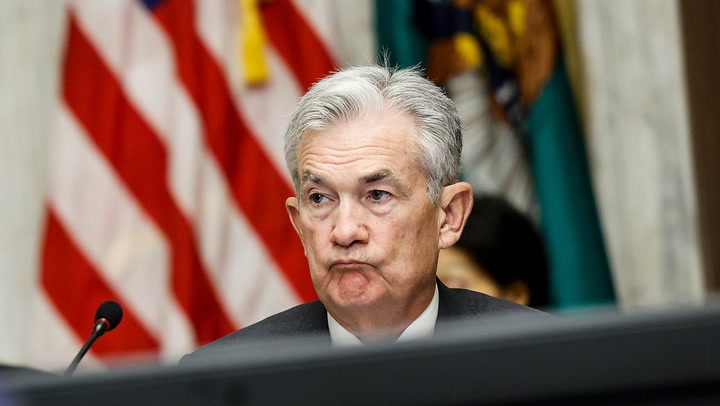 00:59Chances of 50 Basis Point Fed Rate Cut Next Week Jump to 47%
 00:57Is Bitcoin Losing Its Bullish Momentum?
If you are disappointed by bitcoin’s (BTC) failure to get past $70,000, here is an insight that might brighten your day – The recent strong uptake for the U.S.-listed spot ETFs, often considered a proxy for institutional activity, mainly featured bullish directional bets than arbitrage plays.
00:57Is Bitcoin Losing Its Bullish Momentum?
If you are disappointed by bitcoin’s (BTC) failure to get past $70,000, here is an insight that might brighten your day – The recent strong uptake for the U.S.-listed spot ETFs, often considered a proxy for institutional activity, mainly featured bullish directional bets than arbitrage plays.
Since Oct. 14, the 11 spot BTC ETFs registered a cumulative net inflow of nearly $2.5 billion, the largest since March, according to data tracking website SoSoValue. Meanwhile, notional open interest or the dollar value of the active bitcoin futures on the Chicago Mercantile Exchange (CME) surged to new record highs above $12 billion, according to data source VeloData.
Seasoned investors may see the concurrent rise in the two variables as a sign of continued institutional preference for cash and carry arbitrage, a non-directional strategy aimed at profiting from the price discrepancy between spot and futures prices. That was supposedly the case early this year, as institutions set up the so-called basis trade, involving a long ETF position and a short CME futures position, leaving bitcoin largely flat below $70,000.
The latest ETF inflows, however, indicate a bias for bullish plays via spot ETFs, according to Sui Chung, CEO of crypto index provider CF Benchmarks.
“An increase in basis trading is usually apparent when the inflow into spot ETFs and growth in CME OI correspond with one another. But in this case, there’s a clear mismatch with the $2.5 billion ETF flows far exceeding the $1.6 billion increase in open interest for CME’s bitcoin futures contracts,” Chung told CoinDesk.
“This tells us that only a proportion (we estimate around 40%) of the ETF inflow is down to basis trading; the other 60% or $1.4 billion is directional holding,” Chung added. Most bitcoin spot ETFs refer to CF Benchmarks’ Bitcoin Reference Rate - New York (BRRNY) variant.
Futures premium spikes
The elevated futures premium also undercuts any notion of ETF inflows being driven by cash and carry trades. A mass deployment of the strategy typically “arbs away” the premium, limiting the price differential.
The annualized one-month BTC futures premium (basis) on the CME increased from roughly 6% to 13.9% last week, the highest since May, according to data tracked by K33 Research. The funding rates in perpetual markets also increased, suggesting a bias for bullish long trades.
“The bitcoin basis rate [futures premium] has been moving up, implying a bias towards long positioning, which tends to steepen the futures curve and increase contango. The same is reflected in the perpetual funding rate, which has increased to the highest level since July 2024,” André Dragosch, director, head of research - Europe at Bitwise, told CoinDesk.
“Market makers like Jane Street tend to increase their BTC short positioning with increasing BTC ETF inventories; the latest evidence suggests that there has been a net increase in long positioning via futures and perpetuals more recently,” Dragosch added.
![BTC CME futures: Annualized rolling one-month basis/premium. (K33 Research)]() BTC CME futures: Annualized rolling one-month basis/premium. (K33 Research) (K33 Research)That said, some market participants seem to have bought ETFs while shorting CME futures. In the week ended Oct. 15, non-commercials or large speculators held a net short position of 1872 contracts, the highest since March, according to data tracked by Tradingster.
BTC CME futures: Annualized rolling one-month basis/premium. (K33 Research) (K33 Research)That said, some market participants seem to have bought ETFs while shorting CME futures. In the week ended Oct. 15, non-commercials or large speculators held a net short position of 1872 contracts, the highest since March, according to data tracked by Tradingster.
“The latest data on CME Bitcoin Futures Non-Commercial net positioning imply that futures traders are net short on CME. However, on aggregate across all kinds of futures exchanges, the data imply the opposite,” Dragosch noted.
Edited by Oliver Knight.
Disclaimer: The information on this page may come from third parties and does not represent the views or opinions of Gate. The content displayed on this page is for reference only and does not constitute any financial, investment, or legal advice. Gate does not guarantee the accuracy or completeness of the information and shall not be liable for any losses arising from the use of this information. Virtual asset investments carry high risks and are subject to significant price volatility. You may lose all of your invested principal. Please fully understand the relevant risks and make prudent decisions based on your own financial situation and risk tolerance. For details, please refer to
Disclaimer.


