

One of the most calamitous events in the crypto world last year – the demise of FTX – negatively impacted the entire industry. It undermined the trust in centralized exchanges, causing numerous investors to back off them and shift towards self-custody or to sell their stash
The collapse also ed some platforms to take additional measures and up their game on the security field. According to data provided by the blockchain analytics firm – Nansen – exchanges like Bybit, Kraken, and Bitget have overcome the FTX shock and boosted their trading volumes during the first half of 2023.
In-depth Nansen analysis estimated that the FTX crash in November 2022 changed the CEX landscape, with many exchanges experiencing record outflows and diminished interest from investors towards the end of 2022 and the start of 2023.
Some of the biggest losers seem to be Bitfinex, Kucoin, Gate.io, and OKX. The average monthly spot trading volume of Bitfinex six months before the fallout was over $12 billion, compared to $5 billion half a year later
On the other hand, Kraken boosted its spot trading volume by approximately 14%, whereas Bybit recorded a 7% increase
“Most exchanges took a hit on their spot trading volumes, with Bybit and Kraken notable exceptions, who managed to increase their volume,” the report reads.
Although Binance was initially rumored to have a hand in the FTX implosion, the world’s largest cryptocurrency platform remained relatively unfazed. Its average monthly spot trading volume shifted from nearly $445 billion to approximately $444 billion
Derivatives trading volume in the sector has gone through a minor decline, with a significant spike observed in November last year (by the time of the collapse).
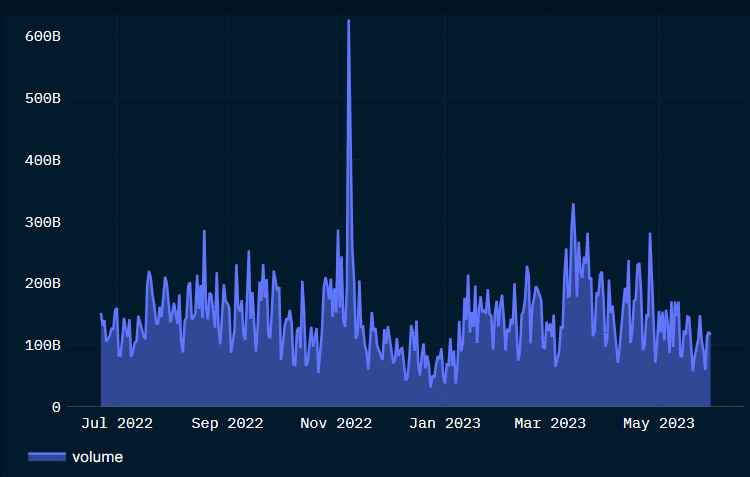
While sending shock waves through the entire crypto industry, the demise of FTX caused some exchanges to advance their investor protection programs
Binanceincreased its Secure Asset Fund for Users (SAFU) to $1 billion, asserting the assets will be only used in case of an adverse event. Bitget raised its protection fund from $200 million to $300 million. Coinbase, Huobi, and OKX were among the others to take similar measures.
Multiple marketplaces have also released proof-of-reserves to show they have sufficient funds to back customer deposits, including Binance, Crypto.com, Kraken, Bybit, andOKX.
According to Nansen, such moves are vital and should become “the minimum standard in the exchange industry.”


