#MuskLosesLawsuitAgainstOpenAI
#MuskLosesLawsuitAgainstOpenAI
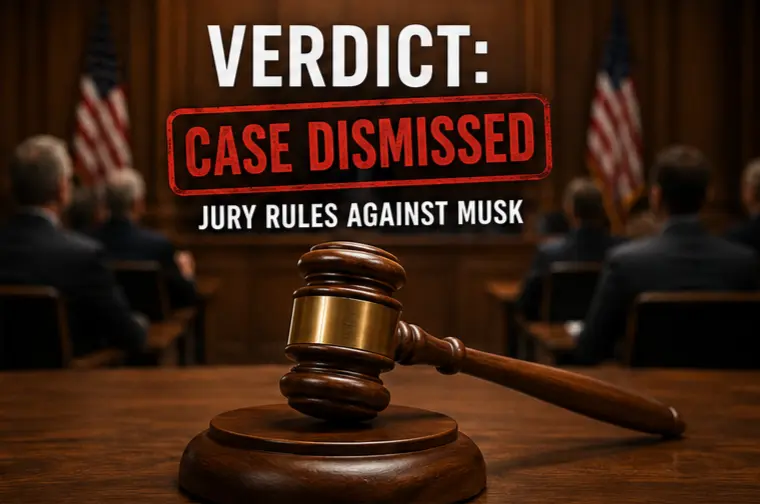
The battle between tech giants just took a dramatic turn after a U.S. federal jury officially ruled against Elon Musk in his high-profile lawsuit against and CEO Sam Altman. The courtroom decision marks one of the biggest legal moments yet in the rapidly escalating AI industry war.
Musk had accused OpenAI of abandoning its original nonprofit mission and transforming into a profit-driven AI powerhouse backed by massive corporate funding. He argued that the company shifted away from its founding vision of building artificial intelligence for the benefit of humanity and instead prioritized commercial dominance, strategic partnerships, and investor expansion.
However, the California jury unanimously rejected Musk’s claims, ruling that the lawsuit was filed too late under legal timing rules. Reports indicate the jury reached its decision in less than two hours, delivering a major legal victory for OpenAI and removing one of the biggest obstacles surrounding the company’s future expansion plans.
This case was never just about money. It represented a deeper conflict over the future direction of artificial intelligence itself. On one side stood Musk, repeatedly warning the world about uncontrolled AI development and corporate concentration of power. On the other side stood OpenAI, aggressively scaling products, infrastructure, and partnerships to dominate the global AI race.
The lawsuit also exposed years of internal tension between former OpenAI co-founders. Musk claimed OpenAI executives manipulated the organization’s structure and benefited personally from the shift toward commercialization. OpenAI’s legal team countered by arguing Musk had long known about the company’s strategic direction and only pursued legal action after launching his own competing AI company, xAI.
Market analysts believe this ruling could significantly strengthen OpenAI’s position ahead of potential future investment rounds or even a public listing. Investors may now see reduced legal uncertainty around the company’s structure and long-term roadmap. At the same time, the rivalry between Musk and Altman appears far from over, with Musk already signaling possible appeals and continued criticism of OpenAI’s leadership.
The bigger picture is even more important. AI is no longer just a technology sector. It has become a geopolitical, financial, and corporate battlefield involving trillion-dollar valuations, global regulation, cloud infrastructure wars, and the future of digital intelligence itself.
As the AI race accelerates, this legal defeat could reshape how major technology leaders approach governance, partnerships, and control over next-generation artificial intelligence systems. One thing is becoming increasingly clear: the fight for AI dominance has only just begun.
#MuskLosesLawsuitAgainstOpenAI
The battle between tech giants just took a dramatic turn after a U.S. federal jury officially ruled against Elon Musk in his high-profile lawsuit against and CEO Sam Altman. The courtroom decision marks one of the biggest legal moments yet in the rapidly escalating AI industry war.
Musk had accused OpenAI of abandoning its original nonprofit mission and transforming into a profit-driven AI powerhouse backed by massive corporate funding. He argued that the company shifted away from its founding vision of building artificial intelligence for the benefit of humanity and instead prioritized commercial dominance, strategic partnerships, and investor expansion.
However, the California jury unanimously rejected Musk’s claims, ruling that the lawsuit was filed too late under legal timing rules. Reports indicate the jury reached its decision in less than two hours, delivering a major legal victory for OpenAI and removing one of the biggest obstacles surrounding the company’s future expansion plans.
This case was never just about money. It represented a deeper conflict over the future direction of artificial intelligence itself. On one side stood Musk, repeatedly warning the world about uncontrolled AI development and corporate concentration of power. On the other side stood OpenAI, aggressively scaling products, infrastructure, and partnerships to dominate the global AI race.
The lawsuit also exposed years of internal tension between former OpenAI co-founders. Musk claimed OpenAI executives manipulated the organization’s structure and benefited personally from the shift toward commercialization. OpenAI’s legal team countered by arguing Musk had long known about the company’s strategic direction and only pursued legal action after launching his own competing AI company, xAI.
Market analysts believe this ruling could significantly strengthen OpenAI’s position ahead of potential future investment rounds or even a public listing. Investors may now see reduced legal uncertainty around the company’s structure and long-term roadmap. At the same time, the rivalry between Musk and Altman appears far from over, with Musk already signaling possible appeals and continued criticism of OpenAI’s leadership.
The bigger picture is even more important. AI is no longer just a technology sector. It has become a geopolitical, financial, and corporate battlefield involving trillion-dollar valuations, global regulation, cloud infrastructure wars, and the future of digital intelligence itself.
As the AI race accelerates, this legal defeat could reshape how major technology leaders approach governance, partnerships, and control over next-generation artificial intelligence systems. One thing is becoming increasingly clear: the fight for AI dominance has only just begun.