Author: Wang Peng, Source: The Paper
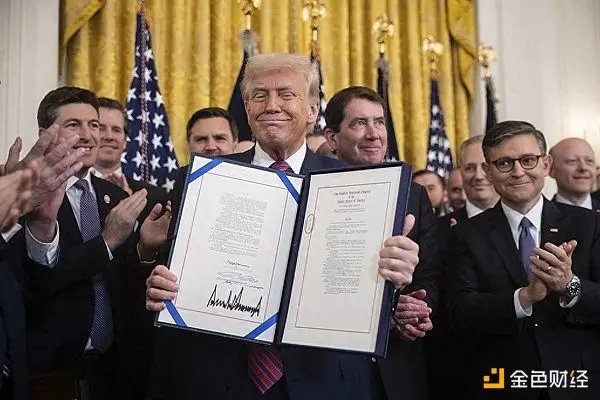
On July 18, 2025, local time, U.S. President Trump officially signed the “Guiding and Establishing National Innovation for U.S. Stablecoins” (referred to as the “Genius Act”), marking the first formal establishment of a regulatory framework for digital stablecoins in the United States. This move will not only have a profound impact on the U.S. financial and monetary system but will also affect the international community and global markets, including China.
What is a stablecoin?
Stablecoins are a type of value-pegged cryptocurrency designed to tie their price to stable assets such as the US dollar, euro, or gold, in order to achieve a level of stability similar to that of fiat currencies. Unlike mainstream cryptocurrencies such as Bitcoin and Ethereum, which are highly volatile, stablecoins commonly take the form of fiat-collateralized, commodity-collateralized, cryptocurrency-collateralized, and algorithmic stablecoins.
The so-called fiat backed stablecoins are currently a mainstream category, such as USDT and USDC. Typically, the issuer deposits an equivalent amount of fiat currency or cash equivalents in a bank account to support circulation, maintaining a one-to-one relationship with the reserves. Its advantage is value stability, but its security and transparency depend on the issuer’s actual holdings of reserves. On the other hand, commodity backed stablecoins use physical commodities as reserves, such as the gold-backed stablecoin PAXG. Crypto backed stablecoins primarily stabilize their value by locking up over-collateralized cryptocurrencies through smart contracts. This method has strong decentralization characteristics, but is relatively complex to operate and faces the risk of price fluctuations in the collateral assets. Algorithmic stablecoins use an “algorithm” to adjust supply to maintain value pegging, thus not requiring actual collateral. In theory, this type of stablecoin can efficiently manage supply and demand, but once trust collapses, it may experience severe “decoupling,” as seen with the now-collapsed Terra UST stablecoin, which was once very popular.
Compared to other cryptocurrencies, stablecoins have certain advantages. First is low volatility. Unlike the dramatic fluctuations of other cryptocurrencies, stablecoins generally maintain a peg close to 1:1, making them suitable for payments, remittances, and everyday transactions. Second, they are relatively friendly for payments. Due to their price stability, they are more suitable for online shopping, cross-border remittances, and various DeFi (decentralized finance) scenarios. Third, there is no need for intermediaries. Unlike traditional payment systems, stablecoins can circulate freely on blockchains without intermediaries like banks. Fourth, regulatory and compliance requirements are stricter. Compared to volatile digital assets, stablecoins have more explicit requirements regarding reserve management, algorithm design, transparency, and compliance.
As of July 2025, the global stablecoin market capitalization has exceeded $250 billion, mostly composed of USD-pegged stablecoins. As of July 2025, Tether (USDT) and USDC together account for 86.5% of the market share, with an annual on-chain trading volume nearing $36.3 trillion. Research from CoinDesk indicates that Tether’s market capitalization first surpassed $150 billion in May 2025. Furthermore, according to MarketWatch, as of May 2025, the total issuance of stablecoins reached $247 billion, a 54% increase from last year, approximately 10% of the total cash in circulation in the United States.
Currently, the mainstream stablecoins globally mainly include Tether (USDT) and USDC. Tether is the earliest and largest dollar-pegged stablecoin, with reserves exceeding $114 billion by 2024, accounting for about 70% of the trading share among stablecoins. USDC, on the other hand, was launched by Circle and Coinbase in 2018, and by the end of 2024, its assets under management will reach $41 billion, running on multiple blockchain platforms such as Ethereum, and supported by applications from institutions like Visa. In addition, other high market cap stablecoins include Ethena’s USDe (approximately $5.9 billion) and MakerDAO’s DAI (approximately $5.4 billion).
Despite the large scale of the stablecoin market, major companies such as JPMorgan remain cautious about its future growth, only expecting it to reach $500 billion by 2028. Overall, stablecoins have experienced significant expansion in the short term, but there is still uncertainty regarding their long-term sustainability.
In summary, stablecoins link cryptocurrencies to real-world assets, reducing price risk in transactions while maintaining the advantages of blockchain technology, making them more feasible for payments and everyday transactions. The introduction of the “Genius Act” marks a point where the U.S. government has begun to inject compliance and trust into stablecoins, aiming to promote them as a reliable financial infrastructure.
The Core Objective of the Genius Act
The signing of the “Genius Act” by Trump marks the first time the United States has provided a clear federal regulatory framework for stablecoins. The main contents include: comprehensive pegging requirements (stablecoins must be backed one-to-one by liquid assets such as U.S. dollars or short-term U.S. Treasury securities), mandatory transparency (monthly disclosure of reserve components, regular audits, and public financial statements), issuance entity licensing (only allowing “chartered” institutions that meet standards to issue, and clearly stating that they are not securities or bank deposits), compliance mechanisms (prohibiting interest payments to stablecoin holders; issuing entities must be able to freeze and destroy tokens to comply with legal orders), and federal + state “dual regulation” guarantees (building a cross-level regulatory system and setting entry barriers for foreign issuers). The table below visually illustrates the differences between stablecoins and other volatile cryptocurrencies.
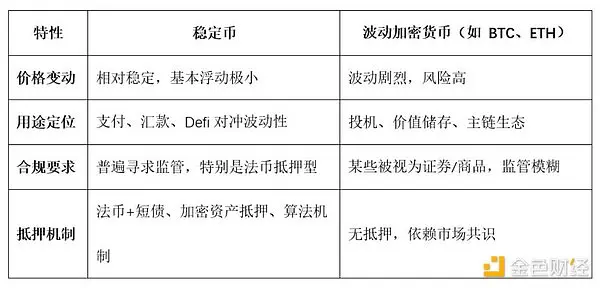
Table 1 Key Differences Between Stablecoins and Other Cryptocurrencies
In fact, as early as August 2024, then-presidential candidate Donald Trump publicly stated: “If the dollar loses its dominant position as the world’s reserve currency, the consequences would be more severe than losing a war.” This shows his extreme emphasis on the dominance of the dollar. After re-entering the White House in January 2025, Trump actively promoted the development of cryptocurrencies and vigorously developed dollar stablecoins, which are driven by multiple strategic objectives.
First, Trump seeks to establish a “full reserve mechanism” and monthly transparent disclosures through the “Genius Act” to strengthen the trust base of the public and institutions in dollar-pegged stablecoins, in order to maintain the international dominance of the dollar in the digital asset sector while suppressing the competitive pressure that may arise from the development of central bank digital currencies (CBDC) by other major economies such as the EU and China.
Secondly, the law grants issuance licenses to domestic U.S. and compliant foreign institutions, which is essentially to attract core companies like Circle and Coinbase to enter the U.S. market, forming a global digital payment channel centered around the U.S. dollar, and enhancing the endogenous support for the demand for U.S. dollars and U.S. Treasury bonds through this channel.
Third, the United States has established the “U.S. Strategic Bitcoin Reserve” and the “National Digital Asset Reserve,” and has issued executive orders to prohibit the research and development of central bank digital currencies, indicating its intention to promote digital assets through market-oriented methods and to guard against the potential expansion of central banks’ control over monetary policy. These arrangements collectively form a “digital dollar strategy,” which aims to advance the long-term advantages of the dollar as a global reserve asset through the collaboration of private stablecoins and national-level digital asset reserves.
As for whether these strategic objectives can be achieved, there are structural challenges and uncertainties in the path to realization.
On one hand, the “Genius Act” can promote the rapid expansion of the stablecoin market in a regulatory environment with clearer guidelines and stronger credibility. The day after the bill was signed, signs emerged of exchanges and financial institutions seeking licenses for digital dollar issuance, and traditional banks and payment networks like Visa actively intervened. In addition, Deutsche Bank expects that the relevant regulations will facilitate the entry of stablecoins into mainstream payment scenarios by 2025 and drive growth in demand for U.S. Treasury bonds.
However, the key bottleneck lies in regulatory coordination and technological integration: The Federal Reserve currently maintains a cautious attitude towards direct access to stablecoins, with only one out of 39 main account applications approved. If the infrastructure relying on the Federal Reserve or the banking system cannot be improved, the advantages of stablecoins in payment and cross-border settlement will undoubtedly be limited. In addition, critics warn that large holdings of U.S. Treasury securities by stablecoins could trigger market turmoil during “decoupling redemptions,” potentially leading to risks in the financial system.
From a global perspective, the “Genius Act” may intensify the competitive landscape of digital currencies among nations. The U.S. legal framework could attract more dollar-pegged stablecoins to the international stage, which would strengthen the relative advantage of the dollar in global trade and payment systems, while potentially creating structural pressure on the intentions of the EU, China, and others to launch CBDCs.
However, this may also lead to regulatory spillover and market fragmentation risks. The new regulatory model in the United States differs significantly from the paths of the United Kingdom, the European Union, and Asian financial centers (such as Singapore and Japan), which may trigger a restructuring of the flow of capital and payments.
Additionally, if large-scale private stablecoin holders hold government bonds, it may have a positive impact on U.S. fiscal costs (such as lowering short-term interest rates), but it could also make stablecoins the “private bearers” of government debt, and once redemption pressure is released in a concentrated manner, it will affect the global bond market.
Ultimately, whether the U.S. market structure can successfully address potential financial stability risks depends on the details of regulatory implementation, cross-border regulatory coordination, and market depth, which will be key in determining its long-term impact.
Can stablecoins maintain the dominance of the US dollar?
Whether the United States can maintain the dollar’s status through stablecoins depends on its strategic construction and institutional implementation.
On one hand, the regulatory framework established by the “Genius Act”, which includes authorizing “Licensed Payment Stablecoin Issuers” (PPSI), requires full backing by high-quality liquid assets (such as U.S. Treasury bonds) to enhance transparency and credibility, and is indeed a key path to solidifying the dollar as the foundation of global digital assets. Furthermore, the aforementioned regulations impose similarly stringent conditions on non-U.S. issuers, further ensuring the unity and controllability of the digital dollar system, which is conducive to preventing local digital asset competition from undermining the dollar’s dominant position.
In terms of implementation pathways, the first step is to establish a formalized trust mechanism that encourages market participants, including financial institutions, international payment platforms, and companies, to be more willing to use USD stablecoins for transactions and settlements. Secondly, there is a push for stablecoins to hold U.S. Treasury bonds. In this regard, both Deutsche Bank and ARK Invest believe that the demand for stablecoins in relation to U.S. Treasuries is gradually increasing, which may lead to lower Treasury yields. Furthermore, the U.S. plans to apply for a Federal Reserve master account, allowing stablecoin payment systems to directly connect to Fedwire (the U.S. Federal Reserve’s clearing system) for settlements, thereby improving efficiency and scale.
However, if the credit of the US dollar declines significantly, the attractiveness of stablecoins may be in doubt. At this stage, the US dollar serves as the world’s main reserve asset and settlement currency, and the value of stablecoins relies on their pegging mechanism. If the US dollar encounters credit depreciation, its underlying pegged assets will be damaged, leading to a direct impact on the price stability of stablecoins; holders may turn to stablecoins pegged to other currencies or assets, such as the already emerged euro stablecoins or crypto asset-backed coins, which will diversify the application space of US dollar stablecoins. In addition, the international community, especially non-dollar zone countries, is tightening regulations to prevent the risk of “digital dollarization” and will implement digital asset compliance controls based on the EU MiCAR, which may restrict the overseas expansion of US dollar stablecoins.
It can be seen that the United States has a realistic institutional foundation and market dynamics to strengthen the digitalization path of the dollar through the stablecoin framework, but the degree of its realization depends on the strength of regulatory enforcement, the integration with the Federal Reserve system, and the macro credit environment of the dollar. If the credibility of the dollar faces significant doubts, the value foundation of stablecoins will be shaken, making it difficult to maintain their attractiveness and international acceptance, which will also put pressure on dollar stablecoins to adjust or be replaced.
Conclusion
The Trump administration’s push for the development of stablecoins aims to reinforce the dominance of the US dollar in the digital asset space and maintain the dollar’s status as the global reserve currency. The implementation of the legislation could promote rapid growth in the stablecoin market, attracting more financial institutions and enterprises to participate, thus advancing the adoption of digital payments and cross-border settlements. However, the rapid expansion of the stablecoin market may also bring challenges such as regulatory coordination and technological integration, which could affect its advantages in payments and cross-border settlements.
From a global perspective, the “Genius Act” may intensify the competitive landscape of digital currencies among countries. The legal framework in the United States could attract more dollar-pegged stablecoins to the international arena, reinforcing the relative advantage of the dollar in global trade and payment systems. At the same time, other economies may accelerate the research, development, and application of Central Bank Digital Currencies (CBDCs), forming a diversified digital currency system.
In summary, the introduction of the “Genius Act” marks an important step for the United States in the field of digital currency, potentially having a profound impact on the global financial system. However, whether it can achieve its expected goals remains to be seen, depending on various factors such as the strength of regulatory enforcement, cross-border regulatory coordination, and market reactions. In the future, the development of digital currency will face more opportunities and challenges, which deserves close attention from all parties.
(The author is a researcher at the National Governance Research Institute of Huazhong University of Science and Technology)


