Author: San, Deep Tide TechFlow
In mid-September, the veteran exchange Kraken will launch its first project Yield Basis on the token issuance platform Kraken Launch in collaboration with the ICO platform Legion. This move marks Kraken as another mainstream exchange engaging in Launchpad services after Binance and OKX.
As the first project, Yield Basis was developed by Michael Egorov, the founder of the well-known DeFi project Curve. This BTCFI protocol, aimed at providing impermanent loss protection for BTC holders, has already attracted widespread attention and discussion in the cryptocurrency market.
To understand the market's expectations for Kraken Launch and Yield Basis, it is necessary to review the performance of other exchanges' Launchpads and the investment logic behind them.
The Past of IPOs on Exchanges
In the past year, major exchanges have generated impressive returns through their Launchpads. Binance's Alpha single order monthly average yield once exceeded 1500U, and although the recently launched X Launch by OKX has been controversial, the X Launch tutorial guides have flooded various crypto communities, highlighting the market's eager anticipation and expectations for such products.
Many projects launched through exchange Launchpads have shown good performance in the market. In May this year, $MYX, which was launched through Binance Alpha, surged nearly 20 times at the beginning of this month. If users held the 644 $MYX airdropped to each participant by Binance Alpha, the maximum return even approached 13,000 U at one point this month. This exaggerated data has triggered a new wave of FOMO sentiment in the market towards exchange Launchpads.
The data behind this reflects the core logic of FOMO regarding established exchanges: premier projects launched on high-quality exchanges often gain significant liquidity premiums and attention, and this key information will translate into actual investment returns.
This also explains why the current market has such an optimistic attitude towards the Kraken Launch launched in collaboration with Legion. On one side is a well-established exchange that has been operating for 14 years and focuses on compliance, and on the other side is a new launch platform that claims to be the “world's first ICO underwriter.” The platform launched through their collaboration has inherent advantages such as positioning scarcity and high liquidity from its inception.

Unlike traditional Launchpads, projects launched through Kraken Launch can be immediately listed on the Kraken exchange after the sale ends, which significantly raises market expectations for the returns on this new offering.
From a time perspective, the data from major exchanges' Launchpads is already sufficient to show that the market is in a state of high FOMO for this category of products, and these emotions will naturally spill over to new platforms. Kraken Launch launching its first batch of new projects at this time is highly likely to carry on this sentiment.
However, it is important to note that Kraken Launch, as a latecomer, faces significant challenges. Binance and OKX have already captured a major share of the Launchpad market, making it not easy for the new platform to attract high-quality projects. More importantly, the Yield Basis project itself is controversial within the Curve community, with some members considering its 60 million crvUSD credit line to pose systemic risks. These uncertainties may affect the actual performance of Kraken Launch's debut.
Yield Basis: Curve founder's new experiment BTCFI
As a project launched in the first phase of Kraken Launch, Yield Basis's core value proposition is to address the long-standing issue of impermanent loss in the DeFi space. In traditional AMM mechanisms, when prices fluctuate dramatically, liquidity providers experience significantly lower returns compared to directly holding the assets, and this difference is known as impermanent loss.
In simple terms, when you provide liquidity to a trading pool, if the token price changes, your assets will automatically rebalance, and the final returns are often not as good as holding directly. Data shows that when the price fluctuates 5 times, impermanent loss can reach 25%. This problem has plagued DeFi development for many years and has deterred many BTC holders from participating in liquidity mining.
Yield Basis adopts a double leverage mechanism. Users deposit BTC, and the protocol automatically borrows an equivalent amount of crvUSD to pair with BTC and enters the Curve pool, using the generated LP tokens as collateral for the debt. When the price of BTC rises, the protocol borrows more crvUSD to maintain the double leverage; when the price falls, it repays part of the debt.
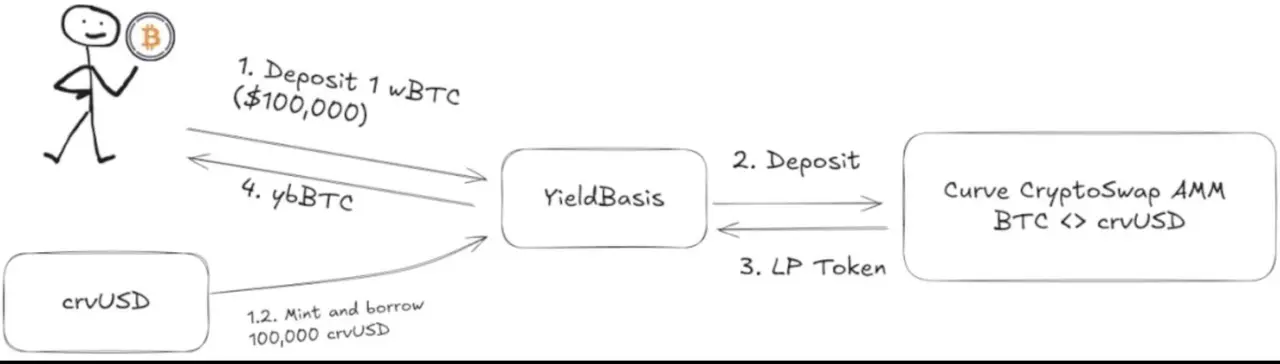
Yield Basis is entirely built on the Curve infrastructure, utilizing Curve's CryptoSwap AMM and crvUSD stablecoin to ensure technical stability.
However, innovation often comes with controversy. Just yesterday, the Curve DAO approved proposal 1206, which granted a credit line of 60 million crvUSD to Yield Basis, sparking quite a stir within the community. Supporters believe this reflects the Curve ecosystem's support for innovation, but the concerns of opponents are not without merit — this amount accounts for nearly 60% of the total supply of crvUSD, and any issues could jeopardize the stability of the entire system.
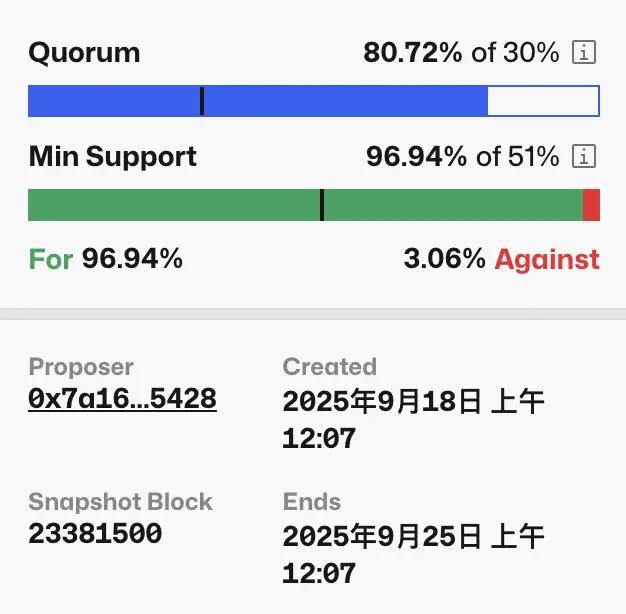
What is even more concerning is that members on the Curve forum pointed out a subtle conflict of interest: several key figures in the Curve ecosystem who participated in the voting are also investors in Yield Basis. Although Egorov responded that inviting well-known figures from the ecosystem to participate is “a very natural thing,” the situation of being both the referee and the athlete inevitably raises questions about the fairness of the decisions.
In terms of token economics, the total supply of $YB tokens is 1 billion, of which 30% is used for community incentives, 25% for team allocation, 15% as development reserves, and the remaining 30% is evenly used for investor sales, Curve ecosystem licenses, and partners, etc.
On the other hand, in the Yield Basis mechanism, liquidity providers must choose between receiving BTC-denominated trading fees or YB token rewards. This design may work well in a bull market, as investors tend to choose tokens for potential appreciation; however, in a bear market, if the majority opt for stable BTC earnings instead of YB tokens, it could put pressure on the token's value.
Participation Guide
The Yield Basis project launch consists of two phases, and we need to register on the Kraken and Legion platforms in advance and complete KYC verification.
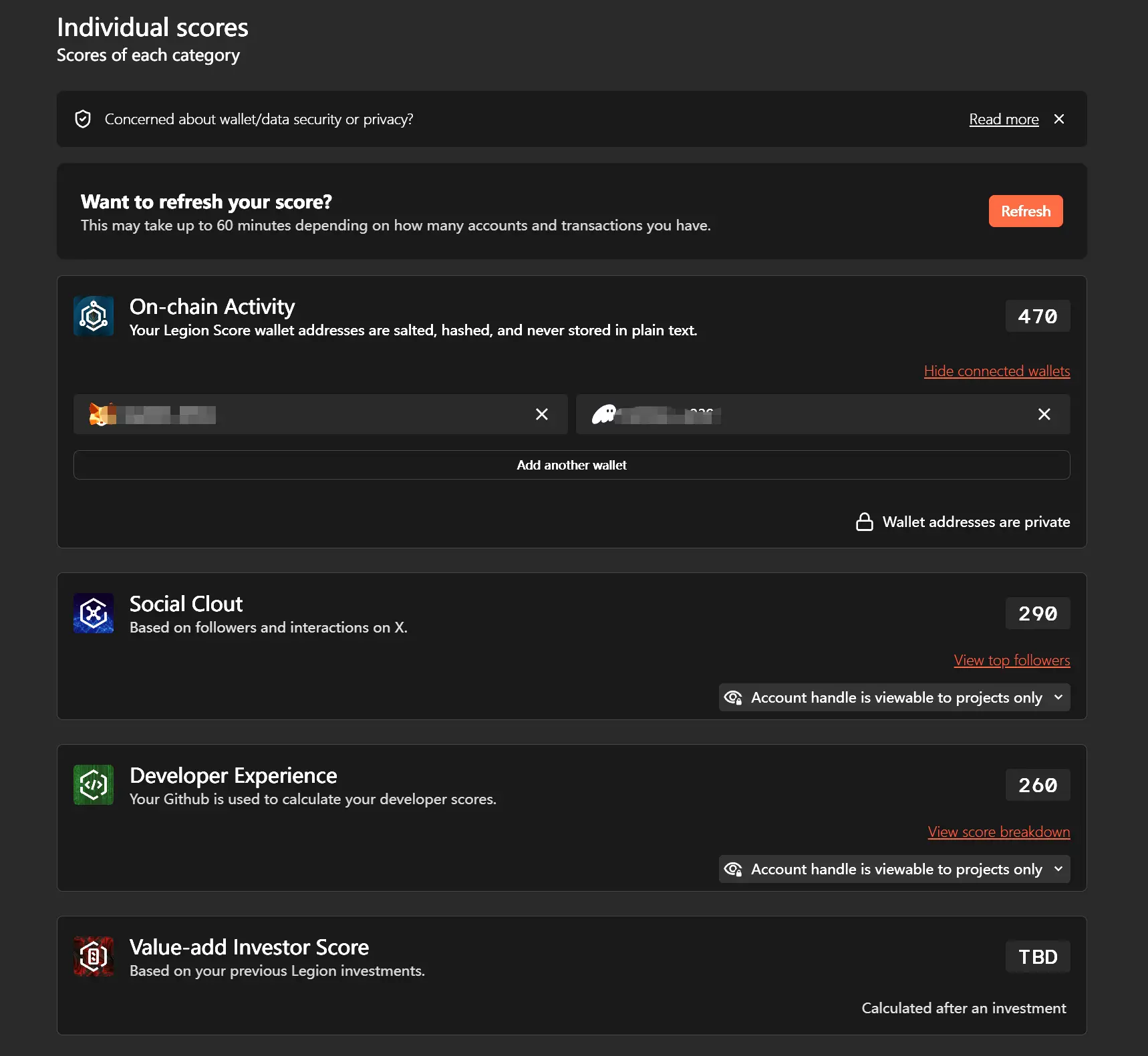
First, there is a pre-sale phase with a maximum of 20%. This phase is conducted on the Legion platform using a Merit-Based allocation mechanism. Users need to connect their wallets, Twitter, Github, and other platform accounts on the platform. Legion will calculate user scores based on on-chain activity, social contributions, and code contributions. Users with high scores will receive a larger allocation share during this phase.
The second phase will complete the sale of at least 80% of the remaining $YB tokens and will be conducted simultaneously on Legion and Kraken Launch, open to all users who have passed KYC on a first-come, first-served basis.
It is important to note that the KYC requirements for the Kraken and Legion platforms are relatively strict, and it is necessary to prepare relevant identification and living documents in advance. Additionally, users from certain regions (such as the United States, Canada, Australia, etc.) may not be able to participate in this new token offering.
Currently, Yield Basis and Kraken Launch have announced specific launch times. However, since Kraken and Legion need 1-3 days to review KYC information, it is recommended that investors interested in this new investment opportunity complete their registration and KYC verification in advance.
Market Observation and Related Discussions
According to community observations, the announcement for the first new project launch of Kraken Launch experienced a brief delay of 18 hours, and the official did not provide a clear reason. Furthermore, as of the evening of September 24, no information or interface related to the launch of Yield Masis was seen within Kraken.
On the other hand, the recent discussions about Yield Basis and Kraken Launch are highly similar, which may pose potential risks.
The current market shows an optimistic attitude towards the Kraken Launch of $YB, with supporters represented by José Maria Macedo, the founder of Delphi Ventures, who compared YB to “the BTC version of Ethena,” indicating the innovative nature of Yield Basis in solutions for impermanent loss. He also emphasized the pioneering contributions of its founder Egorov in the DeFi space and the market potential of the protocol during the podcast.
Podcast link: “Michael Egorov: Yield Basis - Bringing Real Yield to Bitcoin”

At the same time, there are also some questioning voices in the market, mainly focused on concerns about the potential risks of Curve DAO, believing that the credit limit of 60 million crvUSD could lead to systemic risks.
Conclusion
Yield Basis, as the first project launched on Kraken, embodies the market's dual expectations for technological innovation and wealth effect.
However, as a new protocol still in the testing phase, investors need to fully recognize the technical risks and market uncertainties involved. In the face of FOMO (Fear of Missing Out) sentiment, it is particularly important to maintain rational analysis and risk control.


