As conflicts continue around the world, a thought-provoking perspective is resonating within the Crypto Assets community: Bitcoin (BTC) may be an unexpected tool for achieving global peace. Writer Adam Livingston suggests that by eliminating the government's ability to fund wars through inflation, this “hidden tax,” Bitcoin could become a key force in limiting global conflicts.
The Printing Press and War: The Unseen Complicity
(Source: BitBo)
Historically, wars have always been extremely costly endeavors. However, when governments can simply print more money to cover these expenses, the financial constraints of war are greatly diminished.
“The power of currency is the power of politics,” Livingston emphasized. “When a government can create currency just by tapping a keyboard, it has the ability to exert violence far beyond what its citizens can tolerate through direct payment of taxes. In other words, fiat currency is the silent partner in every modern war.”
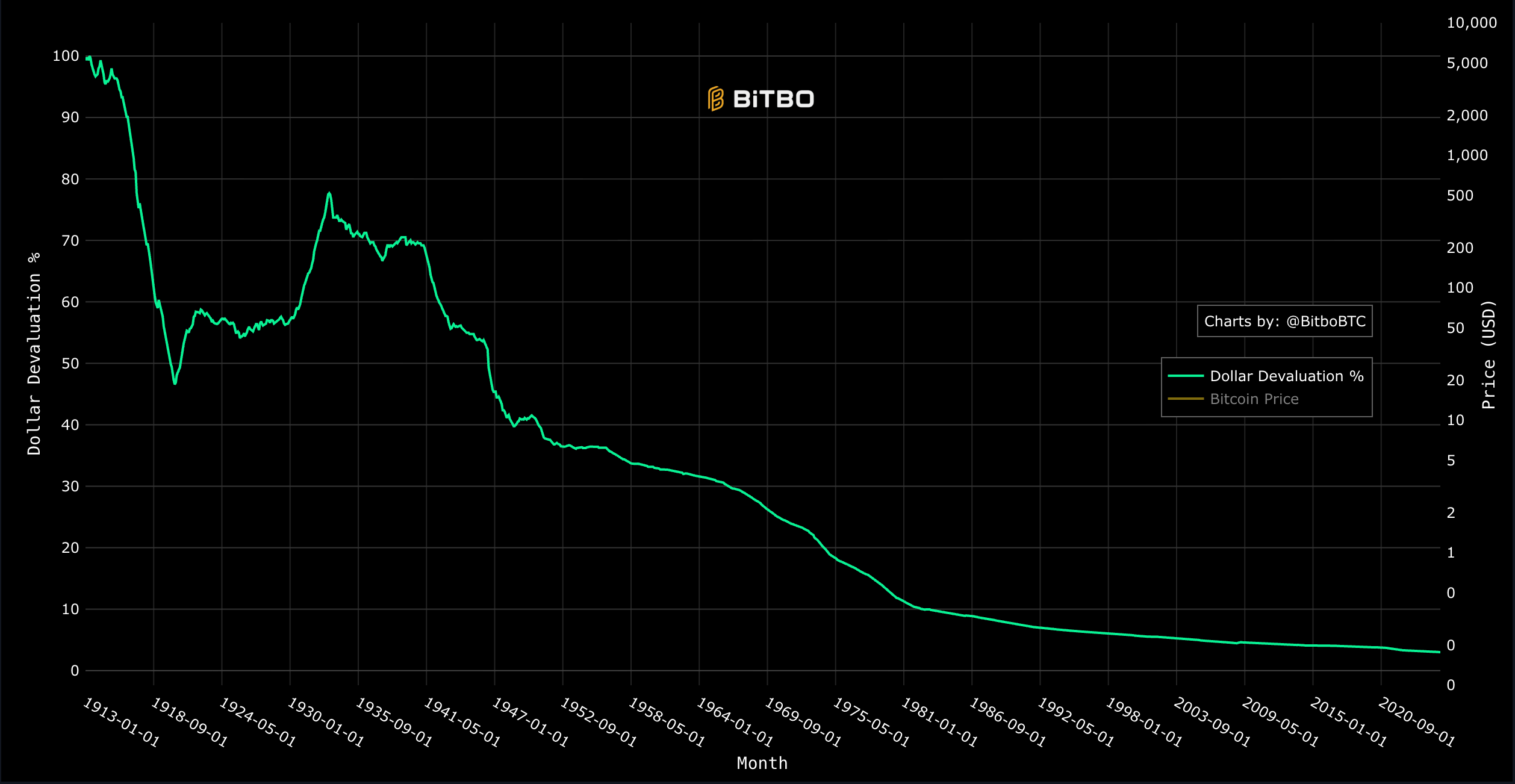
This viewpoint is strongly supported by history. The world wars of the 20th century coincided with the flourishing of central banks and the gradual abolition of the gold standard. The changes in monetary policy during this period allowed governments to finance unprecedented military actions by printing money rather than directly taxing citizens.
“If the public had to pay a transparent war tax, they would not support the war,” explained a monetary historian. “Inflation is an invisible tax that allows the government to fund unpopular policies without provoking immediate public opposition.”
Historical Lessons of Currency Collapse
History is full of examples of currency collapses caused by war financing:
13th Century China: The Fall of Song Dynasty Paper Money
The Song Dynasty printed a large amount of paper money to resist the Mongol invasion, which ultimately led to severe inflation and the collapse of the monetary system. This historical event demonstrates the disastrous consequences when a government creates money without limits for war.
18th Century France: The Malicious Inflation of Coupons
During the French Revolution, the assignats issued by the government rapidly depreciated due to overproduction, ultimately leading to economic collapse and social unrest. This event is considered a typical example of government abuse of the power to issue currency.
Modern Dollar: Ongoing Devaluation
Since the establishment of the Federal Reserve in 1913, the US dollar has depreciated by more than 90%. This long-term depreciation is closely related to the multiple military actions and wars in which the United States has participated, highlighting how the fiat currency system allows governments to continuously fund military operations without having to directly collect the full tax burden from citizens.
Bitcoin: Fixing Currency, Fixing the World
Supporters of Bitcoin believe that this decentralized digital currency with a fixed supply can fundamentally change the ability of governments to fund wars.
How Bitcoin's Key Features Limit War
Fixed Supply: The total amount of Bitcoin will never exceed 21 million coins, which means that the government cannot fund wars by issuing more Bitcoin.
Decentralization: No central authority can control or manipulate the issuance of Bitcoin, making it immune to political influence.
Transparency: All Bitcoin transactions are recorded on a public blockchain, increasing financial transparency.
Global: Bitcoin transcends borders and is not controlled by the policies of any single country.
“Bitcoin separates currency from the nation,” explained a Crypto Assets analyst. “This separation could be as revolutionary as the printing press separating information from power, ultimately reducing centralization and promoting peace.”
The Relationship Between Sound Money and Social Prosperity
The author of “The Bitcoin Standard,” Saifedean Ammous, explores the critical role of sound money in societal prosperity. He points out the serious limitations of traditional forms of currency:
Gold: Although it has intrinsic value, its physical properties lead to the centralization of currency, making it easy for governments to control.
Banknotes: Due to the ability to be printed infinitely, their capacity as a store of value is extremely poor.
“Whenever the issuer prints more banknotes for public spending, the banknotes gradually 'consume' the future value of the holders,” Amus explained. “This decline in value has profound effects on society, from family life to how people prepare for the future.”
Characteristics of a Sound Currency Society
Amos emphasized that a society based on sound money will:
· Value saving over spending
· Encourage long-term thinking and planning
· Promote the invention of breakthrough technologies
· Establish civilized capital
· Reduce social conflicts
In contrast, a society with poorer value storage capacity will “devalue the future,” leading to short-sighted behavior, excessive consumption, and social instability, all of which are breeding grounds for conflict.
Criticism of Bitcoin Peace Theory
However, not everyone agrees with the view that Bitcoin can reduce conflicts. Critics point out:
Energy Consumption: Bitcoin mining consumes a large amount of energy, which may exacerbate resource competition.
Volatility: The high volatility of Bitcoin prices makes it difficult to serve as a stable store of value.
Adoption Barriers: Large-scale adoption globally faces technological and political challenges.
Power Transfer: The transfer of power from the government to Bitcoin holders may create new inequalities.
“Bitcoin may limit the monetary power of governments, but this does not necessarily reduce conflict,” said an international relations scholar. “The roots of conflict are complex and diverse, and monetary policy is just one of the factors.”
Conclusion: The Peaceful Potential of Currency Revolution
Despite the controversy, the idea of Bitcoin as a tool for peace remains thought-provoking. By limiting the government's ability to print money without restriction, Bitcoin may indeed provide a pathway to establish a more transparent and accountable global financial system.
If wars must be funded through direct, transparent taxation rather than hidden inflation, citizens may be more cautious in assessing the costs and benefits of military actions. This financial transparency could become a powerful force for promoting peace.
The slogan “Restore Currency, Restore the World” reflects the profound belief of Bitcoin supporters: a fundamental transformation of the monetary system may be the key to solving many social issues, including wars. As Bitcoin continues to develop and mature, its potential impact on global peace will be an important issue worth ongoing attention.


