From a single DEX aggregator to a product matrix covering the entire ecosystem as a “DeFi super application,” Jupiter has demonstrated exceptional execution and product capabilities, creating significant cash flow. However, the market performance of its governance token JUP stands in stark contrast to the prosperity of the ecosystem, with market capitalization significantly retreating from its peak at the beginning of the year. In response to market concerns, the Jupiter team is promoting a “JUP reboot” plan, aimed at simplifying governance and improving efficiency, in an attempt to find new support for the token's value. Additionally, a new ICO platform is in the works and will debut in November.
Ecological Empire: From Aggregator to “Super Application”
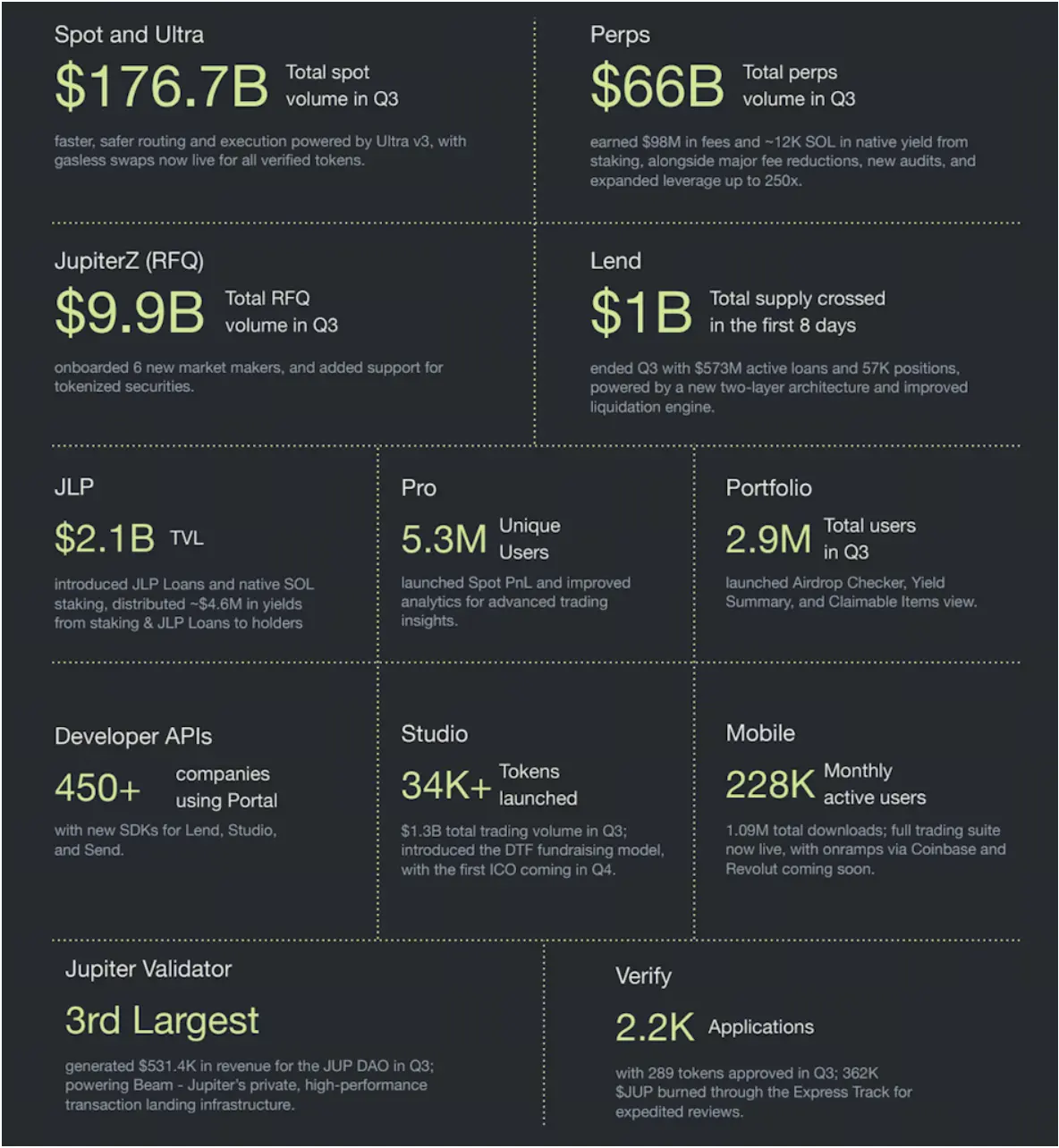
In less than two years, Jupiter has rapidly evolved from a DEX aggregator in the Solana ecosystem into a massive “Decentralized Finance group”. Its business landscape is extensive and complex:
(Source: Jupiter)
- Core Trading Business: flagship spot aggregator, perpetual contract protocol, and Meme coin Launchpad platform.
- Derivatives Financial Services: JLP liquidity pool, lending and liquidity staking services, as well as portfolio tracking tools.
- Underlying Infrastructure: RFQ platform JupiterZ, developer API, token verification system Verify, and operating the third largest validator on Solana.
This does not yet include its new product lines that are still under development, such as its own stablecoin jupUSD, prediction markets, and the full-chain network JupNet. Jupiter is building its business ecosystem at an astonishing speed.
Core Contradiction: Strong Income vs Weak Coin Price
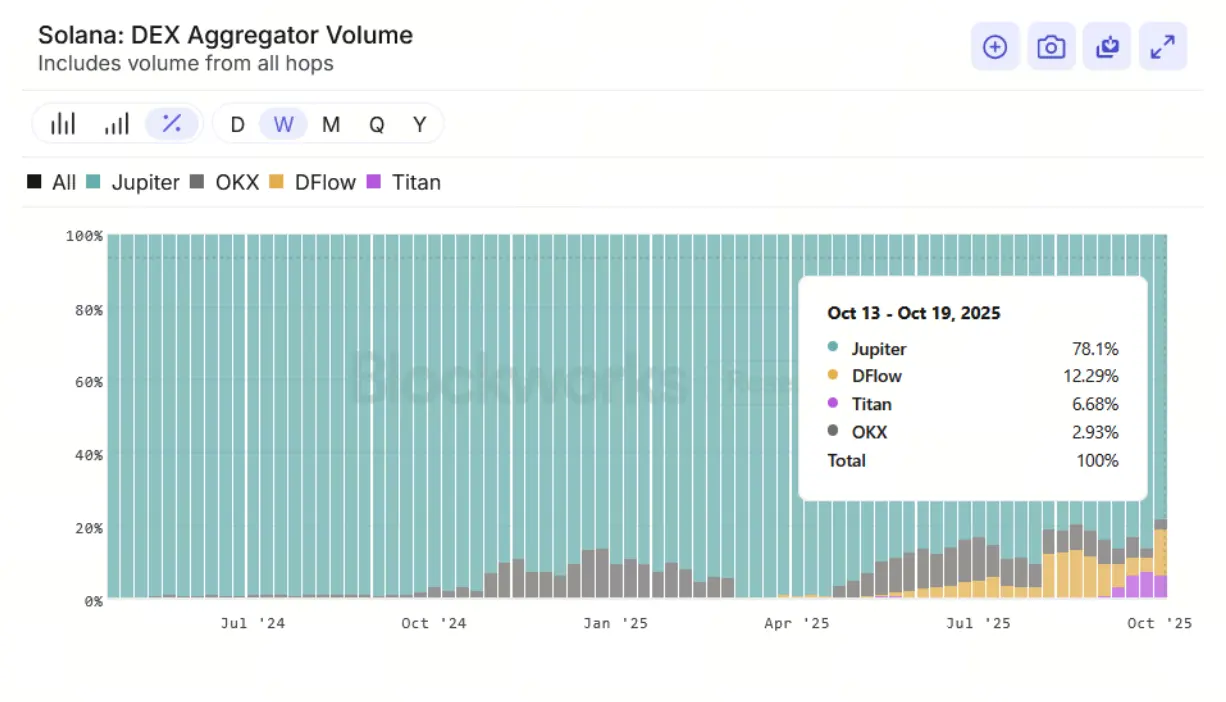
The products of Jupiter are not just superficial; they bring tangible financial returns. According to its third quarter update report, the revenue for the quarter was approximately $45 million, with an annualized revenue reaching about $180 million—this figure ranks among the top in cryptocurrency projects.
(Source: Blockworks)
However, in stark contrast, the market performance of its governance token JUP has continued to be sluggish. The current market capitalization is approximately $1.1 billion, down over 60% from its peak earlier this year, with a price-to-sales ratio (P/S) of about 6.2 times. There is a noticeable divide between the company's fundamentals and the token price.
Market Diagnosis: Why is JUP Value Capture Failing?
Market observers have provided various explanations for the weakness of JUP:
- Utility Shortcomings: The core function of the JUP token is still limited to governance, and many investors believe it lacks direct practical value, making it unable to effectively capture value from the prosperity of the ecosystem.
- Insufficient Narrative Appeal: Some traders believe that JUP is too “stable” for speculative funds seeking high volatility and lacks a sufficiently stimulating market narrative.
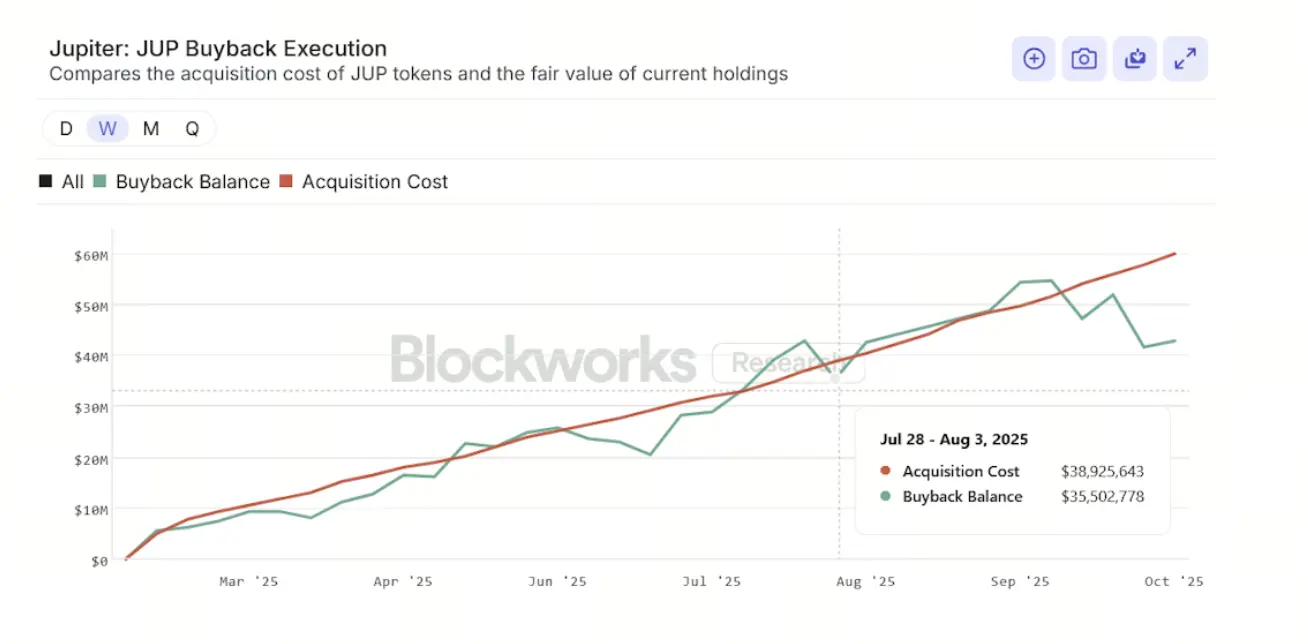
- Limited Value Reflow: Although there is a token buyback mechanism, its scale appears insufficient compared to the massive fully diluted valuation.
- The hype cycle has peaked: Some analysts pointed out that after Jupiter reached its marketing peak last year, market sentiment entered a natural adjustment period, leading to a reassessment of the fundamentals.
- “Complexity Discount”: When a company operates a dozen interrelated businesses simultaneously, its development path and profit model become difficult to assess clearly, and the market tends to apply a valuation discount for such complexity.
Path Correction: Jupiter's “Token Restart” Plan
In the face of challenges, the Jupiter team did not shy away. In the latest quarterly communication, they clearly presented the roadmap for the “JUP Restart,” aimed at achieving focus and simplification through a series of measures:
- Governance Focus: Narrowing the scope of DAO voting to only involve “major token economic and financial decisions” to reduce the governance burden on the community and enhance decision-making efficiency.
- Enhance Capital Efficiency: Shorten the redemption period of JUP from 30 days to 7 days, increasing the liquidity and flexibility of the Token.
- Deflationary Burn: It is planned to destroy 121 million JUP (approximately 42 million USD) in one go from the strategic reserve through community voting, sending a positive signal of scarcity to the market.
The team admitted: “The previous excessive focus on DAO is causing fatigue within the community and creating a negative attention loop. We are determined to change this situation.”
In addition, according to the latest news on October 24, Cash, co-founder of Jupiter, revealed in an interview with The Rollup that Jupiter is developing a brand new ICO platform, which is expected to officially launch in November 2025, and the platform name has not yet been announced. The platform aims to provide token issuance support for projects and bring more profit opportunities for JUP holders. Cash stated that the first token issuance is expected to take place in mid-November.
Future Outlook: From Operational Giants to Value Resonance
Jupiter has already achieved a milestone in the cryptocurrency field: an operational giant that spans multiple tracks and generates stable cash flow. Currently, the market views its Token as a “robust operating asset” rather than a “high-growth potential stock.”
The key challenge for Jupiter in the future lies in how to transform the enormous success of its ecosystem into a clear and direct value stream, and inject it into the JUP Token. If this pathway can be successfully established, Jupiter will not only win the market but also provide a new model for the token value framework of Decentralized Finance projects.
Disclaimer: The information on this page may come from third parties and does not represent the views or opinions of Gate. The content displayed on this page is for reference only and does not constitute any financial, investment, or legal advice. Gate does not guarantee the accuracy or completeness of the information and shall not be liable for any losses arising from the use of this information. Virtual asset investments carry high risks and are subject to significant price volatility. You may lose all of your invested principal. Please fully understand the relevant risks and make prudent decisions based on your own financial situation and risk tolerance. For details, please refer to
Disclaimer.


