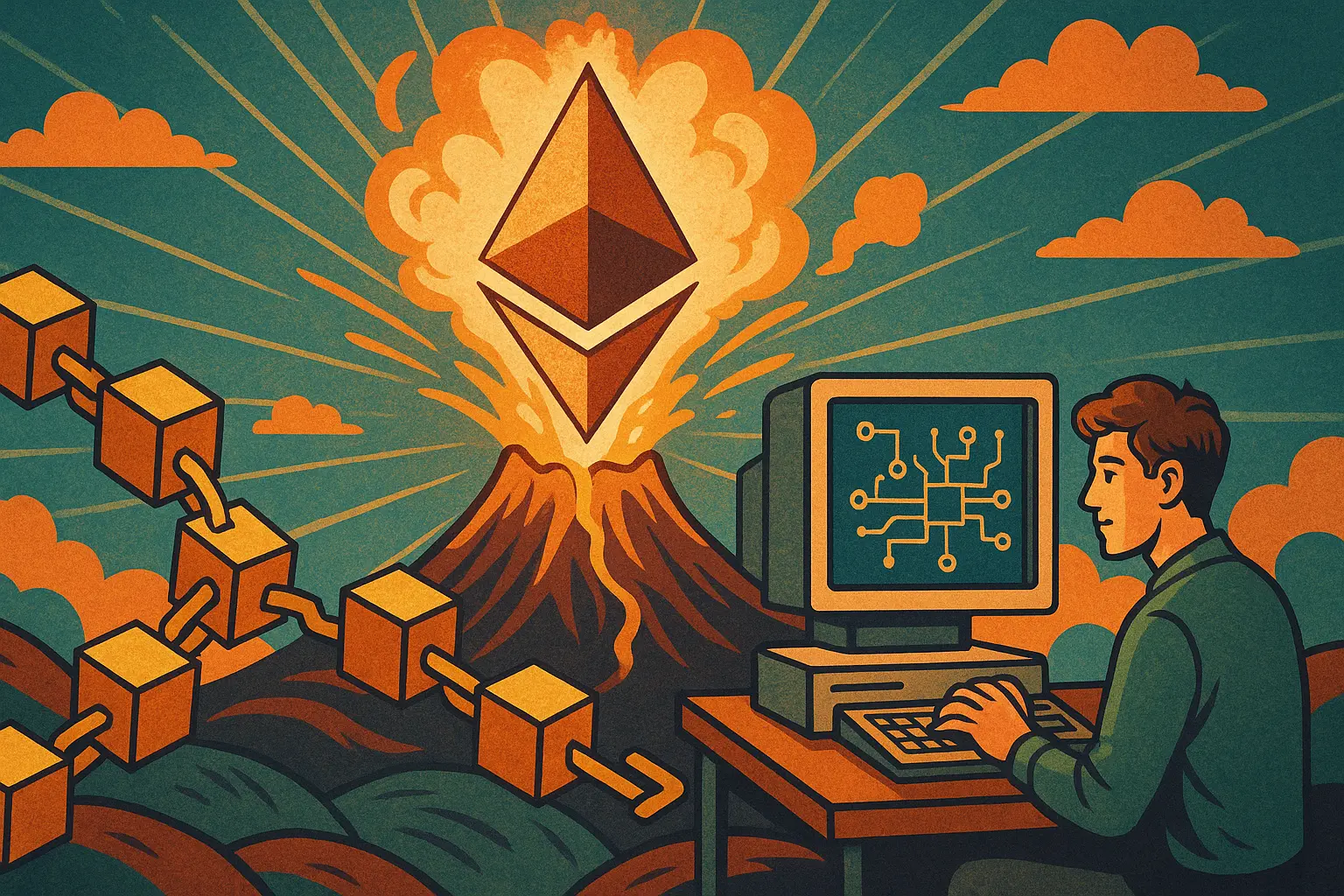
Ethereum is set to undergo two key forks in 2026: the mid-year Glamsterdam fork introduces perfect parallel processing and ZK proofs, with the Gas limit soaring to 200 million; the year-end Heze-Bogota fork enhances censorship resistance. Approximately 10% of validators will switch from re-executing transactions to validating ZK proofs, and L1 scalability will increase to 10,000 transactions per second.
2026 Ethereum Dual Fork Timeline: A Complete Upgrade from Performance to Censorship Resistance
In 2026, Ethereum will experience two hard forks, each with distinct missions. The Glamsterdam fork is expected to occur mid-year, focusing on performance breakthroughs, primarily involving Block Access Lists (BALL) and Enshrined Proposer Builder Separation (ePBS). These technologies may sound dull, but they significantly boost blockchain performance before transitioning to ZK proofs. The Heze-Bogota fork at year’s end will focus on censorship resistance, mainly through Fork-Choice Inclusion Lists (FOCIL), empowering multiple validators and mandating inclusion of specific transactions in blocks.
Timing of the Glamsterdam fork is critical. Ethereum developers are currently finalizing which Ethereum Improvement Proposals (EIPs) to include. Confirmed changes will lay the groundwork for full deployment of ZK proofs. Gabriel Trintinalia, senior blockchain engineer at Consensys, states that Block Access Lists enable clients to package transactions and run them concurrently across multiple CPU cores without conflicts. This shift from single-lane to multi-lane highways will fundamentally change Ethereum’s throughput bottleneck.
The Heze-Bogota fork originally included some EIPs from Glamsterdam, but after intense debate, FOCIL became the sole “considered” proposal. Trintinalia explains: “This is a censorship resistance mechanism that ensures as long as at least part of the network is honest, your transactions will eventually be included.” This design embodies the cypherpunk ethos but is highly challenging to implement, requiring significant effort.
Three Pillars of the Performance Revolution: Parallel Processing, ZK Proofs, Gas Scalability
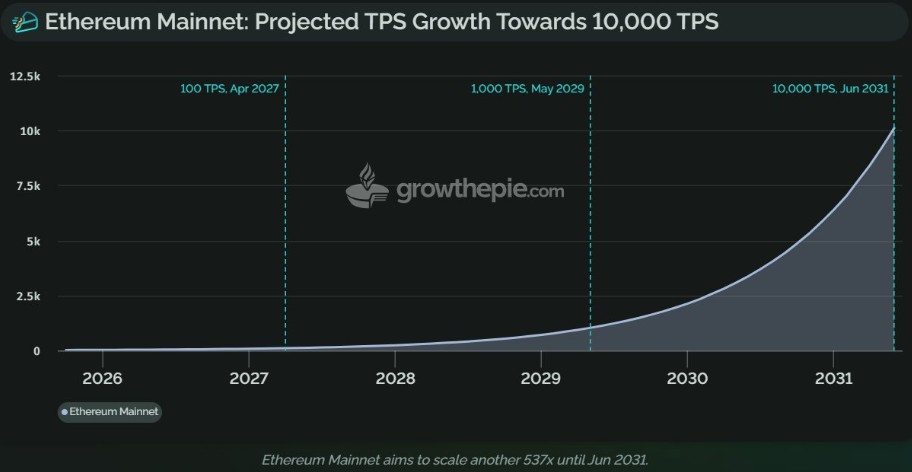
(The 2026 upgrade will expand Ethereum L1 TPS to 10,000, source: Growthepie)
Block Access Lists (BALL), while sounding like a censorship mechanism, actually enable perfect parallel block processing. So far, Ethereum has operated in a single-lane mode, with long transaction queues executed sequentially. BALL allows throughput to expand into multi-lane highways, enabling multiple transactions to be processed simultaneously. This mapping is designed by block producers, who first execute all transactions on high-end hardware and then inform clients of the resulting state differences.
Trintinalia describes disk read bottlenecks as “our biggest bottleneck.” In traditional mode, clients must repeatedly and sequentially read from disk, greatly reducing efficiency. BALL allows clients to preload all necessary data into memory, and combined with parallel processing, this will enable Ethereum to run at higher TPS and larger block sizes without increasing the Gas limit.
Technical Breakthroughs in Perfect Parallel Processing
BALL Mechanism: Each block contains a mapping table indicating which transactions affect others, accounts, and storage slots.
Preloading Optimization: Clients can preload necessary data from disk into memory, eliminating the “maximum bottleneck.”
Multi-Core Parallelism: Transactions can run concurrently on multiple CPU cores without sequential execution.
No Need to Increase Gas: Achieve higher TPS and larger blocks without raising the Gas limit.
Synergy Between ZK Proofs and ePBS

(Ethereum Foundation researcher demonstrates how to verify zero-knowledge proofs, source: ETHProofs)
Enshrined Proposer Builder Separation (ePBS) integrates the process of block creation and proposal directly into Ethereum’s consensus layer. Currently, about 90% of blocks are handled via MEV Boost, a protocol-level solution using centralized relays. ePBS aims for trustless operation, alleviating centralization pressures caused by Maximal Extractable Value (MEV).
From a scalability perspective, ePBS’s main advantage is providing more time for ZK proof generation and dissemination. Validators are currently penalized for slow verification, discouraging them from waiting for ZK proofs. Ethereum researcher Ladislaus von Daniels explains that ePBS will offer more time to receive proofs and decouple block verification from execution, incentivizing validators to voluntarily accept ZK proofs.
Justin Drake, researcher at the Ethereum Foundation, estimates that about 10% of validators will switch to ZK proofs afterward, further increasing the Gas limit. While 10% may seem small, it’s a crucial breakthrough from zero, paving the way for larger-scale adoption in the future.
Gas Limit Debate: 100 Million or 200 Million?
Industry estimates vary widely on how much the Gas limit can be increased in 2026. Besu client engineer Gary Schulte is conservative: “I think by 2026, Gas limits could quickly reach 100 million. Beyond that, it’s too speculative.” He adds that the emergence of delayed execution mechanisms could make higher Gas limits feasible.
Tomasz Stańczak, co-director of the Ethereum Foundation, stated at the No-Bank Summit that the block Gas limit will rise to 100 million in the first half of 2026, and after ePBS, could double to 200 million. Further improvements might mean that by year’s end, the Gas limit per block could reach 300 million. This aggressive forecast is based on the cumulative effect of multiple technological breakthroughs.
Vitalik Buterin remains more cautious. In late November, he said, “I expect Ethereum to continue growing next year, but the growth will be more defined rather than balanced. For example, one future scenario is: increase Gas limit by 5x, while raising Gas fees for operations with lower processing efficiency by 5x.” He listed storage, precompiles, and calls to large contracts. This targeted optimization approach may be more realistic.
L2 and Interoperability Ecosystem Synergy
The number of data blocks will increase to 72 or more per block, enabling L2 to process hundreds of thousands of transactions per second. ZKsync’s recent Atlas upgrade demonstrates new possibilities: allowing funds to stay on the mainnet while transactions occur in the ZKsync Elastic Network’s fast execution environment. This design balances L1 security with L2 high performance.
The planned Ethereum interoperability layer aims to enable seamless cross-chain operations between L2s, with privacy as a core feature. This interoperability layer is as important as the L1 upgrade itself, as it will address current fragmentation in the L2 ecosystem. Users will no longer need to manually bridge assets between different L2s, greatly reducing usability barriers and capital risks.
Disclaimer: The information on this page may come from third parties and does not represent the views or opinions of Gate. The content displayed on this page is for reference only and does not constitute any financial, investment, or legal advice. Gate does not guarantee the accuracy or completeness of the information and shall not be liable for any losses arising from the use of this information. Virtual asset investments carry high risks and are subject to significant price volatility. You may lose all of your invested principal. Please fully understand the relevant risks and make prudent decisions based on your own financial situation and risk tolerance. For details, please refer to
Disclaimer.


