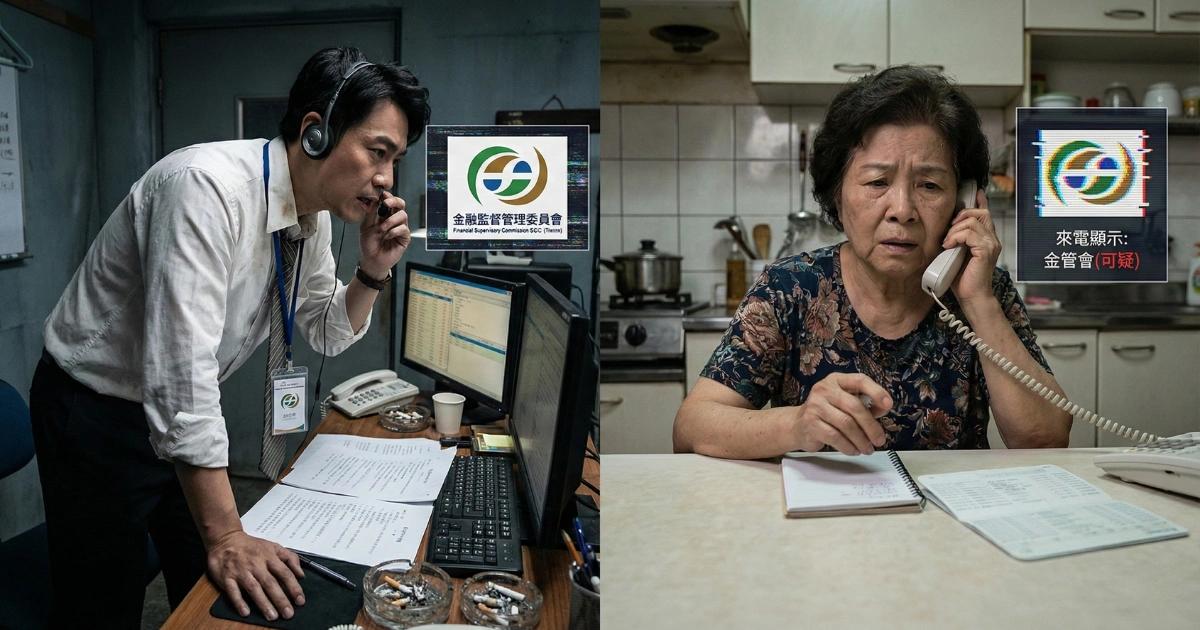
The year-end is approaching, and scam groups are impersonating the Financial Supervisory Commission or the Inspection Bureau, falsely claiming account abnormalities and freezing to induce remittances. The authorities reiterate that they have no such authority. Citizens should call 165 to verify.
Recently, unscrupulous individuals have impersonated “Financial Supervisory Commission” or “Inspection Bureau” officers, falsely claiming that citizens’ bank accounts have abnormal remittance activities, and even accurately knowing personal information, attempting to scam funds. As the year-end approaches, it is a busy time for scam groups to boost their performance. Please also remind your elders not to panic and accept everything at face value, so their retirement funds are not lost.
Taiwan’s New Type of Scam: Financial Supervisory Commission Officer Calls to Freeze Accounts
Recently, unscrupulous individuals have impersonated “Financial Supervisory Commission” or “Inspection Bureau” officers, falsely claiming that citizens’ bank accounts have abnormal remittance activities, have been flagged or frozen, and claiming they can assist in handling the issue. This is actually the work of scam groups. These groups typically follow the process below, exploiting people’s fear of the law and the authority of public power:
- Fake Identity: The caller claims to be a “Financial Supervisory Commission officer” or “Inspection Bureau officer,” even accurately stating your name and ID number to gain trust.
- Creating Panic: They inform you that your ID has been used to open accounts, there are suspicious transactions, or your account is “involved in criminal cases,” “has unusual large transfers,” or “has been flagged as a warning account.” They may even disclose account details and encourage you to report to the police.
- Under the guise of regulation: Claiming to “prove innocence” or “unfreeze” the account, they ask you to click on a link in a text message, download a specific app (possibly remote control software), or transfer funds into a “designated regulatory account.”
The Financial Supervisory Commission has no authority to “freeze accounts”
The Financial Supervisory Commission has repeatedly emphasized through press releases the “Three No’s” principles, including:
- They will not proactively contact citizens
- They will not freeze/control accounts
- They will not request remittances
Account freezing is the authority of the “bank.” The Financial Supervisory Commission does not have access to individuals’ account transaction records and has no authority to review or freeze funds in citizens’ accounts.
Year-end approaching, scams lack performance, call 165 for safety
Taiwan’s Ministry of the Interior Police Department has established the 165 hotline to strengthen the prevention of fraud crimes. It is a nationwide platform for anti-fraud consultation, reporting, and case filing.
When you receive suspicious calls, texts, or see online investment ads that raise doubts, proactively call 165. There will be dedicated personnel to assess whether it is a scam. If you find scam websites, scam Line IDs, or phishing URLs, you can also call 165 to provide information and assist the police in taking down these illegal sites.
The 165 hotline mainly receives incoming calls from the public. If you receive a call showing “165” or “+165,” it is definitely a scam (scam groups often use number spoofing techniques).
Reminder: Besides personal information possibly being in the hands of scam groups, they may also use conversations to fish out your personal details. Especially as the year-end approaches, it is a busy time for scam groups to boost their performance. Also, don’t forget to remind your elders who are unfamiliar with financial and commercial practices: never panic and accept everything at face value, or your retirement savings could be lost.
- This article is reprinted with permission from: 《Chain News》
- Original title: “Fake Financial Supervisory Commission Impersonators Boost Year-End Performance! Be Careful Not to Fall for Personal Data Scams”
- Original author: Florence
Disclaimer: The information on this page may come from third parties and does not represent the views or opinions of Gate. The content displayed on this page is for reference only and does not constitute any financial, investment, or legal advice. Gate does not guarantee the accuracy or completeness of the information and shall not be liable for any losses arising from the use of this information. Virtual asset investments carry high risks and are subject to significant price volatility. You may lose all of your invested principal. Please fully understand the relevant risks and make prudent decisions based on your own financial situation and risk tolerance. For details, please refer to
Disclaimer.


