Pi Network has recently once again been embroiled in controversy over the mainnet launch, with rumors of an official launch on February 20, 2025, strongly denied by community member WaeliaM. The official roadmap indicates that the project is still in the testing phase, but the confusion between the closed mainnet launched in 2021 and the true open mainnet, along with a surge in informal market trading activities, has caused serious community divisions and ongoing trust crises.
The Truth Behind the Rumored Mainnet Launch on February 20
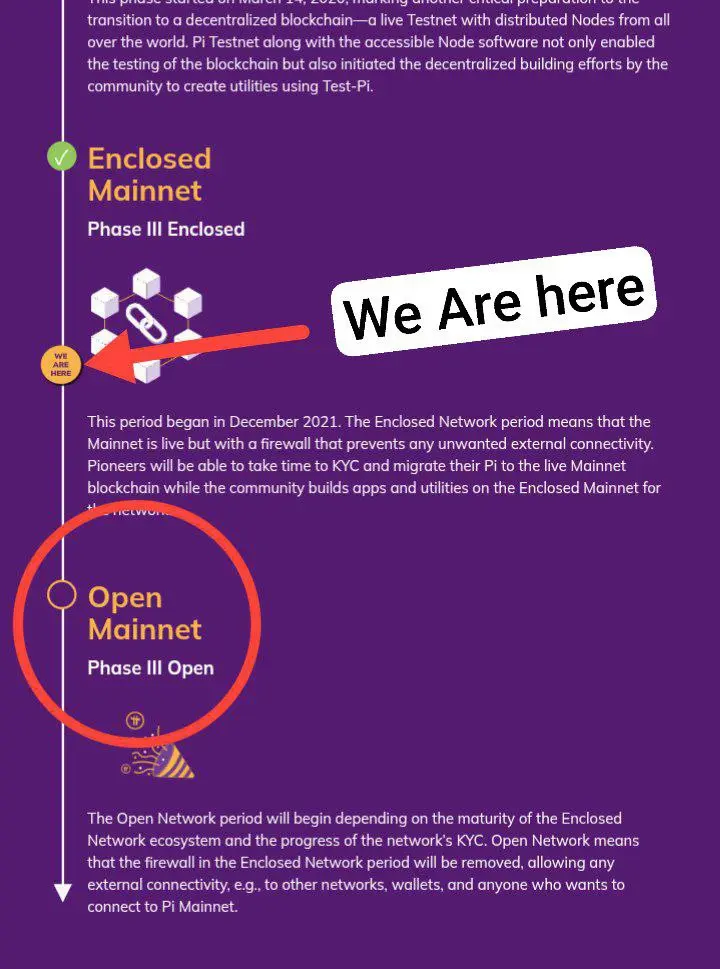
The news that Pi Network will officially launch its mainnet on February 20, 2025, has been widely circulated within the community, but this claim was quickly met with strong rebuttals. Community member WaeliaM pointed out in a post that such statements distort the actual development stage of the project. According to the official roadmap, Pi Network is still in the testing phase, operating within a controlled environment, prioritizing internal testing, infrastructure stability, and ecosystem development.
WaeliaM emphasized that the project is currently in an early testing stage and is also preparing for a more critical next phase (commonly referred to as “Test 2”). This means that Pi Network is still quite a distance from a true mainnet launch, and the date of February 20 has no official basis. However, this clarification did not quell the controversy but instead sparked more debate about “what truly constitutes a mainnet.”
The root of this confusion lies in Pi Network’s long-standing lack of clear milestone definitions. Since launching mobile mining in 2019, the project has attracted tens of millions of users with the promise of “coming soon,” but the specific timeline has always been vague. Whenever the community expected concrete dates, the official responses were often vague, citing “testing phases” and “gradual progress,” creating fertile ground for various rumors.
The Definition Trap of Closed Mainnet vs. Open Mainnet
Key Differences Between the Two Mainnets
Closed Mainnet (launched December 2021): Allows internal wallet activities, KYC verification, and app testing, but prohibits external connections and unlimited transfers.
Open Mainnet (not yet launched): Fully decentralized, allows integration with external exchanges, unlimited token transfers, and third-party wallet support.
Main Dispute Point: Pi Network refers to the closed mainnet as the “mainnet,” but critics argue this is misleading because the network is still under centralized control.
Most disagreements stem from different interpretations of “actual mainnet launch.” Pi Network launched the closed mainnet in December 2021, which permitted internal wallet activities, KYC verification, and app testing but did not open to external connections. Critics believe calling this stage the “full mainnet” is misleading, as the network still restricts unlimited transfers and broader integrations.
From a technical perspective, the closed mainnet resembles a controlled testing environment rather than a truly decentralized blockchain. A genuine mainnet should allow anyone to run nodes, any exchange to list tokens, and any developer to deploy smart contracts. Pi Network’s current state is still far from this standard, yet the official use of the term “mainnet” has led many users to mistakenly believe the project has already completed this phase.
This definitional ambiguity not only causes confusion but also raises regulatory risks. If Pi Network claims to have launched the mainnet but in reality remains under centralized team control with all tokens circulating centrally, it could be considered an unregistered securities offering. The U.S. Securities and Exchange Commission (SEC) is tightening regulation on crypto projects, and unclear definitions of “mainnet” could become a legal flashpoint.
Serious Disconnect Between Trading Activity and Technical Reality
Despite technical differences, market activity has made this debate more complex. In early 2025, with some progress, Pi-related trading activity surged in informal markets, and prices soared before sharply retracing. These price fluctuations fueled claims that the network had fully launched, even though developers insist the ecosystem remains in a controlled promotion phase.
“Informal markets” refer to small exchanges or OTC platforms claiming to trade Pi tokens, but these transactions are not officially recognized by Pi Network. More concerning is that since Pi tokens have not been truly transferable, these platforms may be trading “contracts promising future delivery” rather than real tokens. This situation is very similar to the chaos during the ICO bubble of 2017-2018.
Price volatility further exacerbated the confusion. When Pi prices on unofficial markets soared, many users mistakenly took this as a signal of mainnet launch, only to panic when prices plummeted. In reality, these prices are purely speculative, unrelated to Pi Network’s technical progress. Developers have repeatedly warned users not to participate in these unofficial trades, but with limited effect.
Community Split and Trust Crisis: A Vicious Cycle
Responses to this post reveal a deeply polarized community. Some users believe Pi Network is still in the preparatory stage and warn others not to jump to conclusions prematurely. Others argue that actual transactions, wallet functionalities, and increasing practical use cases indicate that Pi Network is mature enough to consider the mainnet operational. This disagreement highlights longstanding trust issues dating back to Pi Network’s early mobile mining days.
Supporters call for patience and strict adherence to the roadmap, emphasizing that the project needs time to ensure security and stability. They point out recent updates that have improved wallet reliability, KYC throughput, and ecosystem tools, demonstrating steady progress. Critics, however, demand clearer timelines and accountability, questioning why a project that has been active for six years is still in the “testing phase.”
Clear communication about the mainnet status is crucial for Pi Network’s reputation. Contradictory statements can confuse users, damage trust, and invite regulatory scrutiny. As the project moves toward broader adoption, transparent milestone definitions will determine whether Pi Network ultimately becomes a widely adopted blockchain or remains merely an experiment.
Disclaimer: The information on this page may come from third parties and does not represent the views or opinions of Gate. The content displayed on this page is for reference only and does not constitute any financial, investment, or legal advice. Gate does not guarantee the accuracy or completeness of the information and shall not be liable for any losses arising from the use of this information. Virtual asset investments carry high risks and are subject to significant price volatility. You may lose all of your invested principal. Please fully understand the relevant risks and make prudent decisions based on your own financial situation and risk tolerance. For details, please refer to
Disclaimer.


