The U.S. Senate delays deliberation on the Market Structure Bill, bipartisan talks continue on DeFi positioning, stablecoin yields, and developer protections, with an obvious trend of escalating election and regulatory struggles.
Senate delays review of Market Structure Bill, Agriculture Committee hopes to build bipartisan consensus
The legislative process regarding the crypto market structure in the U.S. Senate has been adjusted again. John Boozman, Chairman of the Senate Agriculture Committee, stated that the review of the Market Structure Bill, originally scheduled for mid-January, will be postponed to the last week of January for markup. He pointed out that the delay is due to some key provisions still needing further negotiation to ensure the bill can gain broad enough support to proceed smoothly.
Boozman emphasized that over the past weekend, he had engaged in “constructive and substantive discussions” with Democratic Senator Cory Booker, demonstrating that there is still room for bipartisan cooperation. Since the bill must pass both the Senate Agriculture Committee and the Banking Committee in the future, any bottleneck in either stage could impact the overall legislative timeline, reflecting the high complexity of crypto regulation within the U.S. political system.
DeFi provisions become negotiation focal points, stablecoin yields and illegal finance disputes remain unresolved
Sources familiar with the matter revealed that the current issues under intensive negotiation for the Market Structure Bill include the legal positioning of DeFi, whether stablecoins can be linked to yields or reward mechanisms, and Democratic demands to include provisions “to prevent high-ranking government officials from profiting from the crypto industry.”
In the DeFi industry, it is generally believed that developers who do not control user funds or possess asset transfer authority should not be considered “money transfer service providers” or “remittance institutions.” This stance is regarded as an “uncompromisable red line” for the industry. However, although this protection clause was previously included in the Senate version draft, it has recently become a variable at the negotiation table, causing concern among the DeFi community about the legislative direction.
Bipartisan senators introduce independent bill, highlighting political consensus on DeFi developer protections
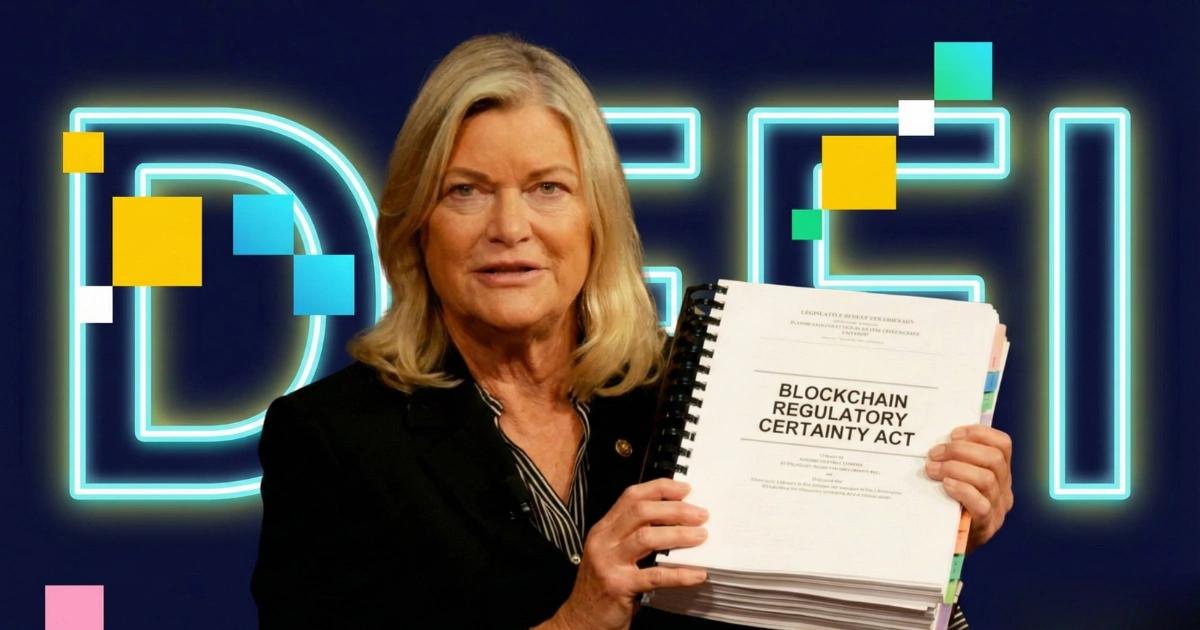
While the overall Market Structure Bill remains undecided, Republican Senator Cynthia Lummis and Democratic Senator Ron Wyden jointly proposed the “Blockchain Regulatory Certainty Act,” aiming to establish clear legal boundaries for DeFi developers.
The bill explicitly states that software developers responsible only for writing code and not holding or controlling user funds should not be classified as remittance institutions.
- Lummis said that requiring developers to follow banking or exchange regulations just because they “write code” is a misunderstanding of technology;
- Wyden bluntly stated that such practices are not only technically unfounded but could also infringe on privacy and free speech.
It is noteworthy that this bill was originally introduced in the House and is now reintroduced in the Senate as an independent bill, which is interpreted as a clear signal to all negotiating parties: protecting DeFi developers has achieved substantial bipartisan consensus and should not be sacrificed in larger political struggles.
Legislative timelines intertwined with political realities, crypto industry becomes key variable in elections
As the Senate Banking Committee prepares to initiate review procedures, whether the final version can pass the chamber depends on support from at least 7 Democratic senators if only Republican backing is secured. For Republicans, if negotiations break down, it could instead provide a “political advantage” in election strategies.
The crypto industry has already become one of the major political donors in the U.S. in 2024. It is estimated that over $200 million may be invested in supporting pro-crypto candidates in the future. If Democrats are labeled as “obstructing crypto legislation,” related political resources could further tilt toward the Republican side.
Against this backdrop, the delay of the Market Structure Bill is not only a technical adjustment but also a reflection of the intertwined interests of regulatory philosophy, industry benefits, and election realities. The independent legislative actions by Lummis and Wyden have made the legal status of DeFi developers a key issue on Capitol Hill for the first time.
Disclaimer: The information on this page may come from third parties and does not represent the views or opinions of Gate. The content displayed on this page is for reference only and does not constitute any financial, investment, or legal advice. Gate does not guarantee the accuracy or completeness of the information and shall not be liable for any losses arising from the use of this information. Virtual asset investments carry high risks and are subject to significant price volatility. You may lose all of your invested principal. Please fully understand the relevant risks and make prudent decisions based on your own financial situation and risk tolerance. For details, please refer to
Disclaimer.


