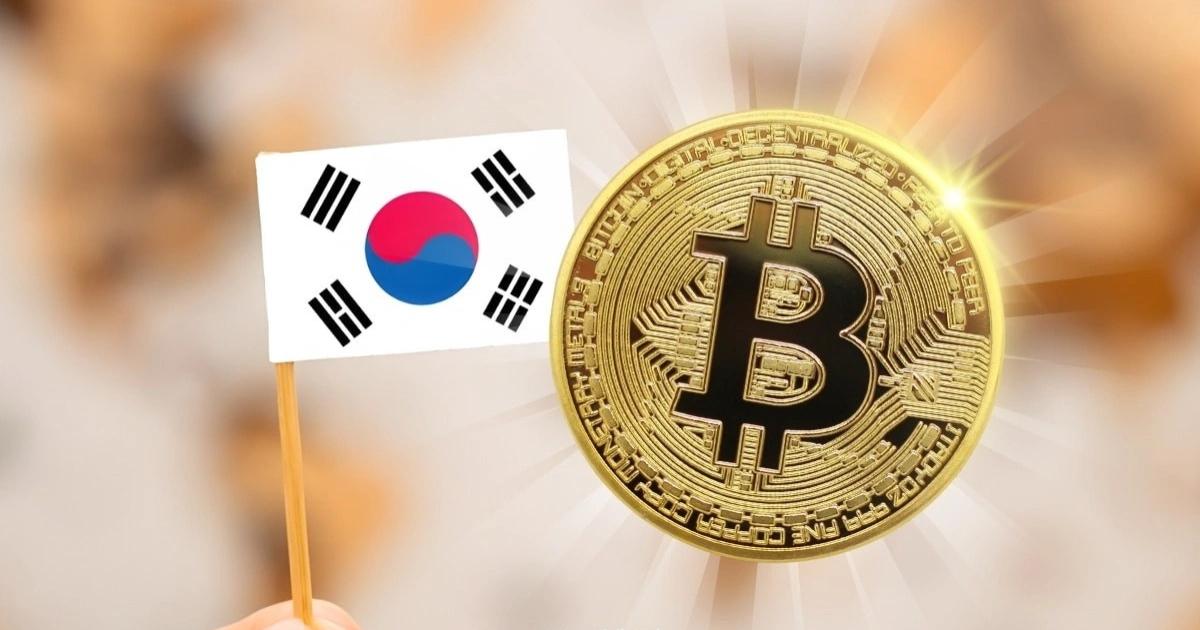
South Korea’s FSC plans to lift the ban on corporate crypto investments, setting a 5% cap and restricting to the top 20 cryptocurrencies, while aligning with the “Digital Asset Basic Act,” marking a shift from closed regulation to a systematic open approach.
The nine-year “Corporate Cryptocurrency Investment Ban” in South Korea is about to come to an end. According to reports, the Financial Services Commission (FSC) is drafting regulatory guidelines for corporate investments in cryptocurrencies, with an expected investment cap of 5%, symbolizing South Korea’s move from strict suppression to orderly, institutionalized openness.
According to the Seoul Economic Daily, the FSC has preliminarily completed trading guidelines for cryptocurrencies targeting listed companies and professional investors, with the final version expected to be released in January or February this year. If progress goes smoothly, South Korean companies could legally include cryptocurrencies on their balance sheets within this year.
To prevent excessive corporate speculation leading to financial risks, this draft sets strict “firewall” measures:
- Investment Cap: Companies and professional investors can allocate up to 5% of their shareholder equity (capital from shareholders) annually to purchase cryptocurrencies.
- Investment Scope: Currently limited to the top 20 cryptocurrencies by market capitalization.
Stablecoin controversy: Whether USD-pegged stablecoins like $USDT, $USDC , etc., will be included in the legal purchase list is still under discussion.
Presto Research Associate Min Jung pointed out: “This will inject considerable liquidity into the market, but since the limit is on the top 20 cryptocurrencies by market cap, funds are expected to flow mainly into Bitcoin and Ethereum, with limited benefits for competing coins.”
This new guideline continues the recent trend of the FSC gradually lifting the practical ban on “institutions trading crypto assets.” As early as mid-2025, South Korea already permitted non-profit organizations and cryptocurrency exchanges to sell their holdings; regulators also announced plans to open trading of cryptocurrencies to listed companies and professional investors in the second half of 2025.
To prevent large transactions from causing market volatility, the new guidelines will also include mechanisms such as “order splitting” and “price limits.” Min Jung stated: “Although the 5% limit seems conservative, for companies taking their first steps, initial efforts will likely be cautious, so it doesn’t constitute a substantial obstacle.”
The most closely watched focus among Korean crypto circles and investors is the upcoming “Digital Asset Basic Act,” expected to be introduced in the first quarter of this year. Seen as a “second-phase comprehensive regulation,” this legislation will set the tone for key policies, including the issuance and trading regulations of cryptocurrency spot ETFs, and will establish a regulatory framework for the Korean won stablecoin.
- This article is reprinted with permission from: 《Block Talk》
- Original title: 《South Korea to Open “Corporate Coin Buying”! Annual Investment Cap 5%, Limited to Top 20 Coins》
- Original author: Block Sister MEL
Disclaimer: The information on this page may come from third parties and does not represent the views or opinions of Gate. The content displayed on this page is for reference only and does not constitute any financial, investment, or legal advice. Gate does not guarantee the accuracy or completeness of the information and shall not be liable for any losses arising from the use of this information. Virtual asset investments carry high risks and are subject to significant price volatility. You may lose all of your invested principal. Please fully understand the relevant risks and make prudent decisions based on your own financial situation and risk tolerance. For details, please refer to
Disclaimer.
Related Articles
ETH drops below 2000 USDT, 24H decline of 5.68%
Gate News Report, March 6th, according to data from a certain CEX market, ETH dropped below 2000 USDT, currently at 1999.87 USDT, down 5.68% in the past 24 hours.
GateNews37m ago
Short-selling firm Culper releases bearish report on Ethereum: Fusaka upgrade disrupts ETH token economics
Aggressive short-selling firm Culper Research has released a report bearish on Ethereum (ETH), believing that the Fusaka upgrade in 2025 will cause structural damage to ETH's token economy. The report points out that a significant decrease in Gas fees has led to increased address pollution attacks and reduced validator rewards, and emphasizes that Ethereum is facing competitive pressure from Solana and L2 solutions. Culper believes that ETH's value capture ability is declining and has started shorting ETH.
ChainNewsAbmedia54m ago
ETH drops below 2000 USDT
Gate News bot message, Gate market display, ETH drops below 2000 USDT, current price 1998.74 USDT.
CryptoRadar57m ago
ETH 15-minute sharp decline of 1.53%: Large investors' short-term profit-taking and ETF capital outflows resonate, triggering a significant drop
From 13:45 to 14:00 on March 6, 2026 (UTC), ETH experienced a significant fluctuation, with a short-term decline of 1.53%. The price fluctuated sharply between 2019.21 and 2051.26 USDT, with an amplitude of 1.56%. High-frequency sell orders surged, market attention spiked, trading volume increased, and the divergence between bulls and bears intensified. Market sentiment became more cautious.
The main driving force behind this fluctuation was large investors and whale accounts reducing their positions after a short-term rebound, leading to a rapid release of large sell orders and triggering short-term selling pressure in the market. On the ETF front, holdings
GateNews1h ago
Jiuzi Holdings raises $80 million through a rights issue to support the development of the crypto asset treasury
Jiuzi Holdings has signed an agreement with strategic investment institutions to subscribe for 40 million shares at $2 per share, raising $80 million. The funds will be used to expand cash reserves, build a crypto asset treasury, and develop an asset allocation strategy. The treasury will include various cryptocurrencies such as Bitcoin and Ethereum.
GateNews2h ago


