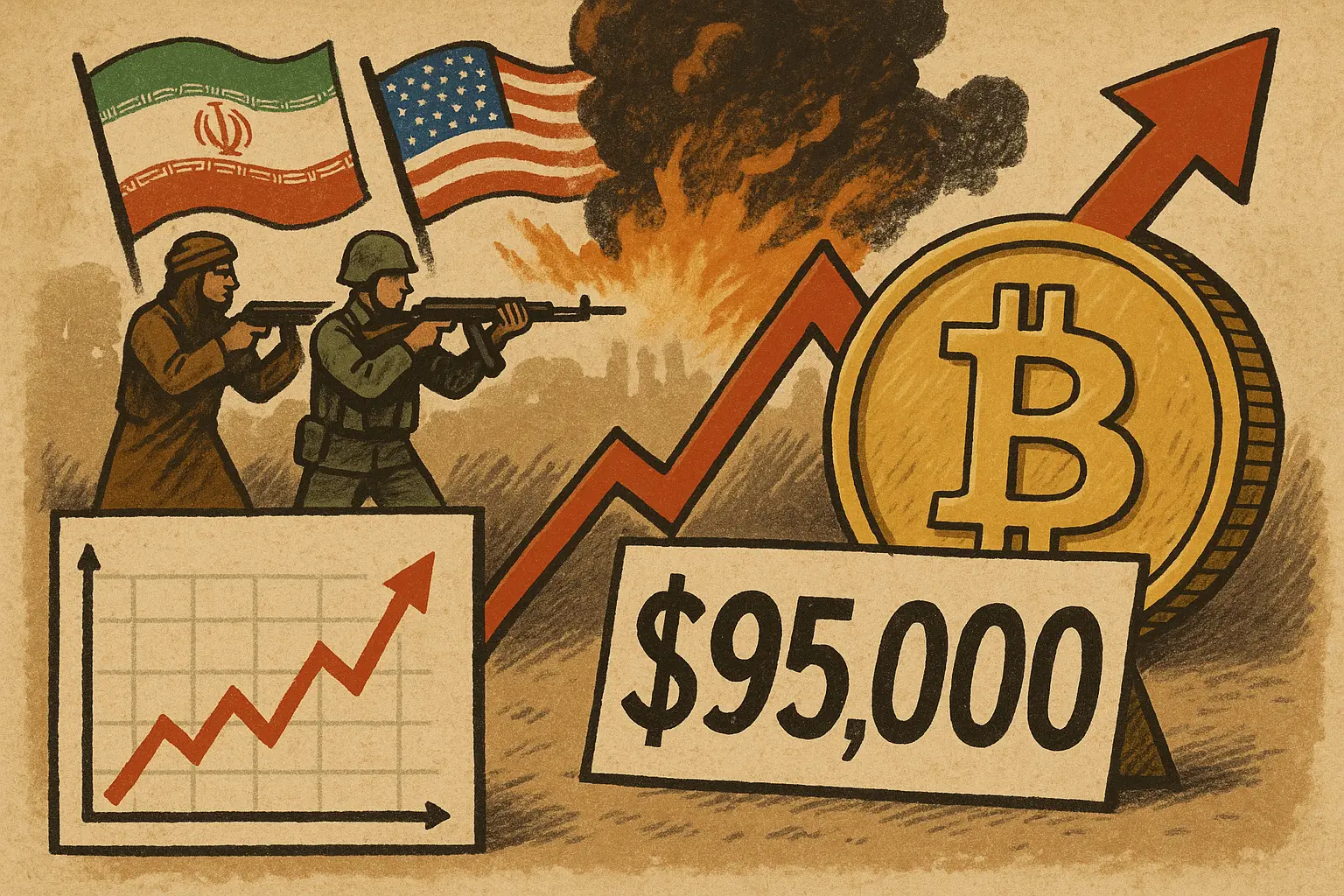
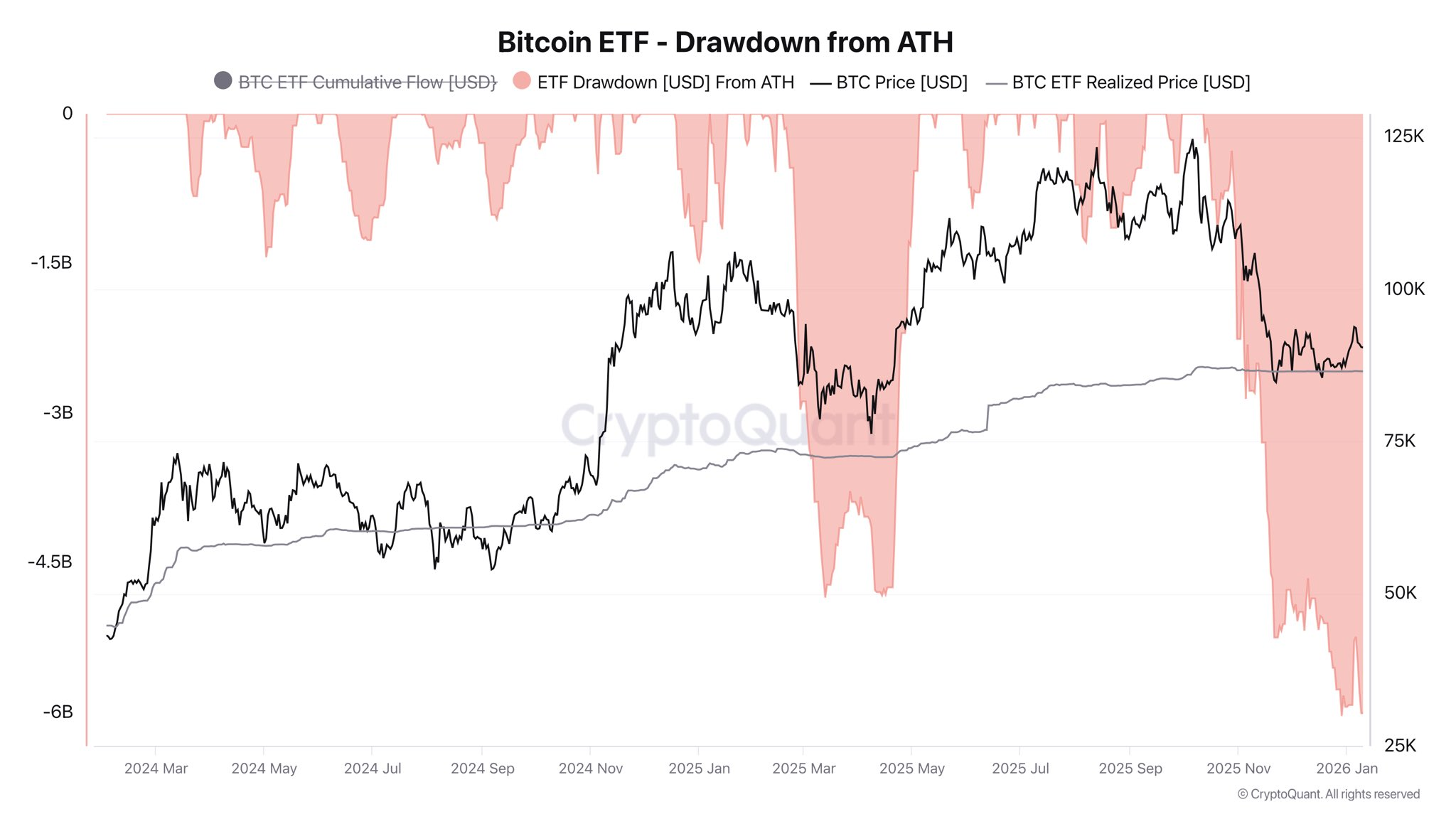
Bitcoin surged to $95,000 on Tuesday, hitting a 50-day high, driven by easing U.S. inflation and the dual factors of U.S.-Iran war risks. The U.S. government has ordered citizens to evacuate Iran immediately, amid ongoing large-scale protests in Iran. CPI stabilization has alleviated pressure for interest rate hikes. Bitcoin rose over 5% from $91,000. In early January, ETF outflows reached $6 billion, and pressure eased after falling below $86,000.
U.S. Evacuation Order Sparks Geopolitical Hedging Demand

(Source: TravelGov)
The U.S. travel warning for Iran is the second catalyst. When war risks rise, markets tend to shift toward safe or alternative assets. During global crises, Bitcoin is increasingly viewed as a geopolitical hedge tool. The escalation of U.S.-Iran tensions and factors like Iran cyberattacks further reinforce Bitcoin’s role as an ungoverned asset.
The U.S. State Department issued a stern warning, urging American citizens to “leave Iran immediately” and prepare for long-term communication disruptions. Large-scale protests continue across Iran, and Washington’s rhetoric against Tehran has grown more aggressive, raising fears of a larger regional conflict. The timing of this alert is highly sensitive, indicating that U.S. government assessments of U.S.-Iran war risks have escalated from “alert” to “emergency.”
An evacuation order carries special diplomatic significance. When a country demands its citizens to evacuate another nation immediately, it usually signals imminent military conflict or major security events. Historically, evacuation orders have been the final warning before war erupts. Prior to the 2003 U.S. invasion of Iraq, the 2011 Libyan civil war, and the 2022 Russia-Ukraine conflict, similar warnings were issued. Therefore, markets interpret this evacuation order as a significant signal that the likelihood of U.S.-Iran war has increased markedly.
As news reports intensify, traders rapidly flock into Bitcoin and other highly liquid crypto assets. Bitcoin’s opening price approached $91,000, rising over 5 within hours. The entire crypto market moved higher, with Ethereum, Solana, and Ripple prices also surging. This correlation indicates that funds are not only flowing into Bitcoin but are broadly allocated across crypto assets to hedge geopolitical risks.
Three Market Impacts of U.S.-Iran War Escalation
Energy Prices: If Iran blocks the Strait of Hormuz, 20% of global oil supply could be disrupted, pushing oil prices higher
Safe-Haven Capital Flows: War risks drive funds into gold, Bitcoin, and other non-repossession assets
Regional Chain Reactions: Countries like Israel and Saudi Arabia in the Middle East may become involved, expanding the scope of conflict
The economic impact of U.S.-Iran war extends far beyond localized conflict. Iran controls the Strait of Hormuz, through which about 20% of global oil supplies pass. If war leads to a blockade, oil prices could soar above $150 per barrel, triggering global inflation and recession. In such an extreme scenario, Bitcoin’s role as “digital gold” for hedging would be maximized.
CPI Stabilization and the Macro Turning Point for Rate Hike Expectations
(Source: CryptoQuant)
The early rally began after the U.S. Consumer Price Index (CPI) was announced, showing inflation remained stable. Prices are still rising but not accelerating. This is crucial for cryptocurrencies. When inflation is under control, the Federal Reserve does not need to further raise interest rates. It also reduces the risk of a sudden economic downturn caused by aggressive tightening policies. For investors, this creates a safer environment for holding risk assets like Bitcoin.
The CPI report eliminated a major downside risk, and as Bitcoin stabilizes after weeks of ETF-driven sell-offs, the reduced geopolitical risks rekindle Bitcoin’s appeal as a hedge. This double positive creates a perfect upward environment: macroeconomic concerns about tightening are alleviated, while geopolitical risks boost safe-haven demand.
In early January, after Bitcoin’s rally in October last year, U.S. spot Bitcoin ETF experienced over $6 billion in outflows as late buyers exited. The sell-off pushed Bitcoin’s price down to ETF cost basis around $86,000, after which pressure eased. Since then, ETF capital flows have stabilized, indicating the sell-off phase has largely ended.
Meanwhile, exchange data shows global buyers are digesting ETF supply, while U.S. institutional investors are choosing to pause rather than exit the market. The premium on the largest compliant U.S. crypto exchange has turned negative, indicating market caution rather than a total collapse. This technical cleansing has laid a healthy foundation for subsequent rallies, with weak hands cleared out and long-term holders dominating.
The Technical and Psychological Milestone of $100,000
After the CPI report showed uncontrolled selling, Bitcoin rebounded above $93,000. Breaking $95,000 further confirms strong demand. As inflation stabilizes and ETF pressure diminishes, U.S.-Iran geopolitical tensions become the catalyst for idle funds to re-enter the market.
Currently, Bitcoin is regaining upward momentum after mid-cycle adjustments. If ETF inflows resume and geopolitical risks remain high, traders will view $100,000 as the next major test. This psychological level is not only an integer but also the previous high after Bitcoin briefly touched it in November 2025 before retreating. Breaking and holding above $100,000 would confirm the continuation of a bull trend, opening the path toward $120,000 and even $150,000.
This rally demonstrates that in an increasingly turbulent world, Bitcoin continues to serve as both a macro asset and a crisis hedge. When traditional financial markets are volatile due to war risks, Bitcoin offers a 24/7 trading alternative, not controlled by any single government, with global liquidity. This attribute is fully validated amid the escalation of U.S.-Iran tensions.
ETF sell-offs have cleared late buyers, paving the way for Bitcoin to potentially retake $100,000. From a technical perspective, the $86,000 low forms a solid support, and a breakout above $95,000 confirms the rebound’s validity. If the U.S.-Iran conflict escalates further, safe-haven demand could accelerate Bitcoin’s rise. Conversely, if tensions ease and CPI stabilization leads to rate cuts, the outlook remains supportive of Bitcoin’s upward trend. In either case, Bitcoin remains well-positioned.
Disclaimer: The information on this page may come from third parties and does not represent the views or opinions of Gate. The content displayed on this page is for reference only and does not constitute any financial, investment, or legal advice. Gate does not guarantee the accuracy or completeness of the information and shall not be liable for any losses arising from the use of this information. Virtual asset investments carry high risks and are subject to significant price volatility. You may lose all of your invested principal. Please fully understand the relevant risks and make prudent decisions based on your own financial situation and risk tolerance. For details, please refer to
Disclaimer.
Related Articles
Bitmine accelerated purchases last week with 60,976 ETH! Tom Lee: Ethereum is in the late stage of the "bear market," and the bottom could be seen as early as this week.
Ethereum reserve company Bitmine announced its holdings on March 9, accumulating 4.535 million ETH with total assets reaching $10.3 billion. Chairman Tom Lee stated that they have recently accelerated their purchase by 60,976 ETH and believe that Ethereum is currently in the late stage of a small bear market, with the bottom estimated between March 8 and 14. Bitmine has staked 3.04 million ETH, generating an annualized yield of $174 million, and plans to launch its own staking infrastructure, MAVAN.
動區BlockTempo25m ago
Ethereum Breakout Signals Short-Term Upside
The recent bullish sentiment in the crypto market is driven by Ethereum's breakout from a downward trendline, indicating potential price targets of $2,050 and $2,085. While the volatility remains, analysts are optimistic about Ethereum's long-term prospects contingent on market adoption.
Coinfomania34m ago
BitMine increased its holdings by 60,976 ETH last week. The Executive Chairman states that ETH may bottom out in mid-month.
BitMine announced that as of March 8, its total assets reached $10.3 billion, including 4,534,563 ETH and 195 BTC. Executive Chairman Tom Lee stated that amidst market uncertainty, ETH has shown resilience, and its price is expected to bottom out between March 8 and 14. Meanwhile, BitMine is accelerating its ETH accumulation, with staked ETH reaching 3,040,483.
GateNews50m ago
Sharplink Releases Annual Report: ETH Holdings Increase to 868,700 Coins, Staking Rewards of 14,500 Coins
Sharplink released its 2025 financial report, showing its Ethereum holdings increased to 868,699 tokens, making it the second-largest publicly traded company globally in ETH holdings. It also holds $28.5 million in cash and $1.9 million in USDC, with plans to continue increasing its ETH holdings.
GateNews54m ago
Sharplink releases 2025 financial report: ETH holdings reach 868,700 tokens, staking rewards amount to 14,500 tokens
Sharplink released its 2025 financial report, showing an Ethereum holding of 868,699 tokens, making it the second-largest publicly listed holder worldwide. The company's total cash and USDC amount to $30.4 million, and it plans to continue increasing its ETH holdings and expand its staking business.
GateNews54m ago


