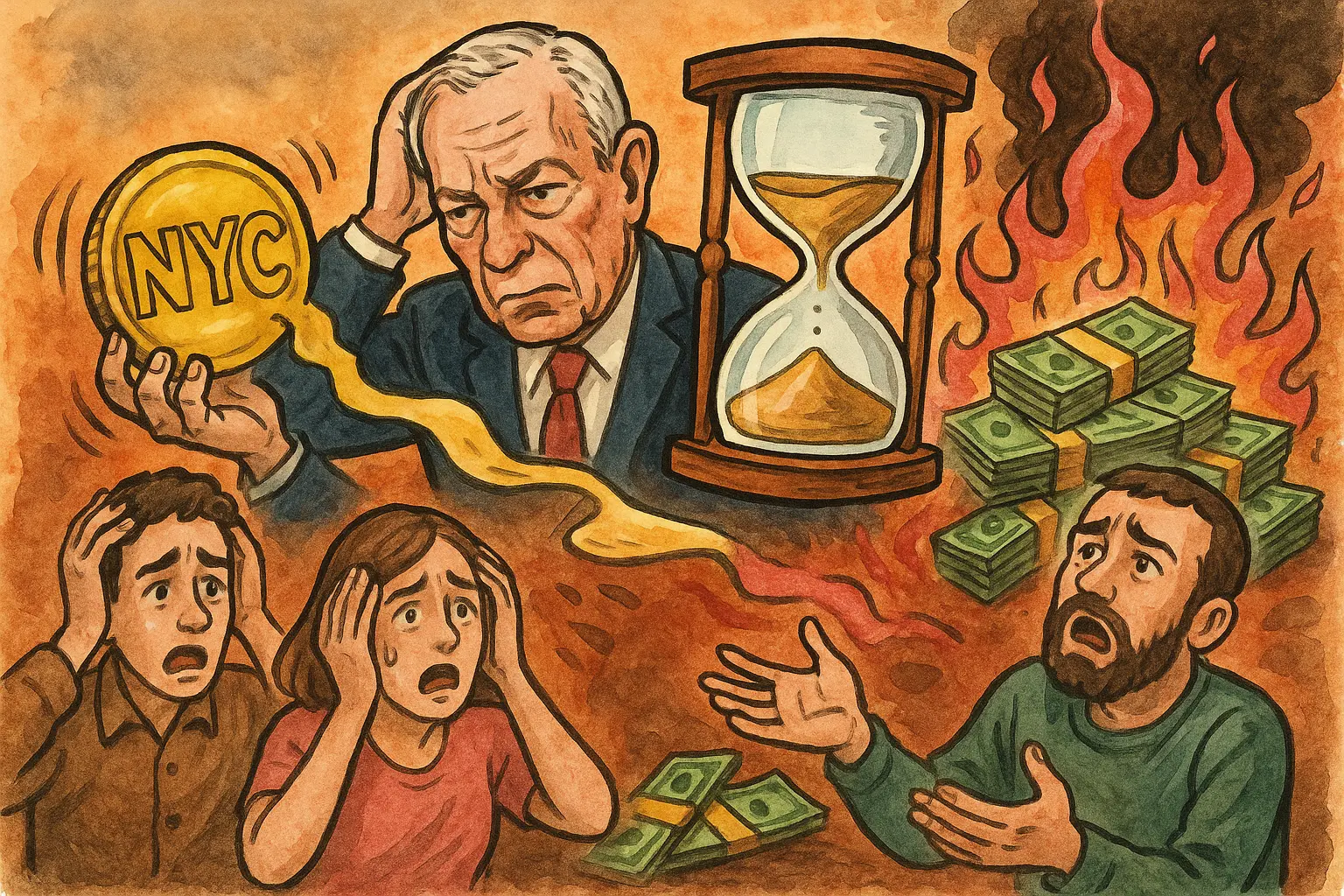
Former New York City Mayor Adams promotes NYC Token, which collapsed 81% within 30 minutes, with a market cap dropping from 500-600 million to 87 million. Claiming to fund education and fight anti-Semitism, Bubblemaps found a peak removal of 2.5 million USDC, a 60% drop followed by an additional 1.5 million, totaling a round-trip of 932,000. One wallet accounts for 70% of the supply, indicating extreme control. An investor lost $473,000 in 20 minutes.
30-Minute Collapse: The Dark Secrets Behind Liquidity Drainage of 81%
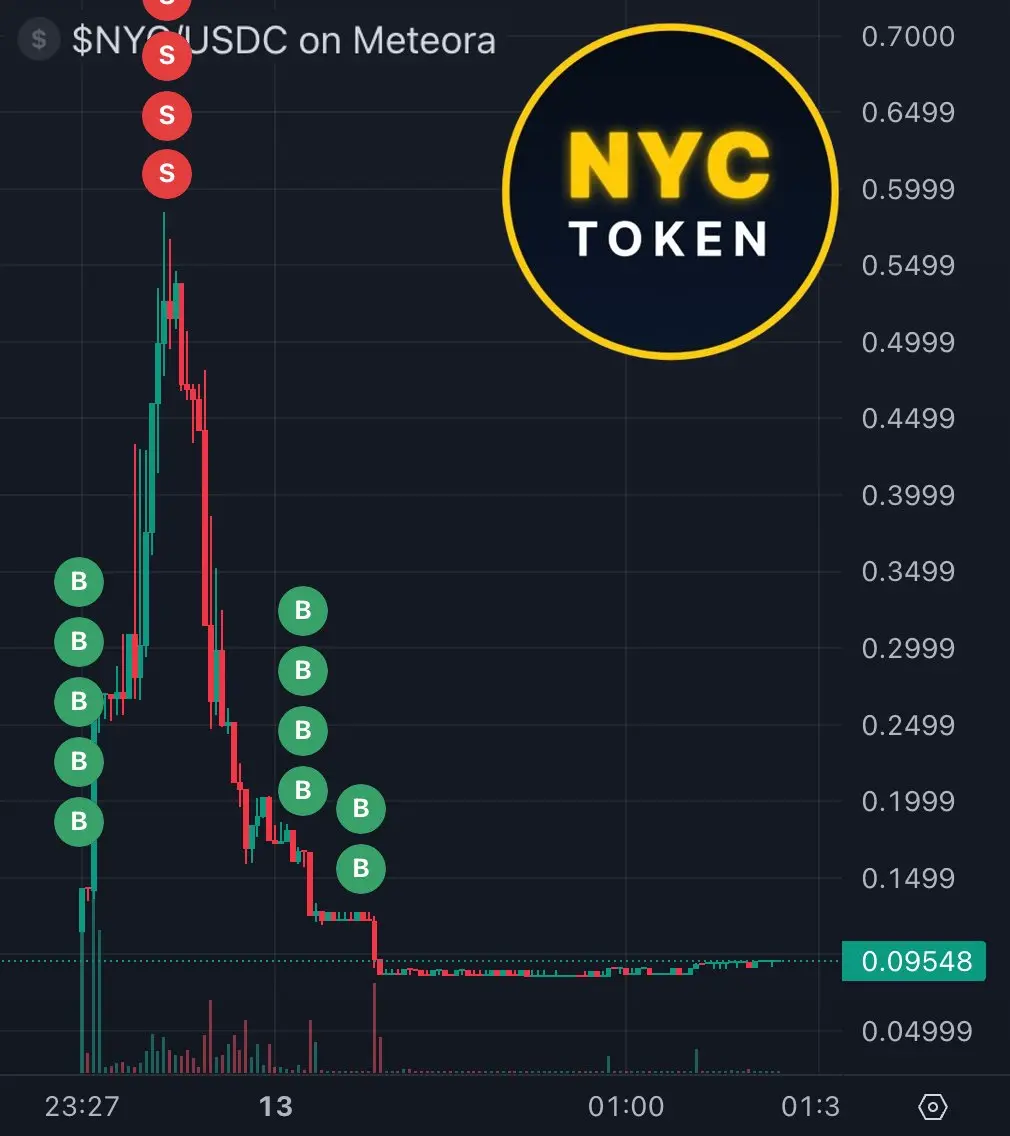
(Source: Trading View)
The NYC Token launched by former New York City Mayor Eric Adams on the Solana exchange around January 12th plummeted over 81% within about 30 minutes, erasing approximately $500 million from its peak valuation. The token’s market cap once reached about $540 million to $600 million. Adams announced the project about 12 days after leaving office at a Times Square event, linking the token to funding blockchain education and combating anti-Semitism.

(Source: Bubblemaps)
Such charitable packaging of token issuance is very common in the crypto market, but the speed and magnitude of the NYC Token collapse are still shocking. On-chain investigators quickly focused on liquidity changes and concentration risks. According to Bubblemaps, a wallet associated with the deployer created a unidirectional liquidity pool on Meteora and removed about 2.5 million USDC near the price peak.
A unidirectional liquidity pool is a special market-making mechanism that allows liquidity providers to deposit only one asset (like USDC) instead of a traditional dual-asset pool. This design enables the deployer to provide liquidity without holding NYC tokens and to withdraw unilaterally at the peak. When $2.5 million USDC was removed, the liquidity pool instantly dried up, causing buy orders to fail and the price to free-fall.
Subsequently, after the token price dropped over 60%, the company added another approximately $1.5 million, resulting in about $932,000 unaccounted for in the round-trip transaction. This “peak withdrawal, low-point addition” pattern is a typical Rug Pull tactic. The deployer cashes out at the high, waits for the price to collapse, then adds liquidity at a low, creating a false impression of ongoing support, while actually pocketing the profits.
Three Major Dark Operations Behind NYC Token Collapse
Peak Withdrawal of $2.5 Million: Removing USDC liquidity at high price points, causing buy orders to dry up
Extreme Concentration of Supply: Top five wallets hold 92%, one wallet controls 70%, severe control
Round-Trip Arbitrage of $930,000: Added $1.5 million at low points but still $932,000 unaccounted for
The same report also notes extreme concentration, with the top five wallets holding about 92% of the supply, and the top ten holding approximately 98.73%. One wallet alone accounts for about 70%. Such extreme token concentration means the price is entirely manipulated by a few addresses, leaving retail investors powerless. When 70% of the supply is held by a single wallet, any sell-off by that wallet can trigger a price collapse.
The Real Tragedy: Retail Investors Losing $470,000 in 20 Minutes
The losses among retail investors are evident in transaction records. A wallet tracked by Solscan executed five purchases totaling 745,725 USDC, then sold at a price of 272,177 USDC. The trader lost about $473,548 in less than 20 minutes. This astonishing speed of loss reveals the extreme fragility of the NYC Token market.
How did this investor’s tragedy happen? When NYC Token launched, Adams’ political celebrity effect and the charity packaging to fight anti-Semitism attracted widespread attention. Many investors rushed into the market driven by FOMO, thinking they could ride the “politician’s coin” wave. However, they didn’t realize that the liquidity pool was designed as a trap that could be drained at any time.
The rapid decline and concentrated holdings mean price discovery depends on fewer wallets and limited mobile liquidity. This can exacerbate slippage when exiting on decentralized exchanges. When many retail investors try to sell simultaneously, insufficient liquidity causes prices to fall far below the ask, further amplifying losses.
Adams publicly promoted the token, and the NYC Token account discussed liquidity arrangements on X. Neither side disclosed detailed accounts explaining the approximately $932,000 discrepancy noted by Bubblemaps. This opacity is typical of Rug Pulls, with issuers refusing to explain fund flows, leaving investors without recourse.
SEC Meme Coin Exemption and Regulatory Vacuum Disaster
Market context is important because NYC Token was launched after other tokens linked to politicians and celebrities faced scrutiny over fees, internal allocations, and large withdrawals. Trump and Melania’s meme coins also sharply declined from their peaks. Overall meme coin market cap fell 61% from early 2025 to about $36.5 billion, then rebounded to $47.3 billion in early 2026.
According to the US SEC staff statement on February 27, 2025, many meme coins do not involve securities transactions because they are typically purchased for entertainment, social interaction, and cultural purposes. The statement also warns that other federal or state agencies can still pursue fraud. Since that statement, public enforcement against meme coin issuers has been limited.
This regulatory vacuum has created disastrous consequences. When the SEC states that meme coins are not regulated as securities, issuers interpret this as “free to manipulate,” and investors mistakenly believe “SEC approval.” In reality, the SEC only says meme coins are outside securities regulation, but fraud, market manipulation, and false advertising remain illegal. The lack of enforcement allows issuers like Adams to operate with impunity.
In New York, proposed legislation would define and criminalize certain “disinvestment” behaviors based on developers’ holdings and sales. This would create a different path from federal securities law. For NYC Token, current issues focus on control and disclosure: who funded this issuance, which protocols regulate liquidity provision and market making, and whether promotional statements match on-chain actions.
Ultimately, this story sounds too bizarre to believe. If even the US President can issue meme coins, why not the former NYC Mayor? However, presidents typically withdraw liquidity gradually according to a public schedule, causing slow price declines, whereas Adams caused investors to be caught off guard at launch, with the token value evaporating instantly. Retail investors who bought NYC and TRUMP tokens are now at a loss, and neither product seems likely to make crypto a force for good.
Disclaimer: The information on this page may come from third parties and does not represent the views or opinions of Gate. The content displayed on this page is for reference only and does not constitute any financial, investment, or legal advice. Gate does not guarantee the accuracy or completeness of the information and shall not be liable for any losses arising from the use of this information. Virtual asset investments carry high risks and are subject to significant price volatility. You may lose all of your invested principal. Please fully understand the relevant risks and make prudent decisions based on your own financial situation and risk tolerance. For details, please refer to
Disclaimer.


