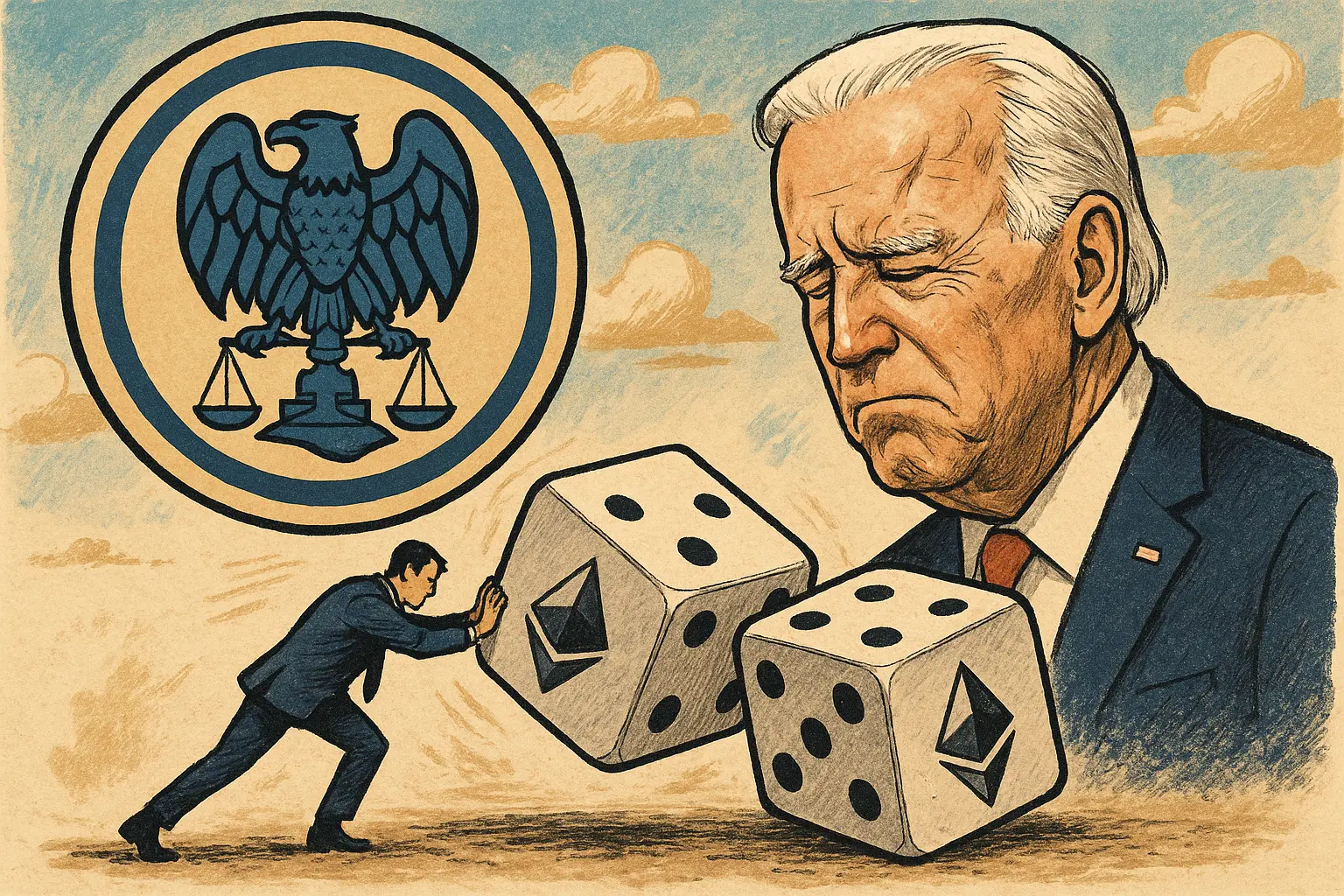
CFTC Chair Selig withdraws proposal to ban sports and political event contracts during Biden administration, criticizing it as a “reckless regulatory approach favoring certain outcomes before the election.” Not issuing a final rule, the agency will push for new regulations based on the Commodity Exchange Act to foster innovation. Simultaneously, the withdrawal of the September staff letter requesting litigation preparedness impacts Polymarket and Kalshi, though platforms still face multi-state legal challenges.
CFTC’s New Chair Criticizes Biden’s Favoritism in Regulation
The U.S. Commodity Futures Trading Commission has withdrawn a proposal from the Biden administration that would have banned sports and political prediction markets, which are among the most popular event contracts today. Recently confirmed CFTC Chair Mike Selig announced on Wednesday that the agency has rescinded a 2024 proposed rulemaking notice aimed at banning activity contracts related to sports, politics, and war, categorizing them as “contrary to the public interest.”
Selig stated that the proposal “reflects the previous administration’s reckless attitude toward selective regulation ahead of the 2024 presidential election, outright banning political contracts,” adding that the CFTC does not intend to issue a final rule on this proposal. “The Commission will withdraw the proposal and advance a new rulemaking that will be based on a reasonable and consistent interpretation of the Commodity Exchange Act to promote responsible innovation in our derivatives markets, consistent with Congress’s intent.”
Selig’s criticism of the Biden administration’s proposal is very strong. The term “regulatory favoritism” suggests that the Biden administration’s motives are political rather than based on public interest. The timing of the 2024 proposal is particularly sensitive, coming just months before the election, at a time when platforms like Polymarket are challenging traditional polling authority with their election outcome predictions. Some observers believe that the Biden administration’s attempt to ban political prediction markets aims to reduce tools that could be unfavorable to the Democratic Party.
From the Trump administration’s perspective, withdrawing this proposal aligns with its broader policy of deregulation and supporting innovation. Since Trump took office, multiple federal agencies have systematically rescinded Biden-era regulatory proposals, including SEC enforcement actions against crypto industry, EPA environmental regulations, and Labor Department labor protections. The deregulation of prediction markets is part of this larger political agenda.
Legal Challenges to Polymarket and Kalshi Temporarily Halted
This is the latest move by the CFTC affecting prediction markets like Polymarket and Kalshi, which gained popularity by allowing betting on various events, especially sports. These platforms face legal challenges from multiple states, which consider them unlicensed gambling. The platforms dispute this, claiming they are fully regulated by the CFTC.
The withdrawal of the ban provides these platforms with some breathing room, at least at the federal level, where they are no longer under the threat of outright prohibition. However, legal challenges at the state level continue. U.S. gambling regulation operates on a dual federal and state system; even if the CFTC permits these markets federally, states can impose restrictions or bans based on their own laws. This complex regulatory landscape creates significant legal uncertainty for prediction markets across different jurisdictions.
Selig also announced the withdrawal of a September staff letter that reminded CFTC-regulated entities of their obligations when facilitating sports event contracts and the need to prepare for litigation. The letter, issued before the government shutdown, advised regulated entities to “be prepared to address all foreseeable circumstances that may arise from facilitating trading and clearing of sports-related event contracts.”
The statement also noted that CFTC staff are aware of various regulatory actions and lawsuits taken by states against sports event contracts. The letter warned companies to prepare through “appropriate contingency plans, disclosures, and risk management policies and procedures.” This tone indicates that even during the Biden era, there are divisions and uncertainties within the CFTC regarding how to regulate prediction markets.
Selig said the recommendation “aims to emphasize litigation considerations,” but “inadvertently created confusion and uncertainty among market participants.” “I look forward to working with staff to develop event contract rules,” he added. This stance shows that the Trump-era CFTC is not aiming for complete deregulation but seeks to establish clearer, more friendly regulatory frameworks that balance consumer protection with fostering innovation.
The Future of Prediction Market Regulation
The CFTC’s withdrawal of the ban does not mean prediction markets are now free from regulation. Selig explicitly stated that the agency will push forward with “new rulemaking,” implying that future regulatory frameworks will be introduced, shifting from “total prohibition” to “orderly regulation.” The new rules may include licensing requirements for platforms, restrictions on certain sensitive events (like war casualties), user eligibility reviews, and measures to prevent market manipulation.
For Polymarket and Kalshi, this increased regulatory certainty is beneficial. They no longer need to worry about federal-level bans and can focus on product development and market expansion. However, state-level legal challenges remain a significant risk. States like Nevada and New York have already or are considering restrictions on prediction markets, and these actions are unaffected by the CFTC’s decision.
More broadly, the direction of prediction market regulation will influence the entire crypto and fintech industry. If the CFTC succeeds in establishing a balanced framework that fosters innovation while managing risks, it could serve as a model for regulating other innovative financial products. Conversely, if conflicts between federal and state regulations persist, prediction markets may remain in a legal gray area for a long time, limiting their growth potential.
Disclaimer: The information on this page may come from third parties and does not represent the views or opinions of Gate. The content displayed on this page is for reference only and does not constitute any financial, investment, or legal advice. Gate does not guarantee the accuracy or completeness of the information and shall not be liable for any losses arising from the use of this information. Virtual asset investments carry high risks and are subject to significant price volatility. You may lose all of your invested principal. Please fully understand the relevant risks and make prudent decisions based on your own financial situation and risk tolerance. For details, please refer to
Disclaimer.
Related Articles
White House Economic Advisor Hassett: No plans to discuss tapping the Strategic Petroleum Reserve in the near future; focus on tariffs and tax refund litigation
Gate News Report, March 6 — The Director of the National Economic Council at the White House, Jared Bernstein, made a statement on various economic policy issues. Bernstein stated that prediction markets have their uses. Regarding Iran and oil issues, he pointed out that there will be no discussion of deploying the Strategic Petroleum Reserve (SPR) in the near future, as the military is developing a plan to ensure ship passage. When discussing tariff refunds, Bernstein said that they are monitoring lawsuits initiated by large corporations, and the private sector will agree on the specific method of refunds.
GateNews9m ago
XRP Could Face Securities Classification Under New U.S. Crypto Framework, Says Cardano’s Hoskinson
Charles Hoskinson argues that under the revised CLARITY Act, tokens like XRP would qualify as securities, igniting his feud with the XRP community.
He called Ripple CEO Brad Garlinghouse out again, cautioning that having no laws is better than having a bad law.
Cardano founder Charles Hoskin
CryptoNewsFlash17m ago
Goldman Sachs expects the Federal Reserve to complete the remaining two rate cuts, but the timing remains uncertain.
Goldman Sachs Multi-Asset Fixed Income Investment Director Lindsay Rosner stated that the Federal Reserve should be cautious about delaying interest rate cuts in the face of a weak labor market. Meanwhile, the Middle East conflict influences policy directions, and the complex interplay between inflation and U.S. employment makes the timing of rate cuts uncertain. Goldman Sachs expects to complete two rate cuts to return to a neutral interest rate.
GateNews32m ago
Geopolitical Turmoil! Dalio Declares "Gold is the Only True God," but Its Safe-Haven Performance Trails Bitcoin
As geopolitical tensions in the Middle East escalate, Bridgewater founder Ray Dalio questions Bitcoin and reaffirms gold as the preferred safe haven. Nevertheless, gold prices fell accordingly, while Bitcoin only experienced a slight correction, indicating that the correlation between the two is weakening. Dalio doubts Bitcoin's transparency and future risks, but he still maintains a small allocation of Bitcoin for diversification.
区块客33m ago
Trump: No agreement will be reached unless Iran surrenders unconditionally.
Gate News Announcement: On March 6, U.S. President Trump posted on social media stating that no agreement will be reached with Iran unless Iran unconditionally surrenders. Trump said that after electing a great and acceptable leader, the United States and its allies will work tirelessly to pull Iran back from the brink of destruction, making it bigger, better, and stronger economically. Trump stated that Iran will have a great future and proposed the slogan "Make Iran Great Again (MIGA)."
GateNews36m ago
Iran and North Korea are both using it! Stablecoins have become the preferred virtual asset for illegal transactions, with involved fraud totaling $51 billion.
According to the latest FATF report, stablecoins have become a primary funding tool for illegal transactions, especially in countries like North Korea and Iran. The report indicates that by 2025, stablecoins will account for 84% of illegal virtual asset trading volume, and calls for increased regulation of stablecoin issuers to prevent money laundering and other criminal activities. The global stablecoin market value has exceeded $300 billion, and regulators need to act quickly to close regulatory gaps.
区块客38m ago


