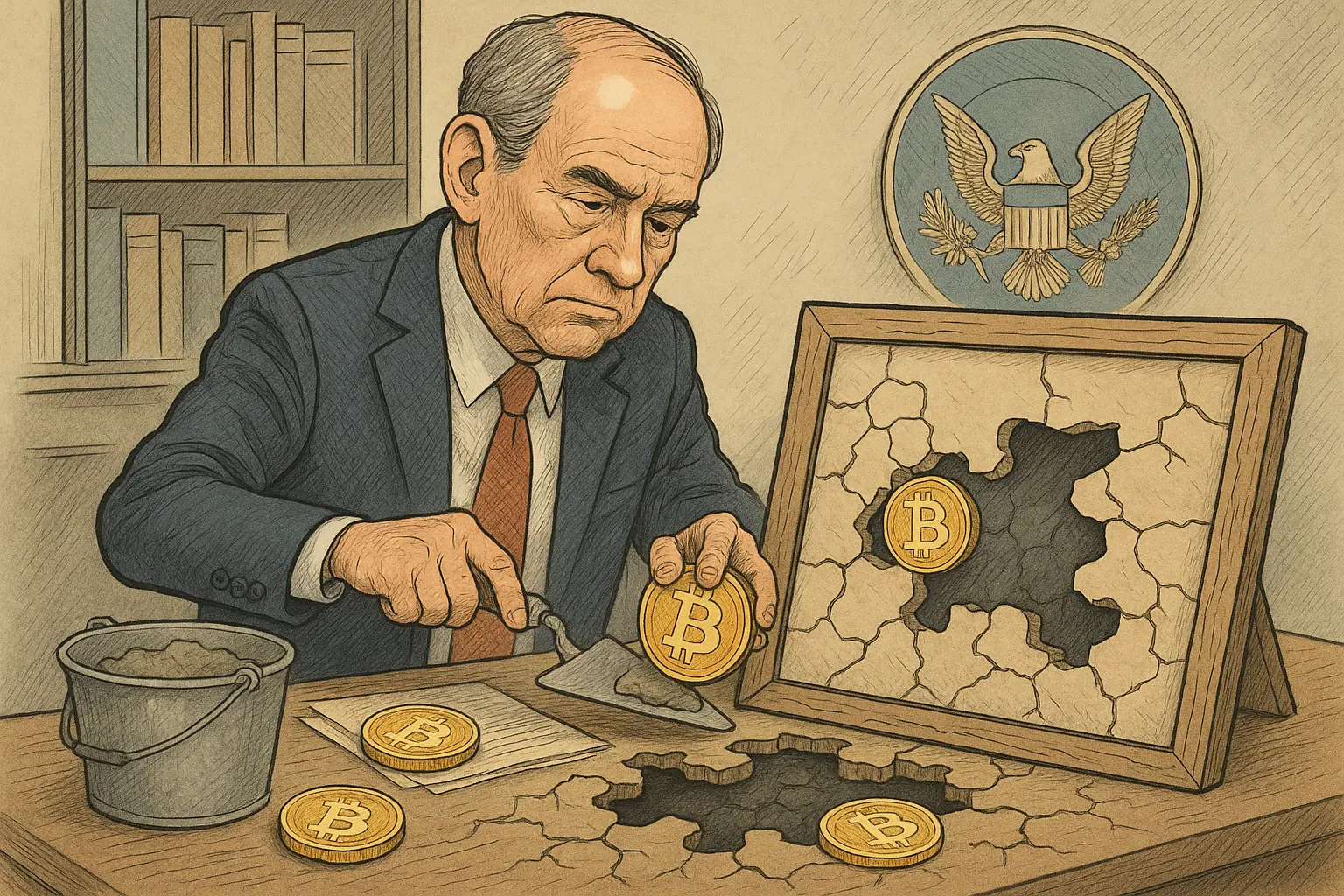
The U.S. Securities and Exchange Commission (SEC) Chairman Paul Atkins said on Friday during a fireside chat at the University of Texas that the SEC under former Chairman led the agency to “miss a significant opportunity” in cryptocurrency regulation because it failed to try to adapt to innovation and instead took aggressive enforcement actions to suppress industry development. He emphasized, “This is a huge missed opportunity for the United States, and we are working quickly to make up for this loss.”
Atkins Criticizes Gensler Era: The Cost of Enforcement Replacing Regulation
During Gensler’s tenure as SEC Chair, the commission adopted a highly cautious and enforcement-oriented stance, claiming that many digital assets are securities and filing numerous lawsuits against major industry players, mainly involving allegations of unregistered securities. Atkins believes this “enforcement-first” approach failed to understand the innovative potential of distributed ledger technology (DLT), leading the U.S. to lose its leadership position in global crypto regulation.
He particularly emphasized that the price fluctuations of individual cryptocurrencies are not the core issue; his real concern is the broad application potential of DLT in payment, clearing, and settlement systems. Upgrading these infrastructures could fundamentally reshape the efficiency of traditional finance.
Gensler vs. Atkins: A Fundamental Shift in SEC Crypto Regulation Approach
Gensler Era: Focused on enforcement actions, claiming many digital assets are unregistered securities, and filing lawsuits against Binance, Coinbase, Ripple, and others.
Atkins Era: Established a Cryptocurrency Working Group, launched “Project Crypto” to update regulatory rules, and rescinded multiple enforcement cases against major industry players.
Policy Shift: Moving from “enforcement replacing legislation” to “building a regulatory framework,” prioritizing regulatory certainty.
Core Technology Focus: Concentrating on the systemic application of DLT in payment, clearing, and settlement systems, rather than the investment attributes of individual tokens.
SEC’s New Direction in Crypto Policy: Implementing a Tokenized Asset Regulatory Framework
This week, the SEC approved WisdomTree’s tokenized U.S. Treasury Money Market Digital Fund’s 24/7 trading and real-time settlement exemption application. This is the first such regulatory exemption in the U.S. for a tokenized money market fund, marking a significant first step in the SEC’s development of a regulatory framework for tokenized assets.
Atkins further announced during the fireside chat, “We have approved a tokenized money market mutual fund, and next, we will approve tokenized bank deposits.” This statement clearly indicates the SEC’s roadmap for tokenized asset approval, extending from public offering money market funds to on-chain bank deposits, covering the two most core short-term asset categories in traditional finance.
Industry observers note that if the SEC’s “Project Crypto” framework can complete rule updates by 2026, it will provide long-missing regulatory certainty for the U.S. crypto asset market and could become a key catalyst for institutional investors worldwide to reallocate digital assets.
Frequently Asked Questions
Q: Why does Atkins criticize the Gensler-era SEC?
A: Atkins believes that during Gensler’s leadership, the SEC replaced rulemaking with enforcement actions, failing to adapt to the innovative potential of cryptocurrency technology, leading the U.S. to lose its dominance in global crypto regulation, which he calls a “major missed opportunity.”
Q: What is the significance of the SEC-approved WisdomTree tokenized fund exemption?
A: It is the first time a U.S. regulator has approved a tokenized money market fund for 24/7 trading and real-time settlement, seen as a formal step for the SEC to incorporate tokenized financial assets into its regulatory framework, setting a precedent for future approval of tokenized bank deposits.
Q: What are the SEC’s next steps in crypto regulation?
A: Atkins announced that after approving the tokenized money market fund, the next step will be to approve tokenized bank deposits; simultaneously, the SEC will revise crypto asset regulation rules through the “Project Crypto” framework, aiming to restore U.S. leadership in global crypto financial innovation.
Disclaimer: The information on this page may come from third parties and does not represent the views or opinions of Gate. The content displayed on this page is for reference only and does not constitute any financial, investment, or legal advice. Gate does not guarantee the accuracy or completeness of the information and shall not be liable for any losses arising from the use of this information. Virtual asset investments carry high risks and are subject to significant price volatility. You may lose all of your invested principal. Please fully understand the relevant risks and make prudent decisions based on your own financial situation and risk tolerance. For details, please refer to
Disclaimer.
Related Articles
U.S. Treasury yields rise across the board, with market expectations for fewer interest rate cuts
Influenced by Middle East conflicts and inflation concerns, U.S. Treasury yields continue to rise. Initial jobless claims remain at 213,000, and the January import price index growth was below expectations. The market expects non-farm employment to decline, while the futures market anticipates the Federal Reserve will cut interest rates only once by 2026. The 10-year U.S. Treasury yield rose to 4.134%.
GateNews2h ago
Oil prices surge, interest rate cut expectations cool down! Circle benefits as the target price breaks $100
U.S. stablecoin giant Circle recently surged nearly 8% in stock price, hitting a four-month high, due to soaring oil prices and a cooling of interest rate cut expectations. Mizuho Securities raised its target price to $100, while maintaining a "Neutral" rating, but became more optimistic about profit prospects. Analysts believe that if the Federal Reserve continues to keep interest rates high, Circle's revenue will benefit accordingly, but market competition and regulatory pressures should still be watched carefully.
区块客8h ago
Trump promotes cryptocurrency regulatory framework, Bitcoin surges, driving crypto stocks higher across the board
Trump recently expressed support for digital assets, promoting regulatory discussions. Market sentiment has improved, and Bitcoin's price has risen by about 7%, with multiple crypto concept stocks also gaining. Analysts believe that changes in the regulatory environment and ETF capital inflows are driving the rise, but future legislative stagnation or price corrections could impact the performance of crypto stocks.
GateNews10h ago
The battle for stablecoin yields escalates: Eric Trump angrily criticizes banks as "anti-American," and crypto regulation bills stall.
The conflict between US cryptocurrency regulation and traditional banking is intensifying. Eric Trump criticized large banks for blocking stablecoin yields, claiming it is an effort to maintain a "low interest rate monopoly." At the same time, Trump also accused lobbying groups of hindering the progress of crypto legislation. The congressional bill on stablecoins is moving slowly and faces disputes from all sides. If no consensus is reached, it could lead to ongoing regulatory uncertainty for the crypto industry.
GateNews10h ago
Eric Trump: Traditional banks lobby to suppress stablecoins, revealing the low-interest deposit monopoly structure
Eric Trump accuses large banks of using lobbying groups to block stablecoins and crypto platforms from offering high annual yields, calling it systemic exploitation. Stablecoins like Coinbase USDC and MakerDAO DAI offer interest rates higher than traditional banks. The controversial CLARITY Act may restrict interest payments on stablecoins, with crypto supporters arguing that this move protects the interests of traditional banks.
MarketWhisper10h ago
U.S. banking industry strongly opposes Kraken's access to the Federal Reserve, Trump angrily accuses of obstructing crypto agenda
Cryptocurrency exchange Kraken becomes the first company to hold a main account with the U.S. Federal Reserve, allowing direct settlement of USD transactions. However, this has sparked strong opposition from the banking industry, which is concerned about potential threats to financial stability. Stablecoins could lead to a $6.6 trillion outflow of deposits, affecting lending costs. Trump supports the crypto agenda, accusing banks of obstructing legislation, indicating his political stance and vested interests.
MarketWhisper14h ago


