Hayes believes that the existing financial order has always been in danger.
Source: Bitcoinist
Compiled by: Blockchain Knight
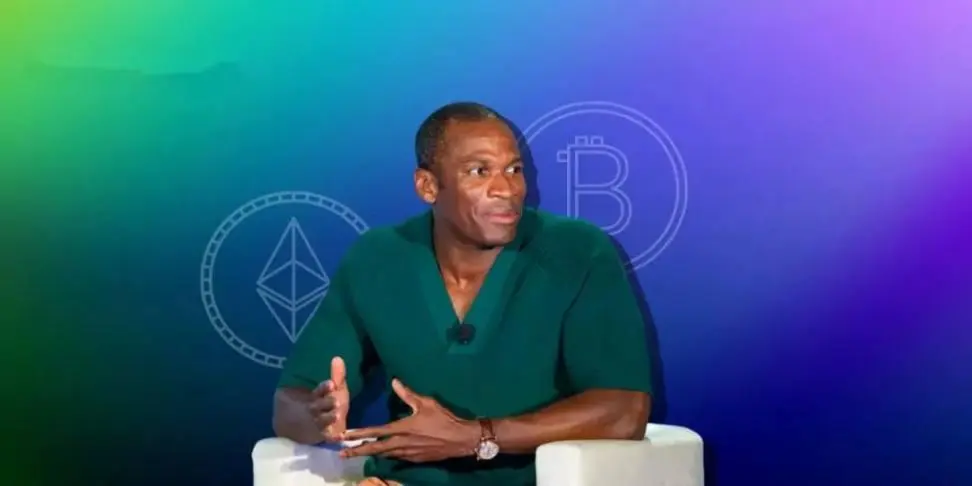
In his latest article titled “ETF Wif Hat”, Arthur Hayes, the founder of Crypto asset exchange BitMEX, deeply explores the intricate relationship between traditional finance and the emerging Crypto asset field (especially BTC).
Hayes contrasts the current financial strategies of the global elite with historical practices and proposes a sustainable model that maintains existing financial structures.
Hayes begins by comparing elite efforts to maintain the global financial status quo with the high costs incurred in health care at the end of life.
He believes that since the global economic crisis caused by U.S. subprime mortgages in 2008, the existing financial order, which he calls “American Harmony,” has been in danger.
Hayes asserts: “The elites in charge of the existing financial order in the United States and their vassals are willing to maintain the current world order at all costs because they benefit the most from the existence of this order.”
Therefore, central banks around the world, including the U.S. Federal Reserve (Fed), the European Central Bank (ECB), the People’s Bank of China (PBOC) and the Bank of Japan (BOJ), have adopted large-scale money printing measures to alleviate this crisis. various issues of crisis.
Hayes noted that this strategy resulted in unprecedented global debt-to-GDP ratios, historically low interest rates, and nearly $20 trillion in corporate and government bonds that had negative yields at their peak.
Hayes believes that this situation does not benefit most people in the world because they do not have sufficient financial assets to benefit from this kind of monetary policy.
In this context, Hayes introduced BTC, created by the pseudonym “Satoshi Nakamoto”, as a breakthrough development that provides an alternative to the traditional financial system**.
He described the creation of BTC by Satoshi Nakamoto as a “lotus in the mud” moment, marking the arrival of a new era of financial independence and global scalability.
However, Hayes noted that BTC was initially too immature to become a reliable alternative after the 2008 crisis. It was not until the financial turmoil of 2022, including the collapse of several major banks and crypto asset companies, that BTC and other crypto assets showed their resilience.
Unlike traditional financial institutions, these digital assets have not been bailed out but continue to operate, with BTC blocks being produced every 10 minutes.
Hayes said that by 2023, it is clear that the traditional financial system cannot withstand further monetary tightening. This led to a strange shift in which BTC prices began to rise alongside long-term U.S. Treasury yields, *suggesting growing investor skepticism towards traditional government bonds and a shift towards assets such as BTC and major tech stocks *.
He also believes that in response to this shift and to keep capital within the traditional system, elites are now financializing BTC through the creation of ETFs.
Hayes compared this to the gold market, where in 2004 the SEC (U.S. Securities and Exchange Commission) launched ETFs such as SPDR GLD, making it easier to trade gold without the need for physical holdings.
To avoid this liquidation, elites must financialize BTC by creating highly liquid ETFs. This is exactly the same trick they play in the gold market.

Therefore, a BTC ETF will enable traditional financial companies to manage BTC investments, keeping capital within the system. Hayes emphasized the significance of large asset management company BlackRock’s application for a BTC ETF in June 2023.
Notably, the SEC appeared receptive to BlackRock’s application, approving it within six months after rejecting similar applications over the years, including the Winklevoss brothers’ application in 2013.
This shows that the elites took a strategic move to integrate BTC into the traditional financial system at a critical moment.
However, Hayes warned that spot ETFs are fundamentally different from directly owning BTC. Spot BTC ETF is a trading product that can be purchased with fiat currency to earn more fiat currency, but it is not BTC and is not a path to financial freedom because it is outside the traditional financial system.
Looking ahead, Hayes discussed the market impact of spot ETFs, focusing on the BlackRock ETF because of BlackRock’s global reach and distribution capabilities.
Hayes predicts that the Crypto ETF complex will continue to accumulate assets as inflation continues, driven by the continued loosening of global economic and military arrangements after World War II and the inflationary nature of war.
Finally, Hayes reflected on the possibility of traditional finance financializing BTC, believing that this would push up the legal price of BTC in the early stages:
“The bull market has just begun, and 2024 will be a volatile year in terms of price action. But I still expect that by the end of the year, the market cap of BTC and the entire Crypto asset complex will reach or exceed all-time highs** .”
Disclaimer: The information on this page may come from third parties and does not represent the views or opinions of Gate. The content displayed on this page is for reference only and does not constitute any financial, investment, or legal advice. Gate does not guarantee the accuracy or completeness of the information and shall not be liable for any losses arising from the use of this information. Virtual asset investments carry high risks and are subject to significant price volatility. You may lose all of your invested principal. Please fully understand the relevant risks and make prudent decisions based on your own financial situation and risk tolerance. For details, please refer to
Disclaimer.


