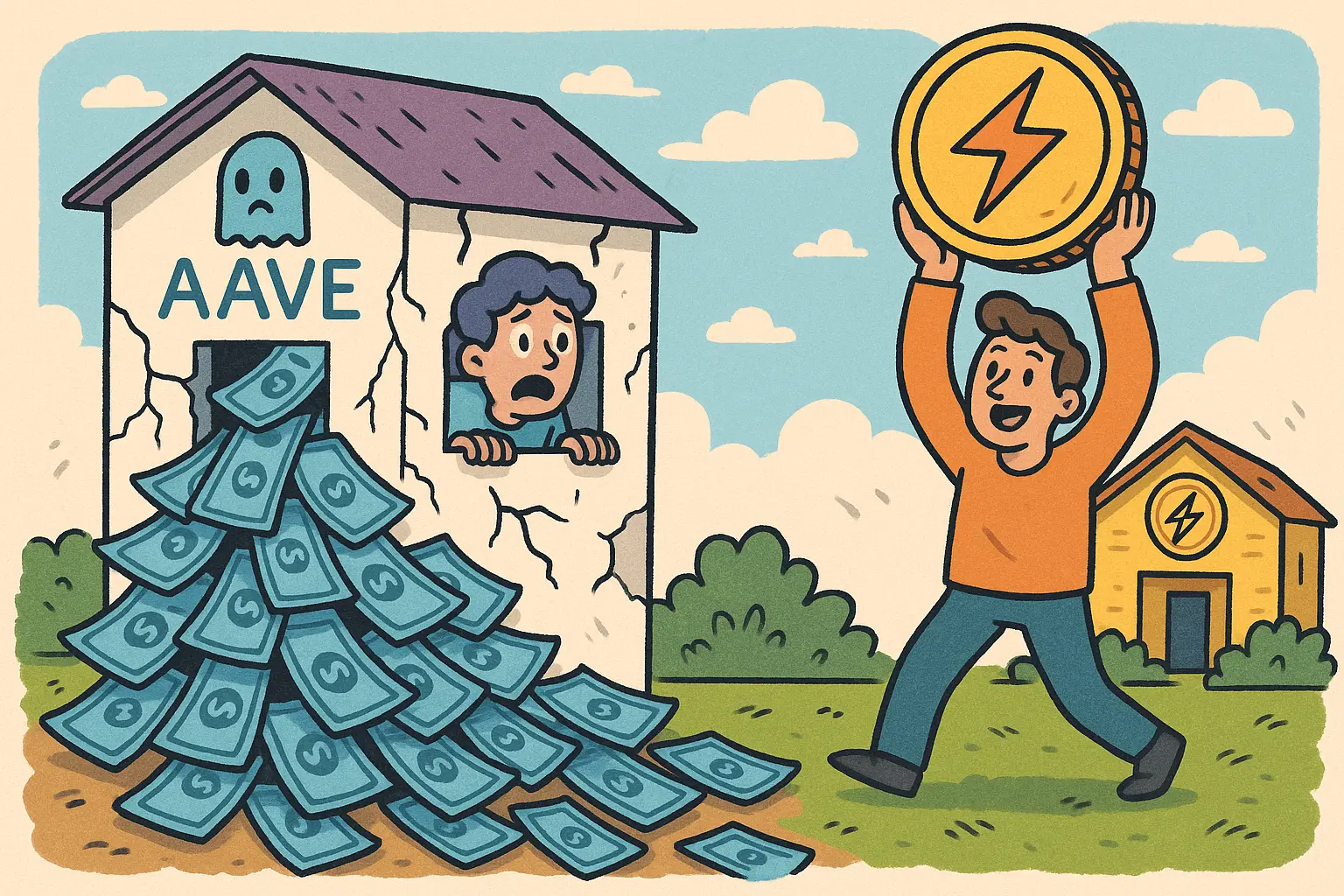
On April 22, on-chain analysts reported that, affected by the rsETH/KelpDAO event, Aave funds have continued to flow out. Within three and a half days, the total deposit amount fell from $48.5 billion to $30.7 billion. Over the same period, Morpho saw a modest outflow of $1.5 billion. The most notable contrast came from Spark: its SparkLend business TVL rose against the trend, from $1.9 billion to $3.2 billion.
Contrasting the three major platforms: Aave is bleeding while Spark benefits against the odds
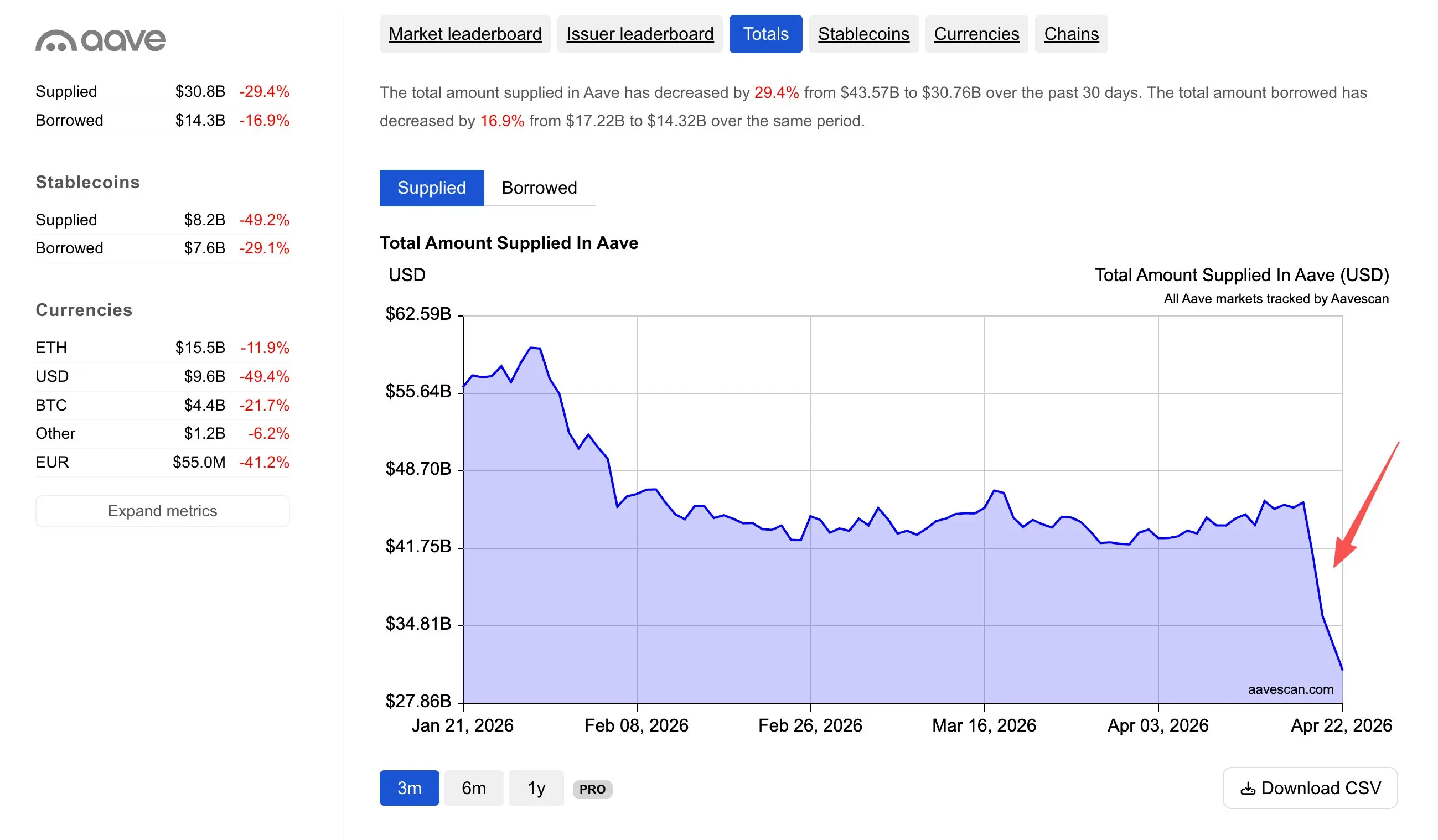
(Source: Aave)
In this event, three mainstream DeFi lending platforms showed distinctly different trends:
Aave: Down from $48.5 billion to $30.7 billion, with net outflows of $15.1 billion in three and a half days (a drop of about 31%).
Morpho: Down from $11.7 billion to $10.2 billion, with net outflows of about $1.5 billion, with relatively limited impact.
Spark (SparkLend): Up from $1.9 billion to $3.2 billion, with net inflows of about $1.3 billion—the biggest beneficiary of the market turbulence.
Some institutional funds that withdrew from Aave were redirected to Spark, indicating that after the rsETH event, some market participants chose comparatively safer alternative platforms.
Aave’s bad-debt outlook: Defillama’s founder proposes two scenario analyses
Defillama founder @0xngmi provided two scenario analyses of how the recovery of Arbitrum’s $71 million ETH would affect Aave’s bad-debt scale:
Scenario One (loss socialized): If Arbitrum prioritizes support for the Aave market and socializes the loss, then each rsETH holder’s position would be reduced evenly by 18.5%. Aave’s bad debt would be about $216 million, requiring the use of the treasury and the Umbrella fund.
Scenario Two (loss borne by L2 holders): If the loss is borne only by L2 rsETH holders, then Aave’s bad debt on Arbitrum would fall from about $88 million to about $17 million, cutting it by roughly 80%, but it could trigger dissatisfaction and potential lawsuits.
Market sentiment stabilizes: AAVE bounces back from the low, and the DeFi industry calls for confronting the recovery
After Arbitrum’s Security Committee froze about 30,776 ETH (about $71 million) worth of KelpDAO-related addresses, Santiment data showed that Aave market sentiment no longer deteriorated to new lows. The AAVE token rebounded from the $80 low on April 20 to about $93.59, and the downtrend in TVL began to level off as well.
Dragonfly managing partner Haseeb Qureshi said, “AAVE may have to absorb some bad debt, but it has enough net value to repay it.” Defillama’s founder emphasized, “DeFi will be hit, but it won’t disappear,” and believes that by using the protocol treasury and adjustments, affected protocols like Aave can “fully recover.”
Frequently Asked Questions
Why can Spark grow against the tide while Aave is bleeding?
Spark benefited from this event mainly because it is viewed by some market participants as a relatively safe alternative platform, especially against the backdrop of Aave facing bad-debt risk. The shift of institutional capital also further attracted other wait-and-see capital to follow, creating a positive inflow effect.
How high could Aave’s bad debt ultimately reach?
Based on Defillama’s founder’s two scenario analyses, Aave’s bad-debt range is between $17 million and $341 million. The exact figure depends on how Arbitrum handles the seized ETH and how the rsETH losses are allocated. Aave DAO currently holds $181 million in assets and about $54 million in the WETH Umbrella fund as a buffer.
How does the DeFi industry assess the impact of this event on the overall ecosystem?
The mainstream view is that this event should be seen as a process for DeFi to “learn from failure.” Both Dragonfly and Defillama executives said that the protocol has sufficient capital and mechanisms to absorb losses. Arbitrum’s coordinated freezing action is viewed as a positive governance precedent, and overall optimism began to emerge within the community.
Disclaimer: The information on this page may come from third parties and does not represent the views or opinions of Gate. The content displayed on this page is for reference only and does not constitute any financial, investment, or legal advice. Gate does not guarantee the accuracy or completeness of the information and shall not be liable for any losses arising from the use of this information. Virtual asset investments carry high risks and are subject to significant price volatility. You may lose all of your invested principal. Please fully understand the relevant risks and make prudent decisions based on your own financial situation and risk tolerance. For details, please refer to
Disclaimer.
Related Articles
Bitcoin Jumps 2.7% on Market Optimism Over Trump's Iran Ceasefire Extension
Gate News message, April 22 — Bitcoin surged 2.7% on Wednesday after President Donald Trump announced an extension of the ceasefire with Iran, boosting market confidence. The cryptocurrency traded around $77,500 at 1 p.m. Singapore time, marking its highest price since Friday when it touched a two-m
GateNews8m ago
Crypto Fear and Greed Index Falls to 33, Signaling Panic Conditions
Crypto Fear and Greed Index fell to 33, down from yesterday, signaling panic. The 7-day average is 27 and the 30-day average 16, indicating sustained bearish sentiment over the past month.
The Crypto Fear and Greed Index fell to 33, signaling panic in the market. The 7-day average is 27 and the 30-day average is 16, indicating bearish sentiment has persisted for a month.
GateNews56m ago
Bitmine adds additional collateral of 61,232 ETH. Tom Lee: The crypto winter is about to end
The cryptocurrency asset management company Bitmine once again added 61,232 ETH (about $142 million) to its staking on April 22, bringing its total staked ETH holdings to 3,395,869 ETH, with a total market value nearing $7.9 billion. Bitmine chairman Tom Lee said that Ethereum is in the final stage of a “mini crypto winter,” and that multiple signs point to a recovery that is about to come.
MarketWhisper3h ago
Gate Daily Report (April 22): A U.S. PACE bill is set to allow the Federal Reserve to pay for access; Kalshi plans to launch sustainability futures
Bitcoin (BTC) sees a short-term rebound, temporarily trading at around $76,230 as of April 22. A bipartisan PACE bill in the U.S. would seek to allow the Federal Reserve’s payment system to be connected, with support from the crypto industry. According to The Information, Kalshi is considering launching sustainable futures to expand its cryptocurrency business.
MarketWhisper3h ago
Bitcoin rebounds to $76k, with Trump extending the Iran ceasefire to ease geopolitical pressure temporarily
U.S. President Trump announced on April 22 that the ceasefire deadline with Iran would be extended. At the request of Pakistan’s Army Chief of Staff and Prime Minister, the U.S. will wait for Iran to submit a unified proposal before moving forward, while continuing to maintain the naval blockade and keeping its forces on standby. Iran refused to attend the next round of negotiations originally scheduled to take place in Islamabad, and the Strait of Hormuz has closed again. Bitcoin rebounded to $76,000, and analyst DonAlt views this as a key early warning level that determines the direction of the market outlook going forward.
MarketWhisper4h ago
Crypto Fear & Greed Index Drops to 32, Market in Panic Mode
Crypto Fear & Greed Index fell to 32 from 33, signaling continued panic; the 0-100 scale marks fear below 50 and greed above 50.
Abstract: The Crypto Fear & Greed Index dropped to 32 on April 22, signaling ongoing panic after a decline from 33 the previous day. The index operates on a 0-100 scale, with readings below 50 indicating fear and readings above 50 indicating greed.
GateNews4h ago


