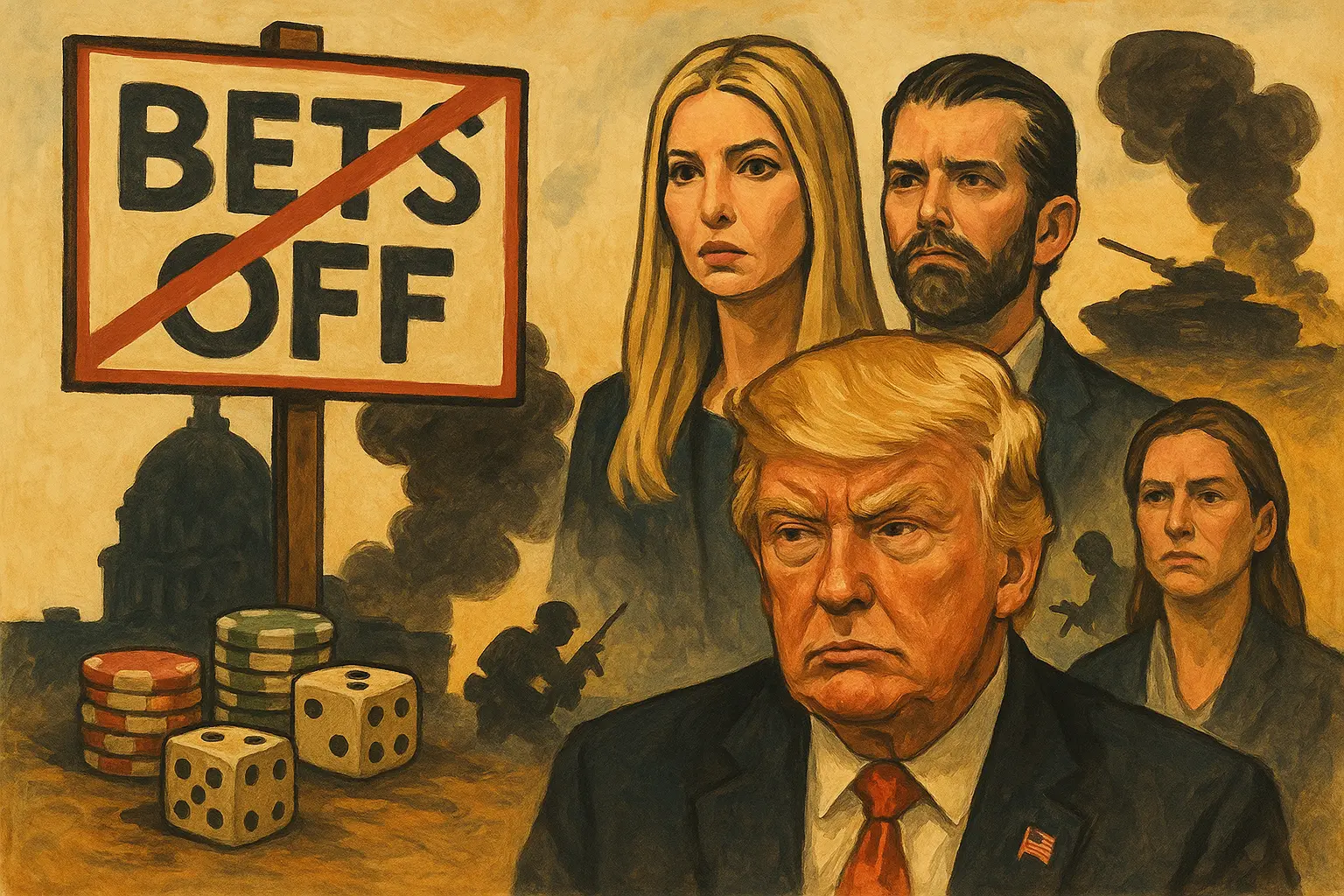
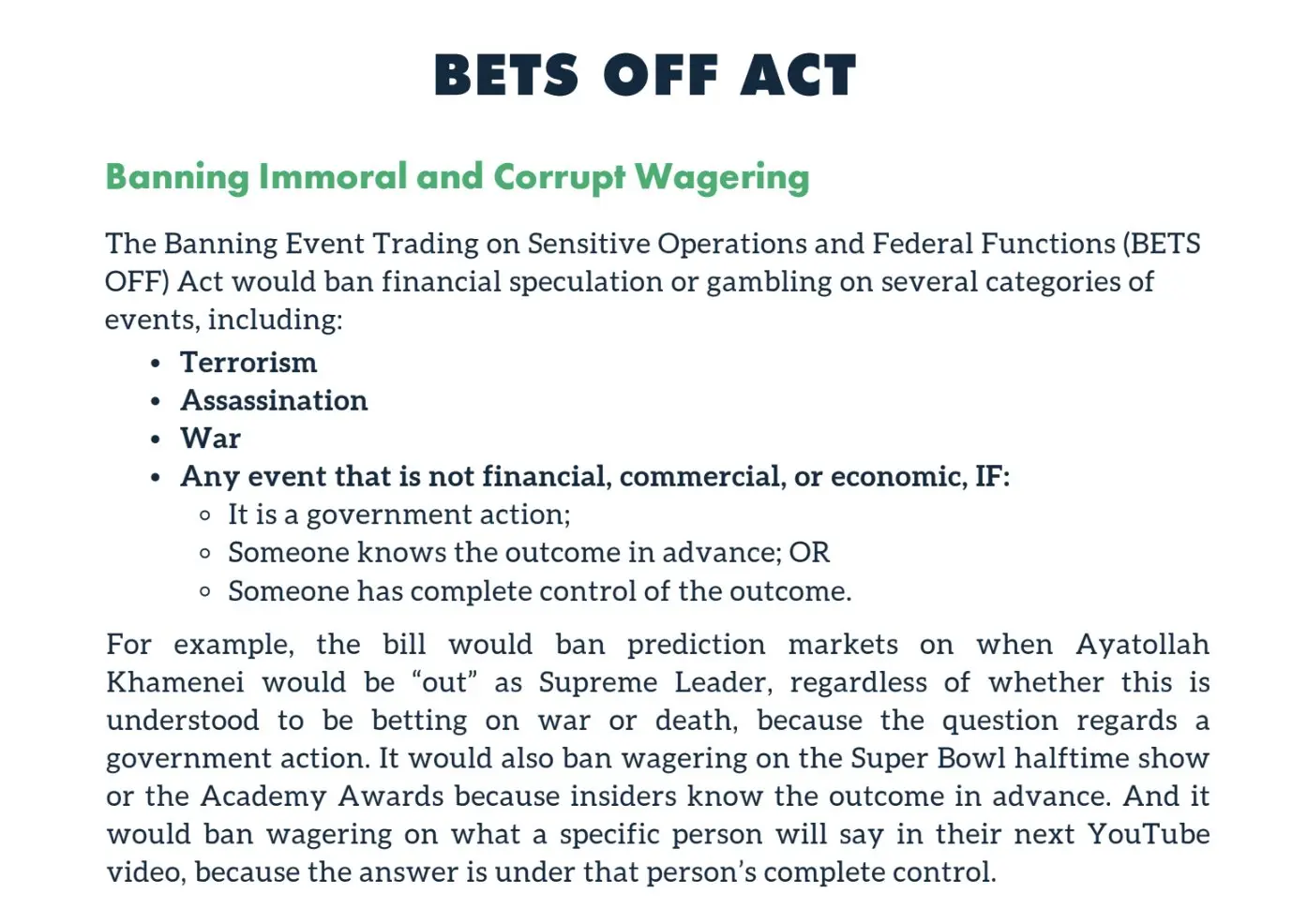
Democratic Senator Chris Murphy and Representative Greg Casar jointly introduced a bill on March 17 called the “BETS OFF Act,” aimed at banning betting on prediction markets related to war, terrorism, assassinations, and government decisions. The bill criticizes Trump and the financial ties between prediction market platforms.
Core Provisions of the BETS OFF Act: Which Bets Will Be Explicitly Banned
 (Source: Bryan Metzger)
The legislation authorizes the U.S. Commodity Futures Trading Commission (CFTC) to prohibit the following types of prediction market bets:
War and Military Actions: Banning bets on the outcomes of military strikes against the U.S. or allies
Terrorism and Assassinations: Banning bets targeting terrorist events or deaths of individuals
Government Decisions and Administrative Actions: Banning bets on executive orders, policy decisions, and other government actions
Insider Information Profits: Banning anyone with control over outcomes or non-public information from placing related bets
The lawmakers state that the bill aims to prevent the misuse of government secrets for personal gain during tragedies, maintain fairness in prediction markets, and protect national security.
Suspicious Bets Before Iran Airstrikes: Data from 150 Accounts
Casar presented specific figures at a press conference, revealing that on the day before the U.S. launched an airstrike on Iran, there was a large-scale abnormal betting activity on Polymarket, with most accounts created on that day:
150 accounts identified as making “very unusual” bets; among them, 109 accounts earned over $10,000; 16 accounts earned over $100,000; and one account nearly $500,000 in profit.
Casar stated at the conference: “Half a million dollars came from betting on a war that has cost taxpayers billions of dollars and claimed the lives of over a dozen U.S. soldiers and countless civilians. While working-class kids are sent to fight in the Middle East, others profit from it.”
Similar suspicious betting patterns appeared before U.S. military action against Venezuela.
Trump Family Financial Ties: Direct Congressional Accusations
The two lawmakers’ criticisms go beyond legal loopholes, directly pointing to financial connections between the Trump administration and prediction market platforms. Murphy said, “The context seems quite clear—the White House or those closely connected to it knew an airstrike was imminent and profited beforehand. This is fundamentally corruption, and it’s shocking that such behavior is legal.”
Casar further named Donald Trump Jr., stating he is an investor in Polymarket and a paid advisor to Kalshi. He also mentioned the Trump family’s push for the crypto project Truth Predict—a platform designed to operate as a prediction market. The lawmakers argue that these financial ties reveal a direct conflict of interest in how the Trump administration is shaping regulation of prediction markets, and the BETS OFF Act aims to cut this link at the legislative level.
Frequently Asked Questions
What types of prediction market bets will the BETS OFF Act prohibit?
The bill will ban bets on war, military actions, terrorism, assassinations, and government decisions. It specifically prohibits anyone with control over outcomes or access to non-public information from placing related bets, aiming to prevent government secrets from being exploited for personal gain during tragedies.
What are the specific data points on suspicious bets on Polymarket before the Iran airstrike?
According to Representative Casar, on the day before the U.S. launched an airstrike on Iran, 150 accounts on Polymarket engaged in abnormal betting, most created that day. Among these, 109 accounts earned over $10,000, 16 over $100,000, and one nearly $500,000 in profit.
What are the alleged financial ties between the Trump family and prediction markets?
Casar pointed out that Donald Trump Jr. is an investor in Polymarket and a paid advisor to Kalshi. The Trump family is also promoting the crypto project Truth Predict, which operates as a prediction market platform. These financial connections suggest a clear conflict of interest in the Trump administration’s regulation of prediction markets, which is a core reason for proposing the BETS OFF bill.
Disclaimer: The information on this page may come from third parties and does not represent the views or opinions of Gate. The content displayed on this page is for reference only and does not constitute any financial, investment, or legal advice. Gate does not guarantee the accuracy or completeness of the information and shall not be liable for any losses arising from the use of this information. Virtual asset investments carry high risks and are subject to significant price volatility. You may lose all of your invested principal. Please fully understand the relevant risks and make prudent decisions based on your own financial situation and risk tolerance. For details, please refer to
Disclaimer.


