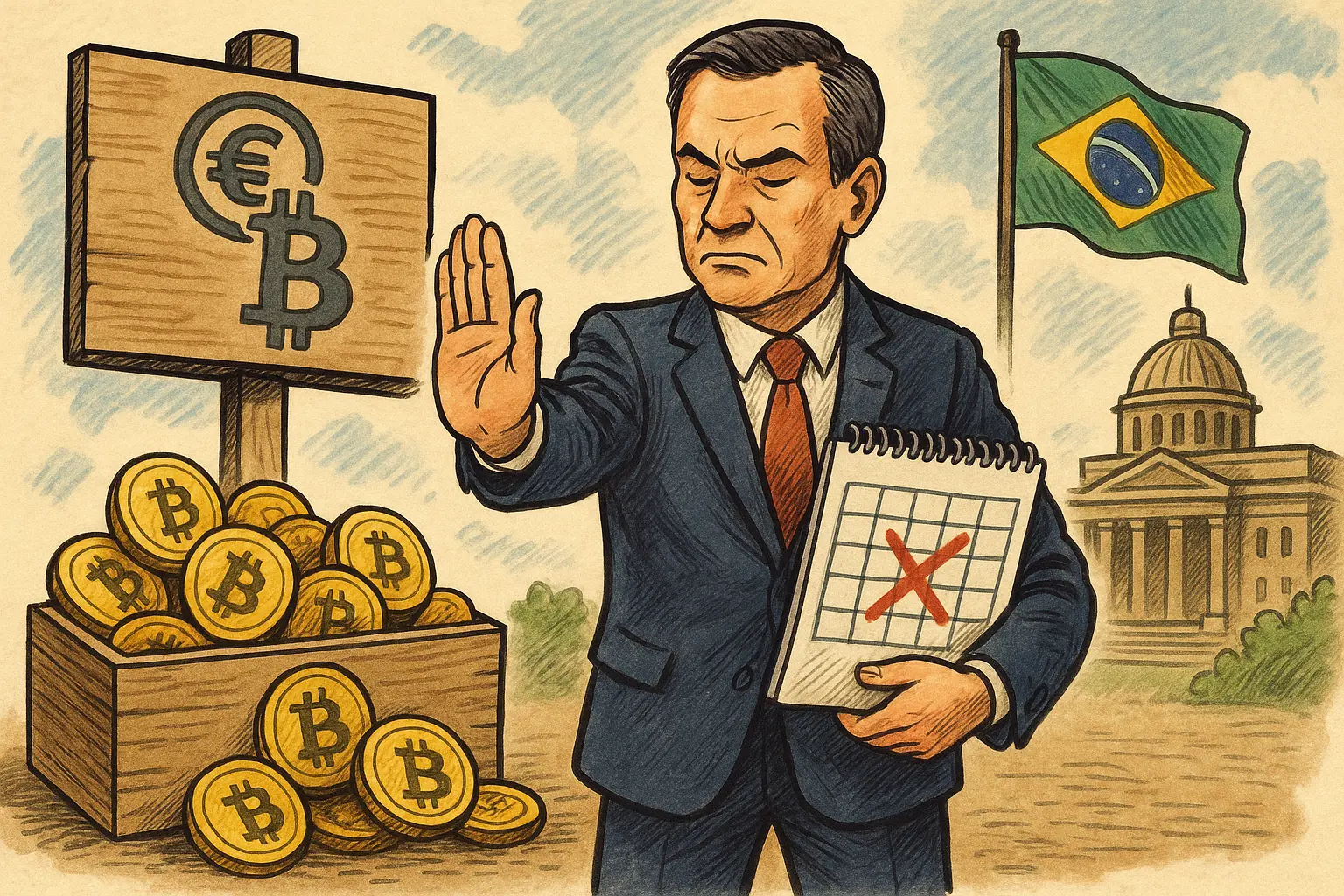
Reuters reported on Thursday, citing two sources, that Brazil’s new Finance Minister Dario Durigan has paused the public consultation originally scheduled on cryptocurrency taxation issues. Durigan officially took office on Friday, succeeding former Finance Minister Fernando Haddad, who resigned to run for governor of São Paulo state. Sources indicate that ahead of Brazil’s October presidential election, Durigan plans to prioritize microeconomic legislation.
Postponed Political Calculations: Fiscal Priorities in an Election Year
Brazilian President Lula invited 41-year-old Durigan to lead the Ministry of Finance, positioning him as the “new face of Brazil’s economy,” emphasizing economic development and improving the business environment. Amid Lula’s fierce re-election campaign and polls suggesting a possible runoff against Senator Flávio Bolsonaro, the pace of fiscal reforms is closely tied to political calculations.
Durigan’s legislative priorities are expected to include regulation of large tech platform economies, crisis management rules for financial institutions, and investments in the Redata data center project. These reflect a policy focus on industries that can create jobs and attract investment rather than expanding taxes. A proposal to eliminate tax exemptions on investment securities, which failed to pass Congress last year, may also be delayed until 2027.
Brazil’s Cryptocurrency Regulatory Framework: What Has Been Implemented and What Remains Pending
Existing Regulations and Pending Issues
Effective Rules: The Central Bank of Brazil completed relevant regulations in November 2025, bringing cryptocurrency service providers under the existing financial supervision framework, requiring them to obtain operational licenses.
Stablecoin Regulation: The same regulations also brought stablecoin trading and virtual assets used for international transfers under foreign exchange market oversight.
Compliance Deadline: Service providers subject to Central Bank rules face a compliance deadline in November 2026.
Taxation Unresolved: The postponed consultation was originally intended to clarify the tax treatment of crypto transactions under the foreign exchange classification. It is now at least delayed until after the election before it can be resumed.
Fund Flow Scale: Gabriel Galipolo, Governor of the Central Bank, stated that approximately 90% of domestic crypto funds over the past three years are related to stablecoins.
This means that before the election, transactions facilitated by crypto service providers in Brazil will continue to operate in a gray area regarding fiscal treatment.
Brazil: Policy Dilemmas in Latin America’s Largest Crypto Market
Brazil ranks fifth globally in Chainalysis’ Cryptocurrency Adoption Index and leads Latin America. It is expected to receive approximately $318.8 billion in crypto inflows from July 2024 to June 2025. Institutional interest is also rising, with risk capital firm Paradigm making its first investment in Brazil in December last year, injecting $13.5 million into the stablecoin startup Crown, which is pegged to real currency.
However, rapid adoption growth coupled with regulatory uncertainty remains a core concern for the industry. The postponement of tax consultations provides a short-term window for policy delay but also prolongs legal uncertainty, making it difficult for crypto companies operating in Brazil to plan long-term finances.
Frequently Asked Questions
Why did Brazil suspend cryptocurrency tax consultations?
Primarily due to shifts in political priorities. Before the October presidential election, the new Finance Minister Durigan aims to avoid advancing potentially controversial fiscal measures in Congress, conserving political capital, and instead focusing on microeconomic legislation and investment-friendly policies.
What is Brazil’s current crypto regulatory framework?
The Central Bank completed regulations in November 2025, requiring crypto service providers to obtain operational licenses and bringing stablecoin trading and virtual asset cross-border transfers under foreign exchange oversight. Service providers face a compliance deadline in November 2026, but the specific tax treatment of transactions remains undefined.
How does the suspension of tax consultations affect crypto businesses operating in Brazil?
Until consultations are resumed, there will be a lack of clear regulations on the tax treatment of crypto transactions in Brazil. This uncertainty hampers exchanges, stablecoin providers, and DeFi protocols from accurate financial planning and compliance budgeting. It may also temporarily deter some institutional capital from further investing in the Brazilian market.
Disclaimer: The information on this page may come from third parties and does not represent the views or opinions of Gate. The content displayed on this page is for reference only and does not constitute any financial, investment, or legal advice. Gate does not guarantee the accuracy or completeness of the information and shall not be liable for any losses arising from the use of this information. Virtual asset investments carry high risks and are subject to significant price volatility. You may lose all of your invested principal. Please fully understand the relevant risks and make prudent decisions based on your own financial situation and risk tolerance. For details, please refer to
Disclaimer.


