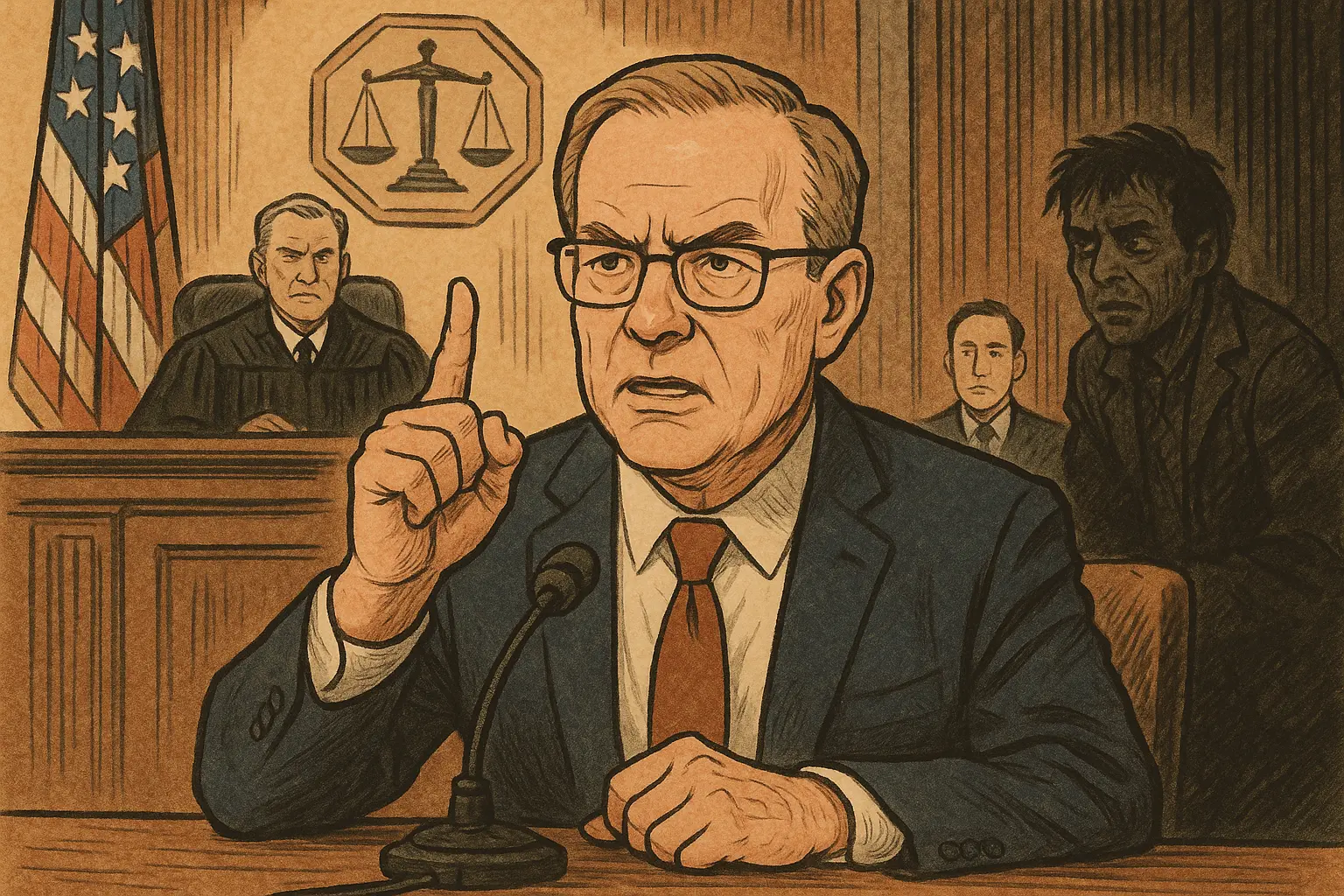
U.S. Commodity Futures Trading Commission (CFTC) Chairman Michael Selig appeared before the House Committee on Agriculture on April 17 (Thursday) and answered lawmakers’ questions regarding the regulatory framework for prediction markets and the acceptance of suspicious trading in oil futures. In his testimony, Selig stated that anyone who engages in fraud, abusive trading practices, or market manipulation in markets regulated by the CFTC will be severely punished under the law, and the CFTC adopts a “zero-tolerance policy” toward the above conduct.
Questions on $500 Million in Oil Trading and a Regulatory Framework for Prediction Markets
According to a report by The Block, Democratic lawmaker Rep. McGovern referenced a specific event on March 23, 2026: minutes before President Trump published posts related to ceasefire talks on Truth Social, someone conducted roughly $500 million in oil and stock futures trades, betting on oil prices falling and the stock market rising. Selig refused to comment on whether the CFTC is conducting an investigation into the matter, saying that publicly confirming or denying would interfere with enforcement work.
Regarding the overall regulatory framework for prediction markets, Selig told the committee that the Commodity Exchange Act provides the CFTC with “very broad, exclusive” jurisdiction over commodity derivatives. The CFTC issued an Advance Notice of Proposed Rulemaking on March 2026 to clarify the listing standards for prediction market contracts.
A California Democratic representative, Jim Costa (Jim Costa), criticized contracts that allow betting on events such as the death of Iran’s Supreme Leader Khamenei, stating in the hearing that “this is profiting from tragedy.” According to The Block, a related contract trade generated about $500,000 in profit. Selig said the CFTC has initiated rulemaking procedures on the issues mentioned above.
Hyperliquid Offshore Oil Market Contracts and the CFTC-SEC Digital Assets MOU
According to a report by The Block, Republican lawmaker Austin Scott questioned Selig in the hearing about oil contracts on the decentralized perpetual futures exchange Hyperliquid. He pointed out that the contracts were executed offshore and are outside the scope of CFTC jurisdiction, and warned that the related trades “may cause harm to U.S. consumers.” Selig said he is closely monitoring the Hyperliquid market with the goal of “bringing these markets into the U.S. regulatory system.”
Regarding coordination on crypto-asset regulation, in March 2026 the CFTC and the U.S. Securities and Exchange Commission (SEC) signed a memorandum of understanding (MOU). The coordination scope covers digital asset regulation, stablecoins, and tokenized collateral. In his testimony, Selig said the two agencies “have long failed to cooperate effectively,” and that the MOU will establish a mechanism for public communication.
CFTC Staffing and Commissioner Vacancy Dispute
According to The Block, lawmakers from both parties raised questions about whether the CFTC’s current staffing is sufficient to oversee prediction markets and the crypto industry. Under regulations, the CFTC should have five commissioners, but Trump has not nominated anyone to fill the vacancy, and Selig is the only sitting commissioner.
The committee’s senior Democratic commissioner, Angie Craig, asked Selig to commit that he would not finalize any new rules as the only commissioner. Selig refused, saying that investor protection and market safeguards cannot wait for more commissioners to be in place. Selig said the CFTC is “operating more efficiently than ever,” the agency is hiring more staff, and it is using AI for market surveillance. Glenn “GT” Thompson, the chair of the House Committee on Agriculture, said that if the CFTC later finds it needs more qualified employees, it should report that to the committee.
Frequently Asked Questions
When and where did CFTC Chairman Selig make a statement about prediction market fraud?
According to The Block, on April 17, 2026 (Thursday), Selig testified at a House Committee on Agriculture hearing, answered lawmakers’ questions on prediction market fraud, suspicious oil futures trading, and the CFTC regulatory framework, and stated that it adopts a “zero-tolerance policy” toward fraud and market manipulation.
How did the CFTC respond to the $500 million oil trades on March 23, 2026?
According to The Block, during the hearing Selig refused to comment on whether the CFTC is investigating the incident, saying that public confirmation or denial would interfere with enforcement work; Selig did not provide any specific information about investigation progress.
What is the current state of commissioner staffing at the CFTC?
According to The Block, the CFTC is required to be composed of five commissioners with different political stances. As of the hearing date April 17, 2026, Trump has not nominated anyone to fill the vacancy, and Selig is currently the only sitting commissioner. The committee’s senior Democratic commissioner Craig raised questions about regulatory capacity in this regard.
Disclaimer: The information on this page may come from third parties and does not represent the views or opinions of Gate. The content displayed on this page is for reference only and does not constitute any financial, investment, or legal advice. Gate does not guarantee the accuracy or completeness of the information and shall not be liable for any losses arising from the use of this information. Virtual asset investments carry high risks and are subject to significant price volatility. You may lose all of your invested principal. Please fully understand the relevant risks and make prudent decisions based on your own financial situation and risk tolerance. For details, please refer to
Disclaimer.
Related Articles
Polymarket Audits Builders Program Startups Over Insider Trading Concerns - Unchained
Polymarket has initiated an audit of its Builders Program after finding third-party tools that may facilitate insider trading by mimicking successful trades. The review follows scrutiny over potential market abuse linked to these apps.
UnchainedCrypto1h ago
Kalshi appeals Nevada event contract ban; CFTC jurisdiction dispute may reach the Supreme Court
Prediction market platform Kalshi has appealed a ruling by the state of Nevada banning its event contracts, and the U.S. Ninth Circuit Court of Appeals held oral arguments on April 17, but did not issue an immediate decision after the hearing. The core dispute in the case is whether Kalshi’s event contracts are “swap agreements” that fall under the jurisdiction of the Commodity Futures Trading Commission (CFTC), or whether they must be regulated by state-level activity under gambling licensing regimes. Multiple legal experts predict that the case may ultimately be appealed to the U.S. Supreme Court.
MarketWhisper2h ago
Prediction Markets Market Share Distribution Revealed, Kalshi Leads at 37.8%
Gate News message, latest data shows the market share distribution among prediction market platforms. Kalshi leads with 37.8% market share, followed by Polymarket at 35.3%. Opinion Labs xyz holds 14.4%, Predict dot fun accounts for 8.5%, and Crypto Com represents 2.5% of the market.
GateNews9h ago
Polymarket Prediction Market Outperforms Wall Street Analysts in Earnings Forecasts, Study Shows
A study by Wolfe Research reveals that anonymous bettors on the Polymarket platform may predict corporate earnings more accurately than Wall Street analysts, with significant accuracy for both optimistic and pessimistic bets. Despite potential, these prediction markets account for a small trading volume.
GateNews15h ago
Kalshi Launches Parental Portal and AI Verification to Combat Underage Misuse of Prediction Market
Kalshi is introducing a parental portal for identity verification and selfie authentication to prevent minors from bypassing age restrictions. This follows scrutiny over its compliance with prediction market regulations amid ongoing lawsuits.
GateNews04-16 01:02


