
China’s AI comic dramas have been further boosted by the Seedance 2.0 model, sparking a surge in popularity, with monthly output exceeding 13,000 episodes. Low costs have led industry players to aggressively expand and grab compute power in the middle of the night, but they have also raised concerns such as resource consumption and content homogenization.
Snow Mountain Rescues a Fox meme goes viral, Seedance 2.0 intensifies the AI comic drama craze
Have you ever seen, across major social platforms, the meme about Snow Mountain rescuing a fox and it “eating sauce-stuffed duck”? Behind this memetic phenomenon is a reflection of China’s AI short-drama production boom, and in recent years, a new trend has also emerged: an “AI comic drama” that makes comics come alive.
ByteDance released its AI video generation model Seedance 2.0 in February. With just a small number of prompts, users can generate videos that include dialogue, shot breakdowns, and background music at extremely low cost, further intensifying China’s AI comic drama boom.
AI comic drama companies抢 compute power; employees battle on until 3 a.m.
Unlike real-life short dramas and AI short dramas, AI comic dramas are a kind of production method that uses generative AI and other technologies to create static comic panels, add voice acting, color, and sound effects, and convert them into dynamic short videos.
According to reports by “36 氪 Future Observation” and “unwire.hk,” the AI comic drama industry in China believes that Seedance 2.0’s technological breakthroughs have significantly lowered production barriers and costs, with AI comic dramas costing only 400 to 1,000 yuan per minute to produce.
Among them, one large AI comic drama company, Jiangyou Animation, saw monthly revenue exceed 50 million yuan in November of last year. Founder Huang Haonan spotted a business opportunity; within less than half a year, he rapidly increased the number of employees from dozens to more than 1,200, pushed monthly output past 100 episodes, and set a target of producing 1,000 episodes per month.
Hunan AI comic drama production company He Ya Animation has also experienced rapid expansion. Yang Hao, founder of He Ya Animation, said that in order to take advantage of the cheaper compute power during off-peak hours and the benefit of shorter queues, employees’ original working hours were from noon until 1 a.m.
After Seedance 2.0 was released, because there were still tens of thousands of people queued to grab compute power at 1 a.m., the company had to adjust work hours, and employees ended up fighting until 3 a.m.
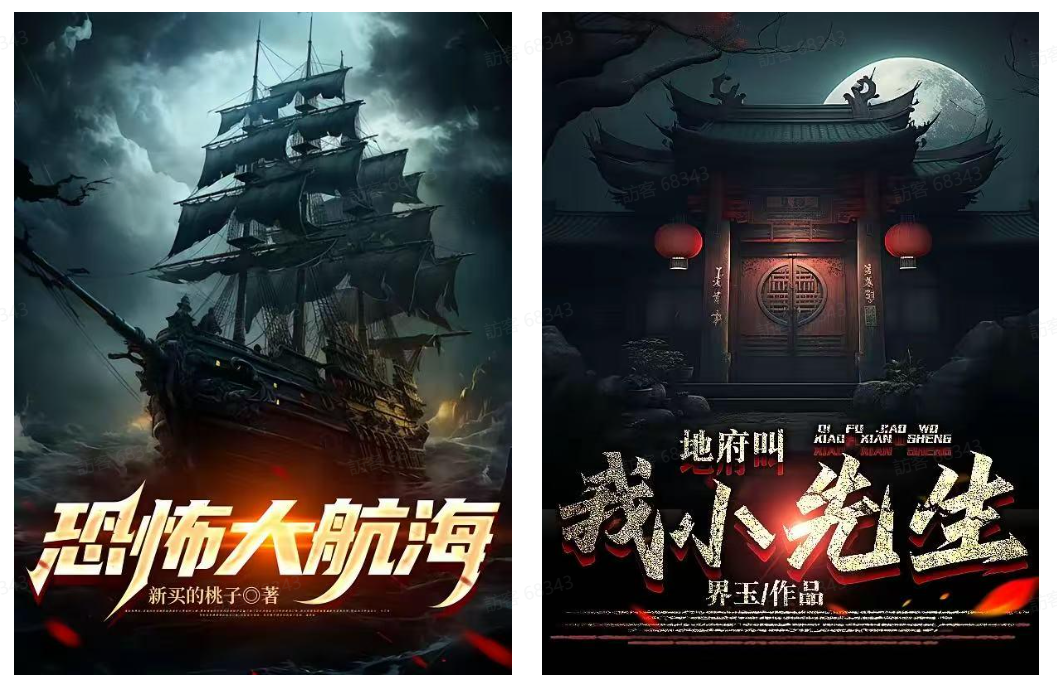
Source of image: script supermarket service provided by He Ya Animation (He Ya Animation), offered for AI creators to use; it is said to be written entirely by humans, with AI only assisting in organizing the narrative structure
As the technology upgraded, fast job reshuffling also appeared within the industry. On the very day He Ya Animation launched Seedance 2.0, it laid off the storyboard director. A past AI comic drama required an 8- to 10-person team; now it has been reduced to around 3 people. The workload of the “card drawer” role responsible for generating videos has also been significantly reduced.
According to data from DataEye-ADX, in September and October 2025, monthly output of AI comic dramas each exceeded 13,000 episodes, nearing the total production volume of real-life short dramas from the past year.
AI comic drama expansion is out of control—what are the concerns?
Along with the intense in-fighting in China’s AI comic drama boom, it has also brought many concerns and pushback.
Under posts related to reporting from “unwire.hk,” some users believe that the large-scale generation of videos like “Snow Mountain fox sauce-stuffed duck” is simply consuming expensive server equipment depreciation costs and compute resources. Once vendors stop subsidizing it, the business model that relies on regular capital injections will be difficult to sustain.
Users have also criticized these AI videos for being packed with copyright disputes, stiff voice acting, and a lack of innovation. In the end, it will likely evolve into blind in-fighting until it becomes impossible to profit.
A report by the BBC also points out that these ultra-short dramas are mostly sensational, over-the-top “soap opera” plots, and they are also under the scrutiny pressure of Chinese authorities. In February 2024, the authorities took down more than 1,200 short dramas on the grounds of being vulgar or poor taste.
China’s short drama market projected to reach a trillion by 2027
One report claims that China’s short drama market size has already exceeded 50 billion yuan. The industry expects it to surpass 100 billion yuan by 2027. With Douyin’s traffic support, AI comic drama vendors are taking advantage of massive “wholesale electronic zhacai,” leaning on short-video platforms and AI tools to grab enormous profits in the lower-tier market.
Because production is getting increasingly simpler, China’s short drama vendors can churn out personalized visual content with fast pacing, quick conflicts, and quick twists—at scale.
As for the video content’s meaning and its negative effects on audiences—those are issues that traditional film and television works and regulators need to think about. For now, industry players only need to keep stimulating viewers’ dopamine.

Source of image: YouTube— a series of short dramas pushed by algorithm on YouTube
Wholesale electronic zhacai—without nutrition, but you can’t live without it
Below a BBC-reported video, some clear-headed viewers also recognized that these “live-action comic dramas” and AI comic dramas are “electronic zhacai.” “Although it has no nutrition, you can’t live without it.”
At the same time, Xiao Chuan (a pseudonym), the former head of short-drama business at a top-tier internet company who was interviewed by “36 氪,” has already left the big company and plans to start a business.
Xiao Chuan told the media that he plans to produce content while waiting for the entire industry to return to a relatively calm state. At that time, perhaps industry attention will shift back to the content itself.
Further reading:
Taiwan media claims: AI short drama “Huo Qubing”—after just launching, it already has 500 million views; what are the suspicious points?


