Grinex, a Kyrgyzstan-registered exchange with deep ties to the Russian crypto market, announced on Thursday that it would suspend withdrawals and trading after its wallet infrastructure was hit by a “large-scale cyberattack.” Blockchain analytics firm Elliptic estimates the attack stole about $15 million in USDT. In an official statement on its website, Grinex characterized the incident as organized crime that harms financial sovereignty, and said the attack techniques have the hallmarks of “hostile nation actor” capabilities.
On-chain flow of the stolen funds: USDT rapidly shifts to TRX and ETH to avoid Tether freezing
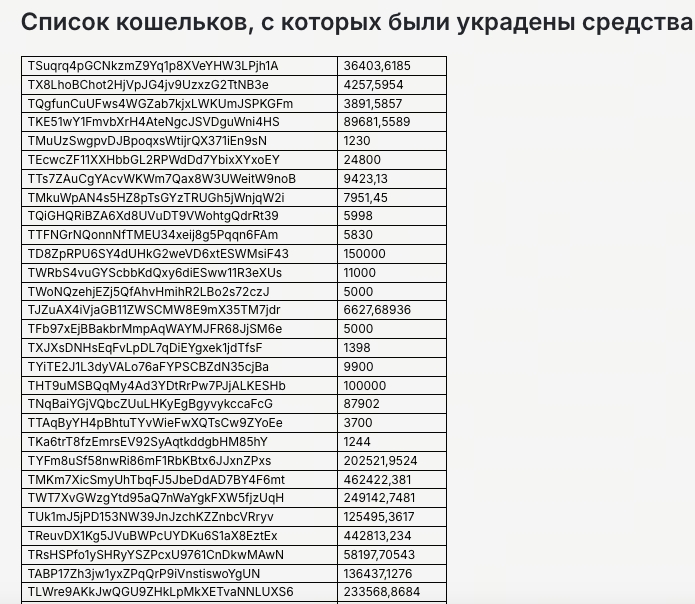 (Source: Grinex)
After being stolen, the USDT was quickly routed through intermediary addresses on the Tron and Ethereum networks and ultimately converted into TRX and ETH. Elliptic noted that the purpose of this conversion operation is likely to reduce the risk of funds being frozen by Tether—Tether has the technical capability to blacklist USDT addresses associated with illegal activity, preventing them from being used in subsequent circulation.
Grinex’s own disclosed on-chain data also confirms this flow: a related wallet identified by the exchange shows a balance of about 459 million TRX, worth more than $15 million, suggesting that the stolen assets had already been consolidated into a single address after the initial transfer.
The successor to Garantex: Grinex’s identity background and market position
It is widely believed in the market that Grinex is the successor to the sanctioned exchange Garantex. Garantex was sanctioned and shut down last year after U.S. authorities determined that it facilitated the flow of hundreds of millions of dollars in illegal funds related to ransomware and dark web markets. Within days after Garantex’s shutdown, its liquidity and users quickly migrated to alternative platforms such as Grinex.
Grinex key identity data
Exchange registration location: Kyrgyzstan, deeply linked to the Russian market
Relationship to the prior entity: widely recognized as the successor platform of the sanctioned Garantex
Market role: the primary venue for ruble-to-crypto trading
A7A5 stablecoin hub: the core circulation center for the ruble-backed stablecoin A7A5
Total A7A5 transaction volume: Elliptic estimates it has exceeded $100 billion
FAQ
Why is Grinex considered a successor to Garantex?
Within a few days after Garantex shut down, its users and liquidity clearly migrated to platforms such as Grinex. Grinex then took over from Garantex to become a core crypto trading venue for the Russian market, particularly by assuming the trading and circulation functions for ruble-to-crypto pairs and the stablecoin A7A5 backed by rubles. Its market positioning is highly aligned with Garantex.
Why would the stolen USDT be converted into TRX and ETH?
Tether has the technical capability to blacklist USDT addresses involved in illegal activity; once frozen, the USDT would be unable to make any transfers or trades. Converting USDT into TRX or ETH can effectively bypass this freezing mechanism because Tether’s blacklist feature does not apply to other cryptocurrencies, allowing the stolen funds to continue circulating.
Grinex calls its mastermind a “hostile nation”—is this allegation credible?
Grinex’s statement frames the attack as an organized action targeting Russia’s financial sovereignty, but it provides no specific technical attribution evidence. In the absence of a detailed technical analysis report, such allegations are difficult to independently verify. The term “hostile nation” currently has more of a political narrative character rather than being based on publicly available technical traceability conclusions.
Disclaimer: The information on this page may come from third parties and does not represent the views or opinions of Gate. The content displayed on this page is for reference only and does not constitute any financial, investment, or legal advice. Gate does not guarantee the accuracy or completeness of the information and shall not be liable for any losses arising from the use of this information. Virtual asset investments carry high risks and are subject to significant price volatility. You may lose all of your invested principal. Please fully understand the relevant risks and make prudent decisions based on your own financial situation and risk tolerance. For details, please refer to
Disclaimer.
Related Articles
Grinex Exchange Halts All Trading After $15M Cyberattack on Wallet Systems
Grinex, a Kyrgyz crypto exchange, suspended trading after a cyberattack resulting in losses of around $15 million. The advanced nature of the attack points to organized or state-level involvement. Grinex has reported the incident to authorities and is assessing the damage.
GateNews23m ago
Ethereum Foundation Uncovers 100 North Korean Operatives Infiltrating Web3 Companies
The Ethereum Foundation's ETH Rangers Program revealed a major security threat from North Korean operatives infiltrating Web3 companies. The investigation uncovered about 100 operatives, flagged 53 projects, and recovered over $5.8 million. The foundation urges improved hiring processes and global cooperation for enhanced security.
GateNews2h ago
Lebanon and Israel Agree to 10-Day Ceasefire, China Welcomes Efforts Toward Peace
A 10-day ceasefire agreement between Lebanon and Israel began on April 17, amid U.S. efforts to address the Iran conflict. China's Foreign Ministry supports the ceasefire and urges responsible negotiations to resolve disputes diplomatically.
GateNews3h ago
Ethereum Foundation: Ketman project identifies 100 North Korean agents within six months
According to an ETH Rangers project recap report published by the Ethereum Foundation on April 17, 2026 (Thursday), within its six-month funding period the Ketman project funded by the Ethereum Foundation identified 100 North Korean IT workers using false identities to infiltrate Web3 organizations, and contacted roughly 53 crypto projects to warn them they may have hired active North Korean agents.
MarketWhisper5h ago
Tennessee proposes allocating 10% of state funds to bitcoin as Senate hearing set for April 21
Tennessee's “Strategic Bitcoin Reserve Act” (SB 2639) will be heard by the Senate Finance, Revenue and Appropriations Committee on April 21 (next Tuesday). The bill was introduced by Senator Kelly Roberts, has passed the Senate Business and Labor Committee, and now moves to the Finance Committee responsible for overseeing tax and spending measures. If it passes, the Tennessee State Treasurer may allocate up to 10% of eligible state funds to bitcoin (BTC).
MarketWhisper6h ago


