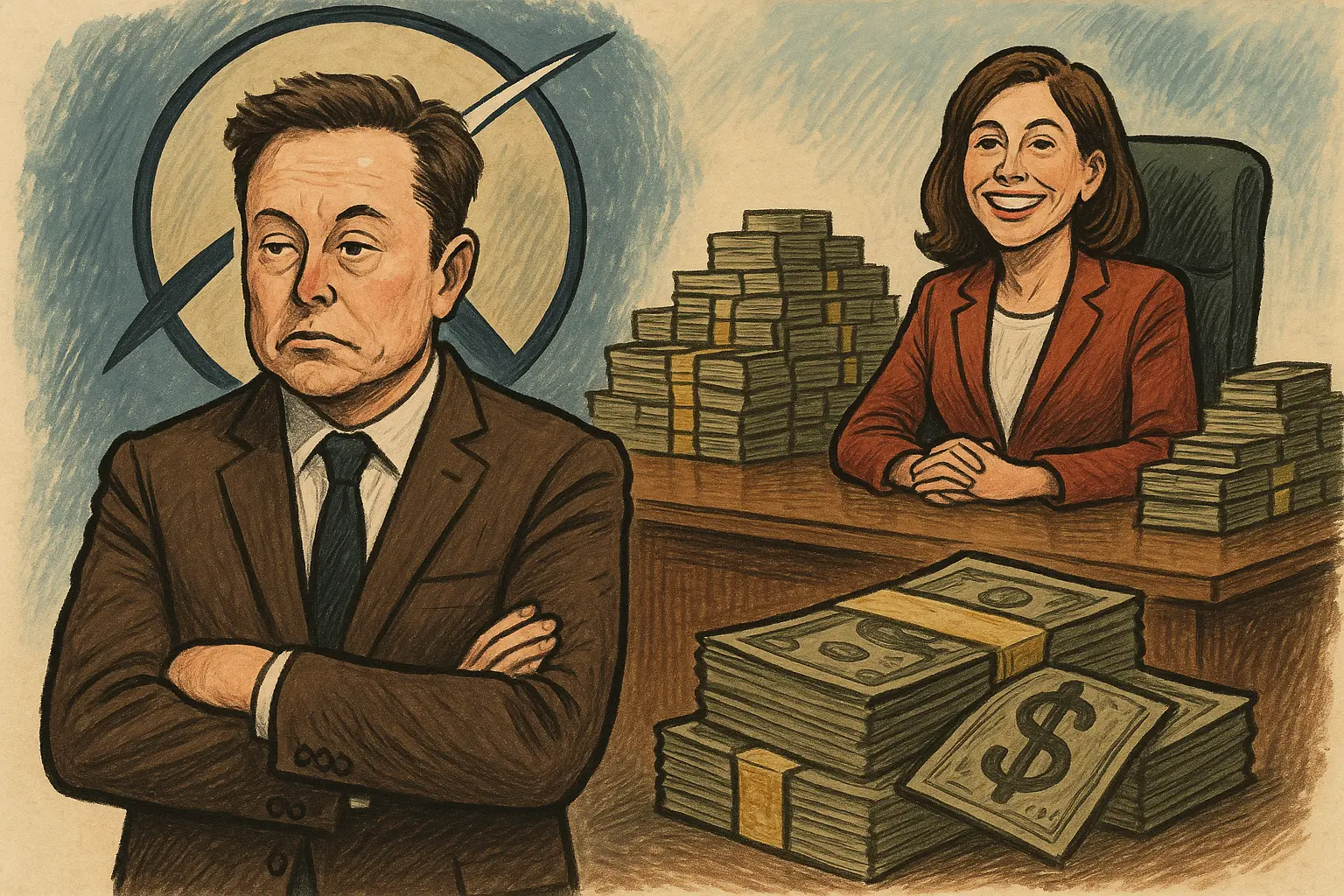
According to Reuters on April 21, SpaceX’s IPO prospectus disclosed highly unusual executive compensation: CEO and President Gwynne Shotwell’s total compensation amounted to $85.8 million, placing her among the highest-paid executives in the United States; while CEO Elon Musk, who holds a large amount of SpaceX shares, earns only $54,080 in annual salary.
IPO Structure: Unusually small shares, skewed toward retail investors
There are several unusual aspects to this IPO by SpaceX. The company plans to sell about $75 billion worth of stock, representing less than 5% of the company’s total market value, with a much lower float ratio than typical IPOs. 30% of the shares will be allocated to retail investors, which is rare among companies of a similar size and among large tech firms that go public. In addition, the index provider is adjusting inclusion rules, allowing passive funds to add SpaceX stock to their portfolios faster than usual, further boosting market demand.
Valuation Breakdown: Four business lines explain only about half of the valuation
Using a Reuters analysts’ framework, SpaceX can be broken into four parts to assess valuation:
Rocket business: Last year it achieved a record 165 launches, but revenue is estimated at only about $4 billion, and historically it has barely maintained break-even; even granting a 5x revenue valuation would yield only about $20 billion.
Starlink: Estimated to reach $20 billion in revenue in 2026, growing more than 50% from 2025. If valued at 32 times historical revenue, that corresponds to about $640 billion, making it the most quantifiable component of the current valuation.
xAI (including the X community network): In the first nine months of last year it recorded losses of about $8 billion; if its $250 billion valuation at the time of combining with SpaceX is carried forward.
Together, these three total about $910 billion, still less than half of the $1.75 trillion valuation.
Musk’s imagination props up the other half of the valuation
The remaining valuation gap needs to be filled with Musk’s vision—space data centers (planned for up to 1 million satellites), asteroid mining, and space tourism, ultimately leading to Mars colonization. These concepts currently face real-world bottlenecks: Google estimates that only by bringing launch costs down to below $200 per kilogram would space-based energy become economically viable, while SpaceX’s cost is currently about $1,500 per kilogram.
Musk’s Tesla example, however, provides a precedent for the public market paying for futuristic ambitions—Tesla’s $1.3 trillion market cap was driven mainly by expectations for humanoid robots and autonomous driving rather than existing sales. SpaceX’s IPO logic may also follow a similar narrative framework.
FAQ
SpaceX’s $1.75 trillion valuation but annual losses of $5 billion—how does this valuation logic work?
From a traditional valuation perspective, it’s difficult to fully justify—an IPO valuation equal to roughly 100 times historical revenue, and the company is still in a loss-making position. Analysts believe that existing businesses (Starlink about $640 billion, xAI about $250 billion, rockets about $20 billion) total only about $910 billion, which can explain a little more than half of the valuation; the other half relies on market pricing of Musk’s future concepts.
Why does Musk take only a symbolic annual salary of $54k?
Musk’s main financial upside is reflected through holding a large amount of SpaceX shares, with his wealth directly tied to the company’s market value. The symbolic pay arrangement partly stems from tax considerations (salary income is taxed at a higher rate than capital gains), and it also sends a signal emphasizing “prioritizing the company’s long-term interests.”
Is Starlink the most certain pillar in SpaceX’s valuation?
So far, yes. Starlink is the only business line that has generated quantifiable, fast-growing revenue (forecast $20 billion in 2026), and it has not yet faced true competition (Amazon’s LEO services only start this summer). Analysts estimate that Starlink could contribute about $640 billion to SpaceX’s valuation, which is the largest component of the valuation based on current certainty.
Disclaimer: The information on this page may come from third parties and does not represent the views or opinions of Gate. The content displayed on this page is for reference only and does not constitute any financial, investment, or legal advice. Gate does not guarantee the accuracy or completeness of the information and shall not be liable for any losses arising from the use of this information. Virtual asset investments carry high risks and are subject to significant price volatility. You may lose all of your invested principal. Please fully understand the relevant risks and make prudent decisions based on your own financial situation and risk tolerance. For details, please refer to
Disclaimer.
Related Articles
XRP Price Near $1.45 as ETF Inflows Build Pressure
Key Insights
Institutional XRP ETF inflows reached $41.6 million over four days, lifting assets under management above $1.08 billion and strengthening market confidence.
XRP faces strong resistance near $1.45, where CoinGlass data highlights a short max
CryptoNewsLand39m ago
Trump Expects Fed Rate Cut in May Under Warsh, Criticizes Powell's Probe
Gate News message, April 21 — On Tuesday, Donald Trump said he would be disappointed if Kevin Warsh, his nominee for Federal Reserve chair, takes office following Senate approval but does not cut interest rates as soon as next month. The central bank has not cut rates in 2026. Trump also pressured W
GateNews1h ago
Solana Holds $87 Support as ETF Inflows Top $22M
Key Insights
Solana ETF inflows reached $22.14 million this week, signaling sustained institutional accumulation and reinforcing short-term support above the 50-day EMA level.
Futures open interest climbed to $5.53 billion, highlighting increased retail participation and growing
CryptoNewsLand1h ago
Bitcoin, Ethereum and Solana ETFs Record Positive Net Inflows on April 21
Gate News message, according to the April 21 update, Bitcoin ETFs recorded a 1-day net inflow of 3,599 BTC (approximately $272.59 million) and a 7-day net inflow of 18,914 BTC (approximately $1.43 billion). Ethereum ETFs showed a 1-day net inflow of 34,380 ETH (approximately $79.25 million) and a 7-
GateNews2h ago
Fidelity and Capital Group Become Strive's Two Largest Shareholders
Gate News message, April 21 — Fidelity and Capital Group have become the two largest shareholders of Strive, a Bitcoin treasury company, according to CEO Cole Macro. The two firms collectively hold ASST shares valued at approximately $152.8 million, as confirmed by the company's latest
GateNews2h ago
U.S. Federal Reserve Chair Nominee Wosh: Digital Assets Already Part of U.S. Financial System
Gate News message, April 21 — During a Senate hearing on April 22, U.S. Senator Cynthia Lummis asked Federal Reserve chair nominee Wosh whether digital assets should be integrated into the nation's financial system to provide Americans with new investment opportunities and consumer protections.
Wos
GateNews2h ago


